'Hunger Stones' Resurface in Europe, Bringing Centuries-Old Warnings Back Into View as Rivers Hit Historic Lows
As drought exposes stretches of riverbed in central Europe, markers carved by past generations to record low water levels are emerging once again
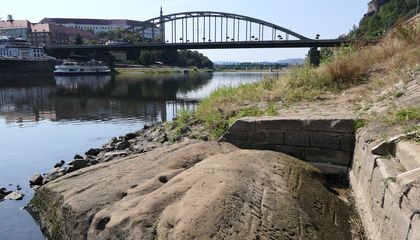
Centuries-old warnings about extreme drought conditions are re-emerging in Europe as rivers reach historic lows. Known as hunger stones, these rock inscriptions mark the lowest water levels and serve as enduring records of severe dry spells that disrupt navigation, agriculture, and livelihoods. Found primarily in central Europe, hunger stones bear inscriptions with dates ranging from the 15th to the 20th centuries, some marked multiple times when multiple dry years occurred.
One hunger stone recently resurfaced along the Elbe River in Pirna, Germany, near Dresden. Dated to 1707, it is one of the most well-known and largest of its kind, according to Jesús Maturana and Nela Heidner of Euronews. Other hunger stones were found in Leverkusen, south of Cologne, near the Rhine River, and Dolni Zleb, a village close to the Czech Republic-Germany border.
The stones typically feature initials, the year, and sometimes engravings of the water line. They served a practical purpose, drawing attention to future risks and emphasizing the hardship faced by day laborers who depended on river transportation and agriculture during drought periods. For instance, in 1904, a boatman named F. Mayer inscribed "Wenn du mich siehst, dann weine" (If you see me, weep) on a sandstone stone along the Elbe.
Research indicates that some hunger stones' inscriptions accurately reflect historical water levels. A 2020 study in Climate of the Past found that 11 measurements inscribed between 1868 and 1957 matched other records closely, differing by just a few centimeters.
Written by urgent.news from Smithsonian's reporting — not their text. Machine-written — may contain errors; check the original before relying on it.