How bags of ice are helping save lives in Phoenix
Extreme heat is the deadliest weather-related threat in the U.S. In Phoenix, heat kills more people than homicides each year. So the city is turning to an unlikely lifesaver: bags of ice. And the fire department is creating a new model in the battle against heatstroke. For our series, Tipping Point, Ben Tracy of Climate Central shows how this low-tech approach is saving lives.
Extreme heat is the leading cause of weather-related fatalities in the United States. In Phoenix, heat-related deaths surpass those from homicides annually. To combat this deadly threat, the city is employing an unexpected solution: bags of ice. The Phoenix Fire Department is pioneering a new strategy to counteract heatstroke, a development covered in a special report by Climate Central's Ben Tracy.
Ben Tracy reports that during a scorching afternoon in Phoenix, temperatures are expected to soar to 115 degrees. This extreme heat poses a grave danger, claiming more lives than any other weather hazard. In Phoenix, the statistics are alarming: heat claims more lives than homicides each year. The city's response to this crisis involves an unconventional lifesaving method - bags of ice.
Phoenix Firefighter Colin Kennedy is intimately familiar with the severity of the situation. As temperatures soar to 105 or 106 degrees, pavement becomes scorching hot. When they encounter an individual suffering from heatstroke on a sweltering sidewalk, firefighters utilize a specialized cooling technique. They place the patient in a blue bag filled with ice water and transport them swiftly to the emergency room.
Captain Dave Kirk of the Phoenix Fire Department explains that this innovative method drastically accelerates the cooling process, up to three to five times faster than traditional approaches. Traditional methods, such as applying ice packs to specific areas and administering cold IV fluids, prove far less effective. Kirk emphasizes that this new approach can prevent severe complications, including brain damage and organ failure.
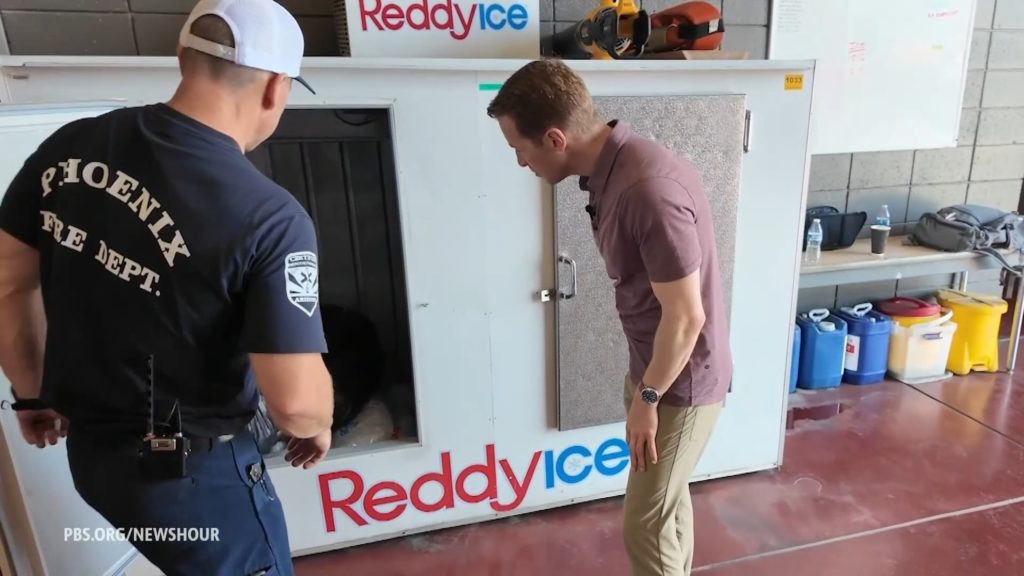
In Phoenix, where firefighters train in the relentless sun, each fire station now houses a crucial tool - a bag of ice. Colin Kennedy, a firefighter, highlights that they carry eight bags, each weighing seven pounds, within a large trash bag. These bags accompany them on calls to address heatstroke emergencies.
In the past summer alone, the fire department has employed this rapid cooling technique over 220 times. They also strategically stockpile ice at popular trailheads to provide immediate cooling for overheated hikers. This proactive approach has yielded remarkable results. Patients have been brought down from dangerous core temperatures of 108, 109, and 110 degrees to a safer range of 101 or 100 degrees by the time they reach the hospital.
Dr. Geoff Comp, a physician at Valleywise Health Medical Center, explains the effectiveness of this cooling method. Water's superior thermal conductivity compared to air makes it an ideal cooling agent, ensuring faster temperature reduction. Comp underscores that minimizing the duration the patient remains in elevated temperatures is crucial, ultimately saving lives.
This innovative cooling strategy represents a significant advancement in the ongoing battle against heat-related illnesses. As climate change prolongs and intensifies heatwaves across the nation, Phoenix's pioneering approach serves as a model for addressing this escalating threat. For PBS News Hour, this is Ben Tracy with Climate Central.
Written by urgent.news from PBS NewsHour's reporting — not their text. Machine-written — may contain errors; check the original before relying on it.
This story
This is one outlet's version. Read the fullest account.