How bags of ice are helping save lives in Phoenix
Extreme heat is the deadliest weather-related threat in the U.S. In Phoenix, heat kills more people than homicides each year. So the city is turning to an unlikely lifesaver: bags of ice. And the fire department is creating a new model in the battle against heatstroke. For our series, Tipping Point, Ben Tracy of Climate Central shows how this low-tech approach is saving lives.
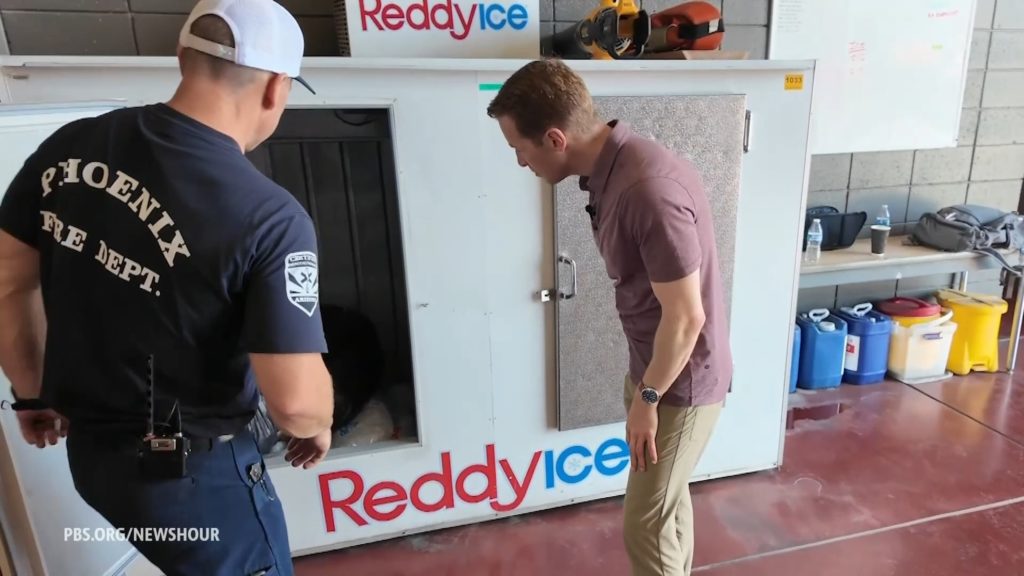
Phoenix, Arizona's extreme heat is the deadliest weather-related threat in the U.S., killing more people than homicides each year. The city is turning to an unlikely lifesaver: bags of ice to combat heatstroke. Special correspondent Ben Tracy of Climate Central explains how this low-tech approach is saving lives as part of their series Tipping Point.
Firefighters in Phoenix demonstrate a new standard heatstroke protocol that involves quickly cooling a person down by placing them inside a bag of ice water. Captain Dave Kirk of the Phoenix Fire Department says cold water immersion has been used by the military and is now part of Phoenix's battle against heatstroke. He explains that this new approach cools patients up to three to five times faster, preventing brain damage and organ failure.
Captain Kirk states that putting ice packs around the neck area and groin and giving cold I.V. fluids is less effective than immersing a person in a bag of ice water. In a city where firefighters train in scorching heat, every fire station now has bags of ice, ready to be used on calls. Over the summer, Phoenix firefighters have used the rapid cooling bags more than 220 times, cooling patients' core body temperatures from 108 to 100 degrees or even lower by the time they arrive at the hospital.
Dr. Geoff Comp, a physician at Valleywise Health Medical Center, explains that putting a person in ice water is more effective because water conducts heat much faster than air. He emphasizes that cooling patients before reaching the E.R. significantly reduces mortality rates and saves lives.
Written by urgent.news from PBS NewsHour Science's reporting — not their text. Machine-written — may contain errors; check the original before relying on it.
This story
This is one outlet's version. Read the fullest account.