From infrastructure to industrialisation: Building Africa's next bridge to economic integration
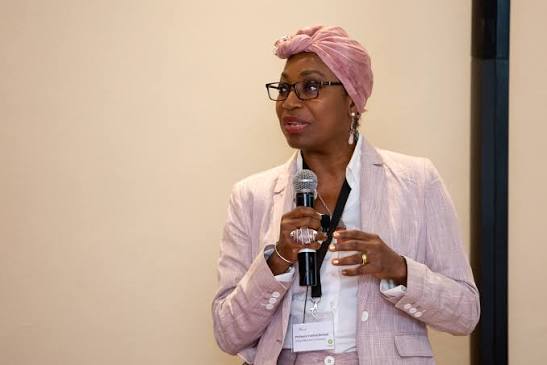
At the Sustainable Infrastructure Development Symposium South Africa (SIDSSA) 2026, held in Cape Town, H.E. Nardos Bekele-Thomas, Chief Executive Officer of AUDA-NEPAD, delivered a incisive address on what it will take to turn Africa's infrastructure into full economic integration. The article below expands on the themes of that address.
Over the past two decades, Africa has invested heavily in connecting the continent, resulting in a substantial infrastructure network. However, the real opportunity now is to ensure that these assets function as a cohesive regional system. This will require aligning institutions, regulations, standards, and operating systems across borders.
The New Partnership for Africa's Development (NEPAD) was established to recognize that no single African state can effectively build everything independently. The Presidential Infrastructure Champion Initiative (PIDA) has since taken this vision further, with initiatives like PIDA PAP 1 in 2012 and PIDA PAP 2 in 2021, the latter holding 69 priority projects with an estimated capital expenditure of $160.8 billion.
PAP 2 has already delivered on many fronts, including the construction or rehabilitation of approximately 16,000 kilometers of roads, 4,000 kilometers of railway, and 3,500 kilometers of transmission lines. On average, infrastructure commitments have been around $10 billion per year. Despite these achievements, there is still significant potential to enhance the integration and performance of these physical assets.
The key to unlocking this potential lies in aligning institutions, regulations, standards, and operating systems. When this alignment is achieved, the physical infrastructure becomes just the starting point for a broader regional system. For example, a power grid physically synchronized across borders can enable seamless electricity trading from day one. Similarly, a Single African Air Transport Market can be realized by lifting intra-African air connectivity beyond its current 23 percent.
The main obstacle to realizing this potential is not always a lack of financing. While PAP 1 commitments averaged around $10 billion annually, PAP 2 requires roughly $16 billion per year, a significant 60 percent increase. However, even with substantial financial resources, some projects fail to move forward due to unresolved technical, tariff, or regulatory issues. These are barriers that can be overcome without additional funding by accelerating the decision-making processes involved.
The case of the Kazungula bridge between Botswana and Zambia illustrates this point. This $259 million project, completed in May 2021, reduced border clearance times from seven days to about sixteen hours and increased daily truck movements from 130 to 200. The success of the bridge was not only due to its physical construction but also to the concurrent alignment of customs, immigration, and legal instruments.
Another example is the Ethiopian electricity interconnection project, which, while facing some financial constraints, has made significant strides due to the simultaneous alignment of technical standards, tariffs, and regulatory frameworks. This demonstrates that without the right institutional alignment, even well-funded projects may underperform.
In conclusion, Africa has built a solid foundation of infrastructure, but the next step is to ensure that these assets perform as an integrated regional system. This requires a focused effort on aligning the various components that govern how these assets operate, beyond just the initial construction phase. By doing so, Africa can unlock the full potential of its infrastructure investments and create a more interconnected and economically integrated continent.
Written by urgent.news from Africa Business's reporting — not their text. Machine-written — may contain errors; check the original before relying on it.