Africa’s natural resources must drive jobs, industrialisation – Denton
Professor Fatima Denton, Director of the United Nations University Institute for Natural Resources in Africa (UNU-INRA), has urged African countries to leverage natural resources for job creation and industrialisation. The post Africa’s natural resources must drive jobs, industrialisation – Denton appeared first on Ghana Business News .
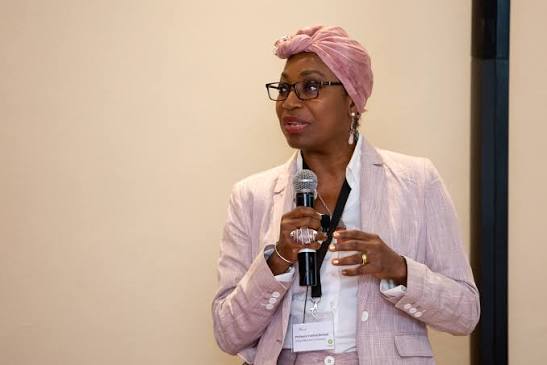
Professor Fatima Denton, Director of the United Nations University Institute for Natural Resources in Africa (UNU-INRA), has called on African nations to harness their natural resources to create jobs and spur industrialization. Denton argued that countries should shift from merely exporting raw materials to utilizing their resource wealth to foster local value addition, develop industries, and stimulate long-term economic growth.
Speaking to the Ghana News Agency (GNA), Denton stressed that resource management should be connected to employment, technology, investment, and comprehensive structural transformation.
Denton emphasized the need for a holistic perspective on natural resources, focusing on job creation and the structural transformation plan associated with those resources. She cautioned against remaining trapped in a cycle of merely extracting and exporting raw materials without generating substantial value or expanding productive capacity.
Denton urged African nations to leverage their resource wealth to bolster technological capabilities and decrease dependence on external markets and expertise. She highlighted the importance of viewing these resources not merely as vulnerabilities but as opportunities that can interconnect various development strands to drive economic transformation.
Denton stressed the significance of framing the narrative around Africa's natural resources, as the way these issues are presented can impact who benefits from them. She noted the increasing global demand for critical minerals needed for the energy transition and questioned the criteria used to classify resources as "critical" and how such classifications affect international economic relations.
Denton advocated for an opportunity narrative, emphasizing that Africa, despite contributing little to global carbon emissions, possesses many resources essential for transitioning to greener economies. She suggested that African countries could collaborate, attract investment, enhance local value addition, and develop green industries based on their resource endowments.
However, Denton warned that simply having abundant mineral deposits does not automatically confer economic control or development benefits. She explained that if resources remain untouched in the ground without developing the value attached to them, they remain under the control of others. True control, she argued, requires investments in technology, strategic planning, and a skilled workforce capable of transforming resources into higher-value products.
Denton specifically commented on Ghana's mining sector, particularly its gold production, pointing out that many specialized skills for mineral extraction and processing are still sourced externally. She referenced a post-COVID discussion with a representative from Mali, who highlighted concerns about the concentration of expertise in certain specialized mining activities outside of producing countries.
Denton stressed that this situation underscores the necessity for countries like Ghana to cultivate skills across the entire resource value chain, from exploration and extraction to processing and downstream manufacturing. She argued that developing local expertise would not only reduce reliance on foreign skills but also generate higher-quality jobs for young people entering the workforce.
Denton concluded by noting that while Africa produces natural resources, the jobs derived from these often remain limited, and there is a need to maximize job creation, ensuring they are decent positions that attract young people to pursue them.
Written by urgent.news from Ghana Business News's reporting — not their text. Machine-written — may contain errors; check the original before relying on it.
Also reported by 1 other outlet
- Drive for safer cars in South Africa gains fresh impetus moneyweb.co.za