Environmental DNA shows some frog species bouncing back from fungus
The species were hit hard by chytrid fungus in the 80s and 90s, but new research suggests two frogs have recovered to now expand to new territories, while one is still constrained.
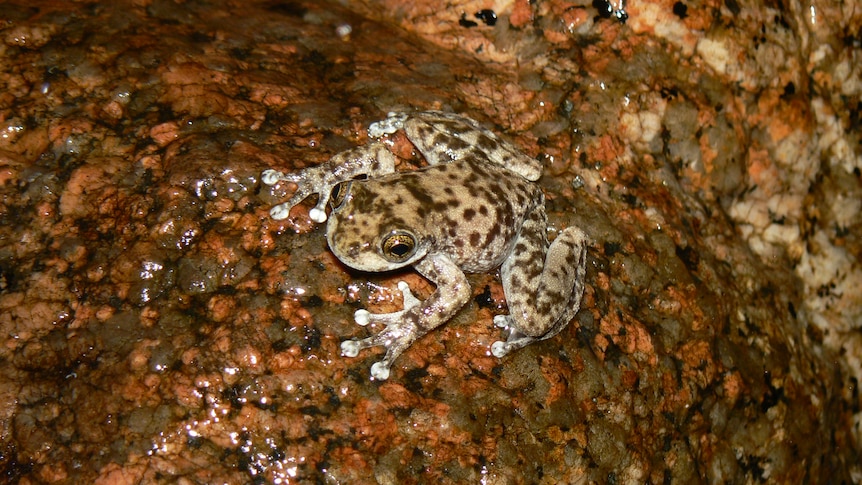
A study using environmental DNA has revealed that some frog species in the Daintree Rainforest are recovering from a chytrid fungus outbreak that occurred in the 1980s and 1990s. The endangered waterfall frog (Litoria nannotis) and the endangered Australian lace-lid frog (L. dayi) have expanded to new territories, while the armoured mistfrog (Litoria lorica) remains restricted to a single area.
Researchers collected water samples from 11 sites in the World Heritage Daintree Rainforest to assess the status of these three frog species, which are all found only in the Wet Tropics in north-east Queensland. Cecilia Villacorta-Rath, a senior research officer with James Cook University, said the frogs were ideal for study due to their similar environments and aquatic lifestyle, which made it easier to detect their DNA downstream in water samples.
The findings, published in July's Conservation Science and Practice journal, show that the waterfall frog and the Australian lace-lid frog populations have recovered to the point where they were detected in new territories. However, the armoured mistfrog has not recovered well, only being encountered at one of the 11 sites. Chytrid fungus, responsible for mass deaths of amphibians worldwide and at least four species in Australia, attacks keratin in the animals' skin, disrupting important skin functions.
Laura Grogan, a senior lecturer in wildlife science at the University of Queensland, noted that various factors contribute to the recovery responses of frog species to chytrid fungus outbreaks, including infection load, resistance development, behavioral changes, and even changes in the fungus itself. She also highlighted that some populations might still be vulnerable due to genetic bottlenecks, even if they appear abundant, which could make them susceptible to other threats or environmental changes.
Dr. Grogan emphasized the importance of further research into the genetic diversity of populations, using eDNA collection, to ensure their long-term survival.
Written by urgent.news from ABC News AU's reporting — not their text. Machine-written — may contain errors; check the original before relying on it.