Cyclone frequency may rise over Indian coast from the warming of Pacific: study
A combination of global warming and a cyclical event called the Pacific Decadal Oscillation that repeats every 20-30 years, could make cyclones that originate near the Equator more frequent in the coming years
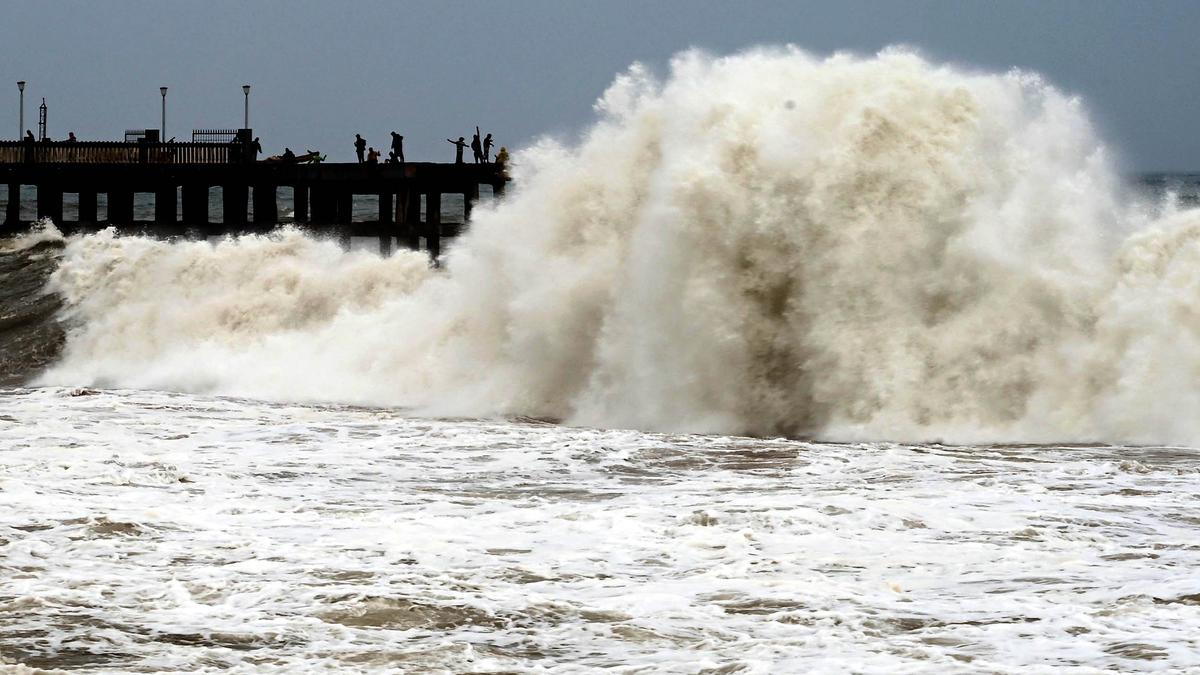
A recent study published in Nature Communications suggests that the frequency of tropical cyclones originating near the Equator in the Indian Ocean could increase due to global warming and a cyclical event known as the Pacific Decadal Oscillation (PDO). These cyclones, while destructive, have been less frequent in recent decades, with a notable decrease in occurrences between 1981-2010 compared to 1951-1980.
The PDO, which operates on a 20-30 year cycle, was in a warmer or positive phase during the latter period, leading to reduced rainfall over India. A warming of the Central Equatorial Pacific, such as an El Nino, typically corresponds to decreased rainfall in India, while a cooler La Nina phase is linked to excessive rainfall. The PDO, unlike the more studied ENSO phenomenon, has longer-term effects and can only be identified after several years of ocean temperature measurements.
In 2019, the PDO entered a cooler, negative phase, which, if sustained, could result in more tropical cyclones forming in the post-monsoon months near the Equator, according to meteorologist R.S. Ajayamohan, one of the study's authors. An El Nino is currently emerging in the Pacific, which has already affected rainfall patterns in central and southern India, with deficits of 7% and 17% respectively.
While the PDO is less studied than ENSO, the study suggests that a negative PDO phase combined with an El Nino could lead to increased rainfall in India.
Written by urgent.news from The Hindu - Sci-Tech's reporting — not their text. Machine-written — may contain errors; check the original before relying on it.
This story
This is one outlet's version. Read the fullest account.