Verhalten von Meeressäugern: Forscher zeichnen auf, wie Wal sich in Stellnetz verfängt
Eine Studie zeigt durch Zufall, wie sich ein Schweinswal in einem Stellnetz verfängt - und Notsignale aussendet. Was Forscher aus der Analyse für den Schutz der Tiere ableiten.
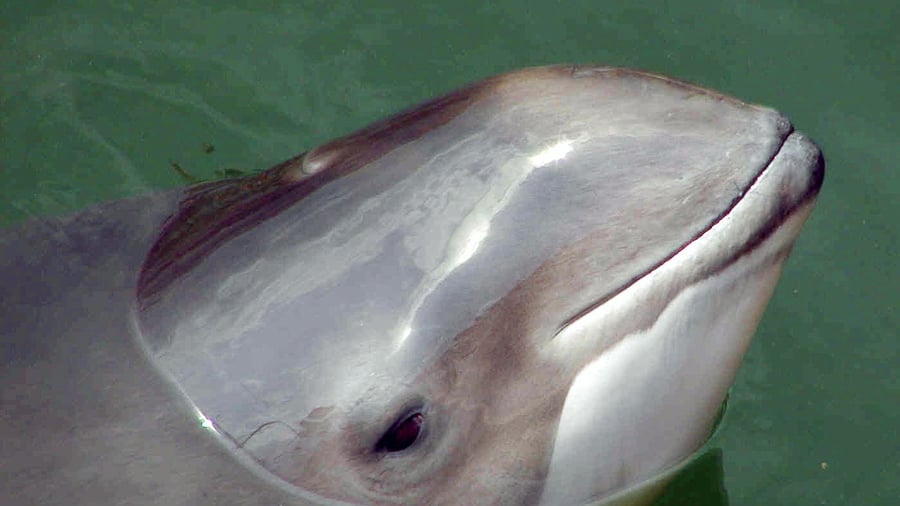
Wale, dolphins and other marine animals regularly perish in fishing nets, including in German waters. A chance discovery by researchers from the University of St Andrews in Scotland has captured such an entanglement event involving a porpoise off the English coast. According to a report in the scientific journal "Open Science," the incident provides insight into the behavior of marine mammals.
The team had set a gillnet with an acoustic monitoring system off the southwest English county of Cornwall. In 2019, two Common Porpoises (Phocoena phocoena) were initially searching for food near this net before one of them got caught. While this animal, likely still less than 1.2 meters long, attempted to free itself, it issued over 50 calls.
It repeatedly tried to pull on the net before eventually suffocating after several minutes. The other porpoise also emitted several calls. Such a detailed recording of the event had never been achieved before, the researchers write. Alone in British waters, there are thousands of kilometers of fishing nets. According to the St Andrews University, animal entanglement in fishing gear is the single biggest human-caused cause of death for dolphins and porpoises worldwide.
In Britain, roughly 1,000 porpoises die annually after becoming entangled in gillnets. Preventing entanglement through innovative methods? "Seeing the harsh reality of the entanglement problem up close naturally brings home the reality of the entanglement problem," says Macaulay. However, the experts see an opportunity for protection measures, such as nets that reflect sound and are therefore more audible to the animals.
Nets that are easier for large and strong species to escape could also be considered. Macaulay emphasizes that this knowledge will help develop sustainable and practical, scientifically sound solutions to reduce entanglement and accelerate their implementation. The German Nature Conservation Agency notes that such cases also regularly occur in the Baltic Sea.
"Entanglements of porpoises in gillnets are common in the gillnet fishery, but unfortunately, only a small fraction of these entanglements are reported or surrendered," it states. "One way to document porpoise entanglements is the so-called dead carcass monitoring of stranded animals. Between 2000 and 2014, the number of annual dead porpoises along the German Baltic Sea coast more than quadrupled, from 25 to 129."
Written by urgent.news from Handelsblatt's reporting — not their text. Machine-written — may contain errors; check the original before relying on it.