Africa must plan energy for production, not just consumption – UNECA
By: Samuel Ayammah The Director of Economic Affairs at the UN Economic Commission for Africa (UNECA), Dr. Marit Kitaw, has challenged African governments to fundamentally change how they plan energy, warning that the continent will not industrialize if it continues to plan energy only for household consumption. Dr. Kitaw made the remarks at the 2026 […]
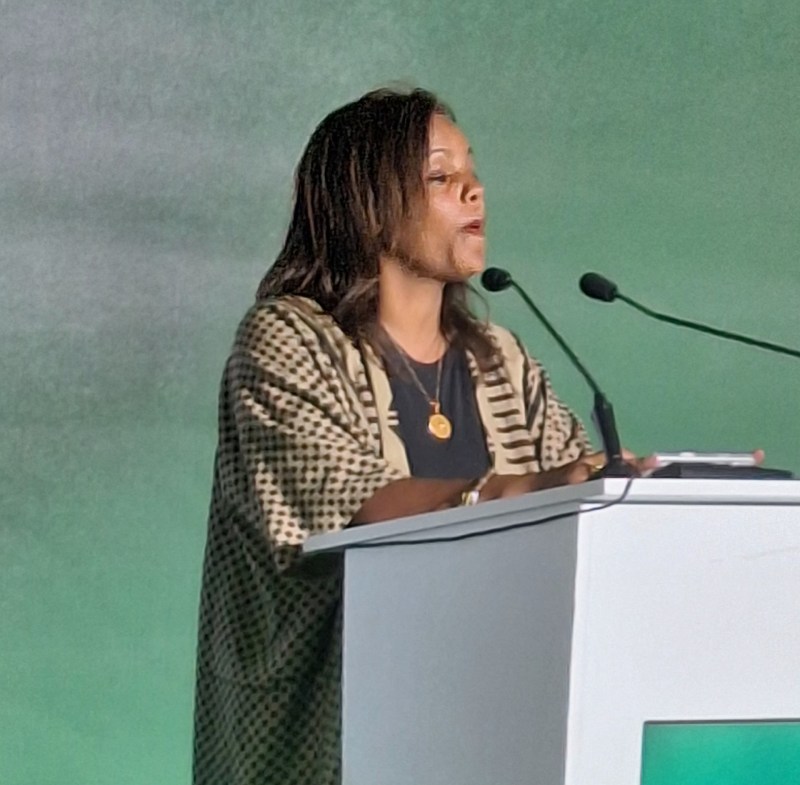
Dr. Marit Kitaw, Director of Economic Affairs at the UN Economic Commission for Africa (UNECA), has urged African nations to reevaluate their approach to energy planning, arguing that the continent cannot industrialize if it continues to focus solely on household consumption. Speaking at the 2026 Future of Energy Conference in Accra, Kitaw highlighted Africa's vital role in the global energy transition, noting that the continent holds significant reserves of cobalt, manganese, bauxite, copper, graphite, and lithium.
While Africa boasts vast potential in solar, wind, hydro, geothermal, and natural gas resources, the continent also grapples with a stark paradox - 600 million Africans lack access to electricity, a fact that can only be resolved by shifting energy planning to prioritize production rather than mere consumption.
Kitaw stressed that energy systems must be designed with production in mind, ensuring affordable, reliable, scalable, and productive power. She emphasized that energy planning should be closely tied to mineral strategies, industrial policies, trade frameworks, infrastructure development, and workforce training. Fragmented planning efforts can only remain aspirations if energy and industrial policies are developed separately.
Kitaw praised Ghana for starting to have these discussions concurrently and commended a panelist who advocated for aggressive thinking on energy.
The UNECA chief further emphasized the importance of regional integration, suggesting that African countries should collaborate rather than compete in various stages of the value chain. By sharing generation capacity, reducing system costs, and improving reliability, regional power pools can help create a single market of 1.4 billion people through the Africa Continental Free Trade Area Agreement (AfCFTA).
Additionally, regional mineral corridors can connect mines to processing hubs, manufacturing centers, and markets, fostering the creation of an African product that attracts investment and supports competitive industries. Kitaw described the Africa Green Minerals Strategy as a comprehensive industrial strategy, energy security measure, and instrument for African bargaining power, advancing the Africa Mining Vision of 2009 to support broad-based structural transformation.
The challenge now lies in implementing these strategies effectively, as highlighted by the United Nations Secretary-General’s Panel on Critical Energy Transition Minerals, which calls for high-level expert advisory mechanisms, stronger traceability, support for artisanal and small-scale miners, and greater circularity and material efficiency.
Written by urgent.news from GBC Ghana's reporting — not their text. Machine-written — may contain errors; check the original before relying on it.