Why humidity makes your hair frizz: the hydrogen bond science
A hairstyle can change shape without a drop of rain touching it. The reason is happening at molecular scale. Hair is built largely from keratin proteins held in shape partly by hydrogen bonds, relatively weak attractions that water can readily influence. A 2024 review of hair chemistry identifies hydrogen, disulphide and ionic bonds as important contributors to hair's behaviour, while humidity…
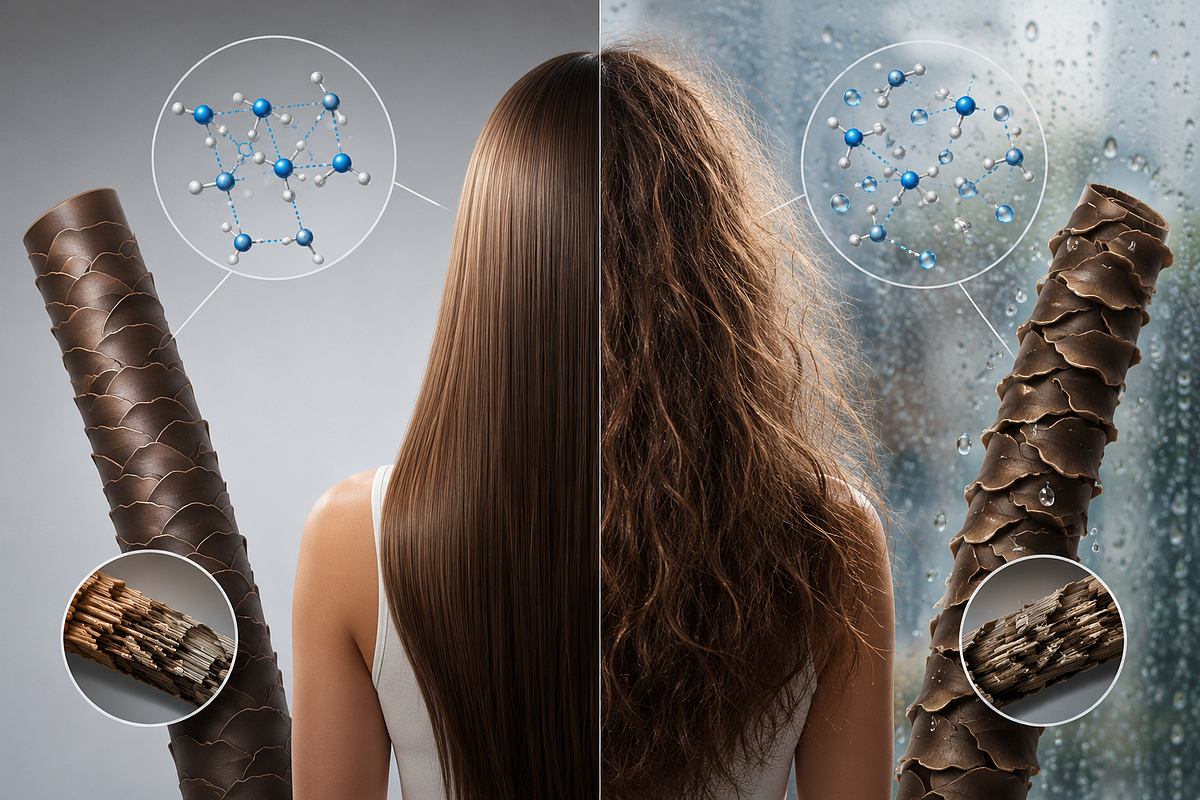
Hair shape can transform without any moisture, due to molecular level processes. Proteins in hair, mainly keratin, are stabilized partly by bonds that water can easily impact. A 2024 hair chemistry review notes hydrogen, disulphide and ionic bonds as key contributors, while humidity research reveals hair absorbs water in proportion to rising relative humidity.
This causes familiar effects in hot climates like the UAE, where moving from cool indoor air to humid outdoors can make previously smooth hair start to curl or frizz.
Hydrogen bonds are temporary links within and between hair protein strands. When hair is wet, water molecules interact with those proteins, disrupting some of those connections. As hair dries, hydrogen bonds reform, temporarily altering its shape. Unlike stronger disulphide bonds, these weaker links remain vulnerable to water. Humidity then perpetuates this interaction after styling.
Studies on human hair found that water uptake rises with relative humidity, while the fibre's mechanical properties also change. When moisture enters keratin, it increases molecular mobility and swelling, which can lead the strands to lose the neat alignment established during drying. The end result varies based on hair type, condition, and styling methods.
Thus, frizz is not just an indication that hair is "dry". It also depends on how easily the fibre exchanges water with its surroundings and how consistently neighbouring strands respond. Anti-frizz strategies therefore need to address hair at various stages. Conditioning products improve slip and manageability. Gentle drying methods reduce unnecessary rubbing while hair is wet.
A leave-in treatment or serum can then coat the surface and help maintain a smoother arrangement. When choosing an anti-frizz product, focus on the overall formula rather than just one exotic oil. Look for conditioning agents and silicone-based film formers which help create a smooth surface barrier.
Garnier Fructis Sleek & Shine Anti-Frizz Serum is a targeted product addressing humidity specifically. Its silicone-led formula leaves a smooth surface film, aiming for up to 72 hours of frizz control even in high humidity conditions. Another option is Bare Anatomy Ultra Smoothing Hair Mask, which concentrates on conditioning and manageability before drying.
By improving slip before styling, it can make it easier to create a smooth finish without aggressive brushing. Marc Anthony Grow Long Leave-In Conditioner, while not growing new hair, serves as a leave-in conditioner detangling and smoothing frizz. It balances a rinse-out mask and finishing serum, occupying the middle ground for wet or damp hair.
Pre-styling care also plays a crucial role in minimizing frizz. Using a microfibre towel to gently blot and wrap wet hair, rather than rubbing it with a regular towel, helps reduce mechanical disruption of strand alignment. Brands like SimpleField offer microfiber towels designed to absorb excess moisture while minimizing frizz and split ends.
Mechanical removal of water with less rubbing, followed by application of leave-in products while hair remains damp, forms a more coherent routine than relying on a single miracle ingredient. Ultimately, humidity-driven frizz is a material issue as much as a styling issue, with water interacting with keratin, increasing moisture uptake with rising humidity, and temporarily altering the bonds that hold a style together.
Written by urgent.news from Gulf News's reporting — not their text. Machine-written — may contain errors; check the original before relying on it.