Why Even a Cornered Putin Won’t Press the Red Button
Great powers have been humbled many times without escalating to nuclear war.
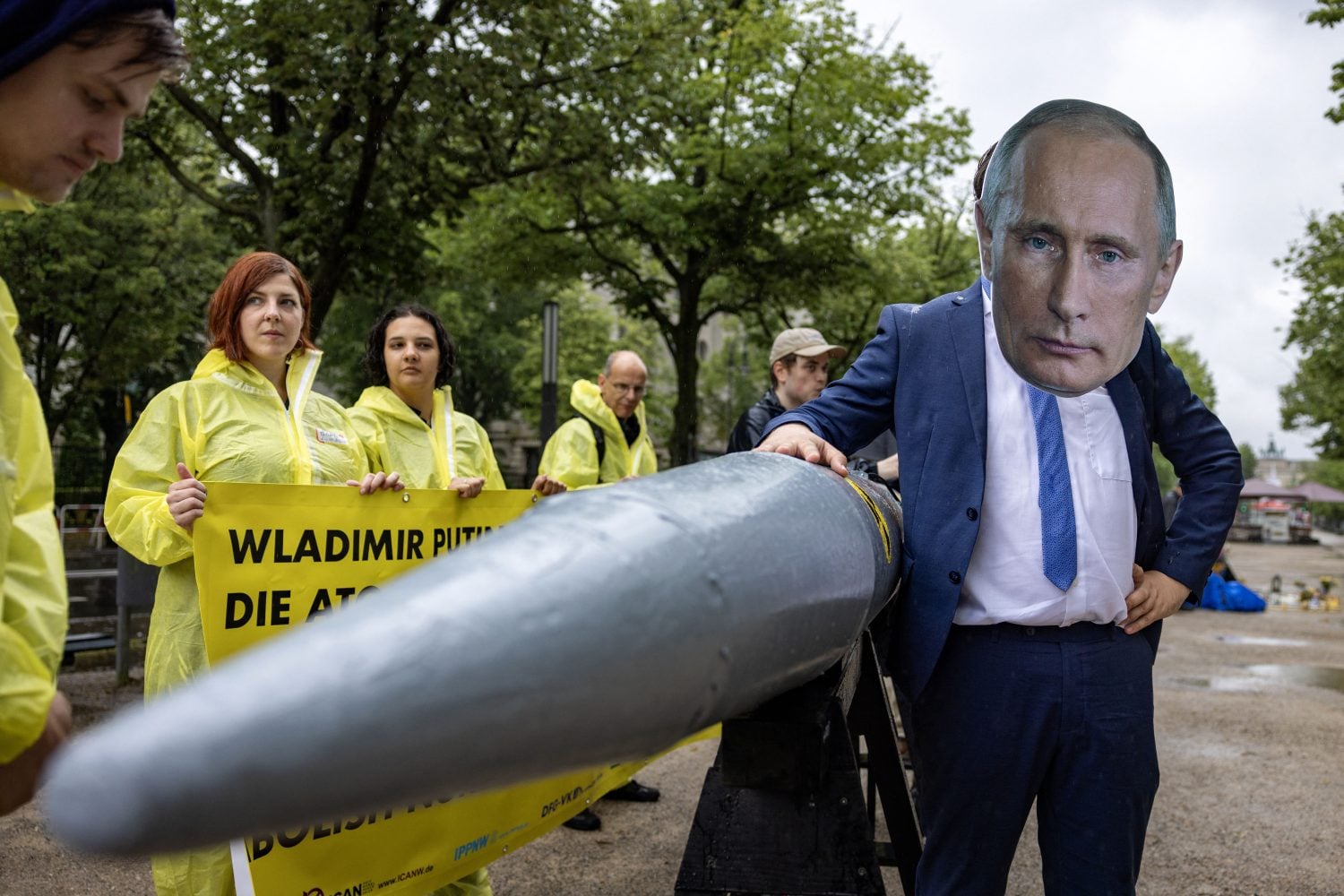
Western debates surrounding Ukraine's assistance and potential war outcome often view it as impossible for Ukraine to defeat Russia or expel it entirely from its territory. Many Western politicians prefer vague phrases like "helping Kyiv as long as it takes" rather than openly supporting Ukraine's "victory." The undercurrent of this thinking is that Russia losing the war would be undesirable and catastrophic for Ukraine.
Given Russia's nuclear arsenal, the thought process goes, it wouldn't risk Armageddon. Ukraine, having given up its nuclear weapons in 1994, is doomed to accept at least some of Russia's demands. Prominent Western voices, such as University of Chicago academic John Mearsheimer and Harvard University's Stephen Walt, have warned against pushing a great power to the brink, fearing Russia might turn to nuclear weapons.
However, the Biden administration has been cautious in delivering military aid to Ukraine, particularly advanced weapons and anything capable of striking Russia, due to fears of nuclear escalation. Ukraine's ultimate goal is not to completely defeat Russia but to liberate its territory and restore internationally recognized borders, acknowledging a partial victory by Russia to achieve peace.
History shows that nuclear-armed powers like France, the United States, and the Soviet Union, despite facing humiliating defeats, have never resorted to nuclear escalation. Similarly, China, which lost a war against Vietnam, did not escalate its conflict. Today, nine countries possess atomic arms, but no nuclear power has used these weapons since 1945, or even credibly threatened to do so.
This is despite the technological advancements and proliferation of nuclear weapons since then. The world's thinking about nuclear weapons has evolved, leading to an informal worldwide taboo against using them, except in cases of truly existential all-out war. Non-nuclear states can even attack nuclear-armed nations without fear of retaliation.
In 1973, for example, Egypt and Syria attacked Israel despite knowing Israel possessed nuclear weapons. The widespread belief in the taboo has allowed non-nuclear states to challenge nuclear-armed nations. The perception of nuclear weapons' strength has even enabled such attacks.
Written by urgent.news from Foreign Policy's reporting — not their text. Machine-written — may contain errors; check the original before relying on it.