These Tiny Shrews Grow Bigger Snouts and Shrink Their Brains to Survive Harsh Winters, Study Suggests
Scientists have long known that some small mammals reduce their brain size during cold months and regrow them in the spring. Long-clawed shrews from Hokkaido, Japan, seem to follow that pattern—while their noses surprisingly do the opposite
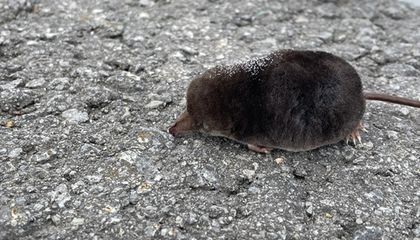
Long-clawed shrews, native to Northeastern Asia, exhibit a unique adaptation known as "reverse Dehnel’s phenomenon." This phenomenon, previously observed in winter-related brain and body part reductions in other small mammals, sees the shrews grow larger snouts and shrink their brains during cold months. The study, published in the Proceedings of the Royal Society B, examined 136 skulls of long-clawed shrews collected between 1948 and 1988 in Hokkaido, Japan.
The findings revealed that shrews' snouts were 7% taller and 6% wider in winter compared to spring, marking the first known instance of this reverse phenomenon in shrews. The researchers suggest that the larger snouts could improve the shrews' dietary options by increasing bite force or enhance their sense of smell to help locate prey in Hokkaido's deep snow.
Another plausible explanation is that the expanded nasal cavity allows for a richer vascular network, enabling the shrews to regulate their temperature better and maintain cognitive functions despite the cold. This peculiar adaptation, primarily observed in shrews in Europe, remains "strikingly understudied" in Northeastern Asia.
More research is needed to understand the environmental factors influencing this phenomenon in long-clawed shrews living in milder climates.
Written by urgent.news from Smithsonian's reporting — not their text. Machine-written — may contain errors; check the original before relying on it.