The secret love life of the longfin squid
MIT Sea Grant resident artist and acclaimed underwater photographer Keith Ellenbogen captures an intimate look at courtship and communication in a hidden spawning spectacle off Cape Cod.
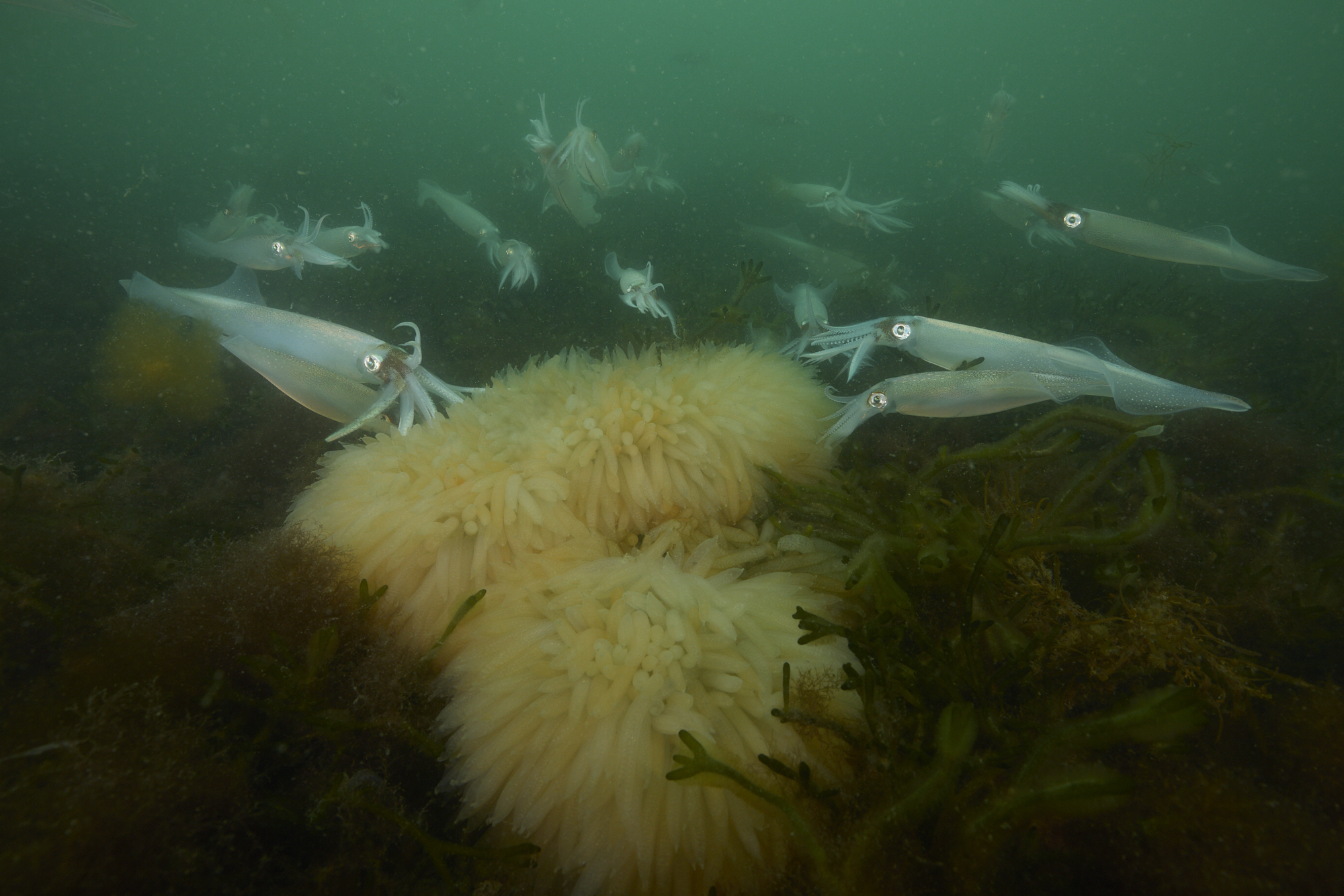
In the turbid waters off Massachusetts, a curious creature known as the longfin inshore squid, or Doryteuthis pealeii, thrives and has held a significant place in regional commercial fisheries for centuries. These elusive squid, affectionately referred to as the "Boston squid," inhabit the emerald-green depths with low visibility, making them a challenging subject for underwater photographers.
Despite the challenges, one such artist and photographer, Keith Ellenbogen, has managed to capture stunning images of these creatures.
In 2023, over 2.85 million pounds of longfin squid were landed commercially in Massachusetts, valued at more than $2.82 million. The species consistently ranks among the top 10 in commercial catches and shares the spotlight with iconic marine species like American lobster, Atlantic surf clam, and sea scallop.
In 2024, landings dropped to under 750,000 pounds, representing only a quarter of the previous year's catch. However, this decline in numbers doesn't necessarily signify a problem for the species. Longfin squid exhibit significant fluctuations in abundance year-to-year, which can be attributed to their short lifespan, sensitivity to ocean conditions, and short spawning season.
The mysterious spawning of these squid has long remained hidden from view. In an attempt to document this event, renowned underwater photographer Keith Ellenbogen embarked on an expedition, teaming up with local fishermen to locate the spawning aggregation deep within the nutrient-rich waters. With limited visibility and the presence of numerous other marine organisms, Ellenbogen finally encountered a scene of breathtaking complexity - thousands of squid engaged in mating rituals and egg laying beneath the surface.
Squid are born as planktonic hatchlings, known as paralarvae, and begin their lives in coastal, surface waters before migrating to deeper waters as they grow. Their predatory lifestyle involves remarkable jet propulsion, 10 grasping limbs, and chromatophore organs, which allow them to rapidly change their appearance for camouflage, courtship, and communication. Intriguingly, squid themselves are colorblind, relying on contrast, brightness, and movement to perceive their surroundings.
Written by urgent.news from MIT News Research's reporting — not their text. Machine-written — may contain errors; check the original before relying on it.