1.7 Million Satellites Could Threaten Astronomy
More than 1.7 million satellites could eventually orbit Earth under current proposals, creating growing problems for astronomers on the ground and in space. A study by the European Southern Observatory (ESO) found that large satellite constellations could increase sky brightness and interfere with observations from ground-based telescopes. The number of active satellites has already reached […]
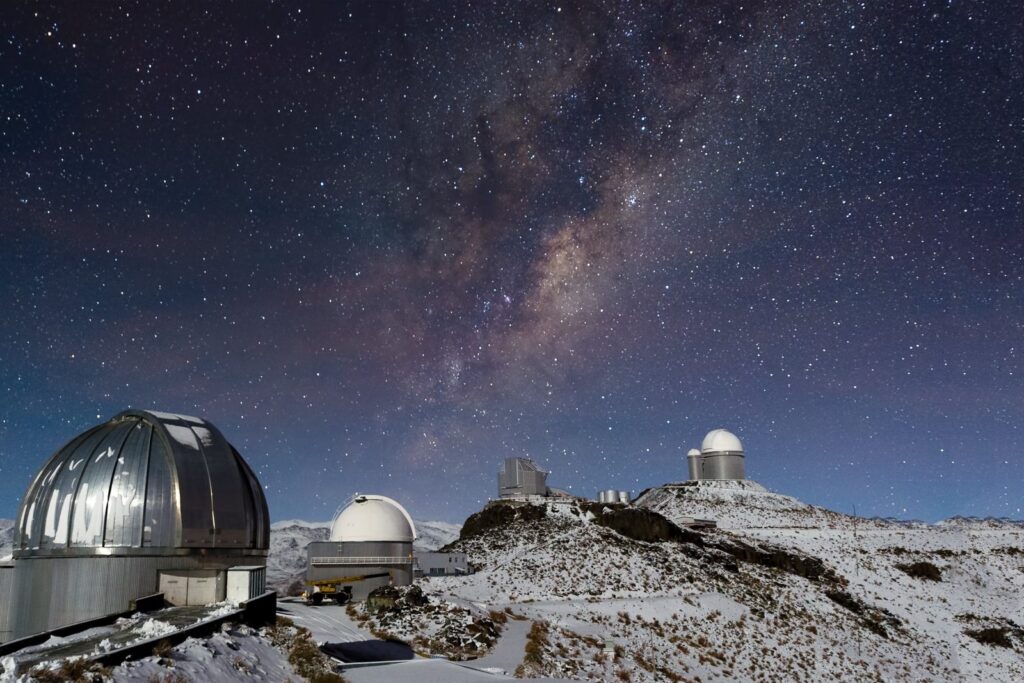
The Milky Way graces the Atacama Observatory at La Silla as night descends, yet astronomers face an escalating threat: the proliferation of satellite megaconstellations. The European Southern Observatory (ESO) predicts that over 1.7 million satellites could inhabit Earth's orbit in the future, posing significant challenges for ground-based and space-based astronomy. Presently, around 14,000 active satellites circle our planet, a number that has surged dramatically in recent years.
Companies like SpaceX, with its Starlink network, and Amazon, developing Project Kuiper, are chiefly responsible for this growth. Proposals from multiple operators, not just these two firms, envision a total of 1.7 million satellites. This projected increase in satellite count, driven by the need for improved global internet connectivity, could severely disrupt astronomical observations.
Satellites become problematic when they reflect sunlight toward Earth, creating bright trails across telescope images that obscure faint objects. As satellite numbers continue to expand without adequate regulations on brightness and visibility, the issue is expected to escalate dramatically. ESO data indicates that the number of orbiting satellites surpassed 14,000 by mid-2026, primarily due to the expansion of telecommunications systems.
To mitigate this, astronomers suggest limiting the number of satellites to around 100,000, with a more conservative preference for 50,000. This threshold aims to balance the need for satellite services with the preservation of clear skies for astronomical observations. SpaceX and Amazon are aggressively expanding their orbital networks, with SpaceX deploying thousands of Starlink satellites for global broadband internet and Amazon planning its own network.
The 1.7 million figure encompasses the cumulative potential of numerous proposed constellations and orbital systems, highlighting the cumulative impact on astronomical observations. While adjusting telescope schedules or employing software to remove some satellite trails offers some relief, these measures become less effective as satellites proliferate across the sky.
Bright satellites also contribute to an increase in overall night sky brightness, particularly around sunrise and sunset when they remain illuminated against a dark backdrop.
This brightness escalation around twilight hours could hinder the detection of faint astronomical objects, affecting both professional astronomers and amateur enthusiasts. Moreover, space telescopes face a unique challenge: satellite trails can contaminate crucial observations. Studies have shown that with a projected 1.8 million satellites by March 2026, nearly one-third of Hubble Space Telescope images and more than 96% of NASA's SPHEREx mission exposures could be affected.
Professionals must either discard compromised data or invest valuable time in acquiring replacements.
Astronomers emphasize that satellite networks should continue to develop, providing essential services. However, a race against orbital growth is underway, underscoring the urgent need for regulatory measures to protect the integrity of astronomical observations.
Written by urgent.news from Colombia One's reporting — not their text. Machine-written — may contain errors; check the original before relying on it.