The ICC is under attack. Ukraine’s special tribunal must not be allowed to fail
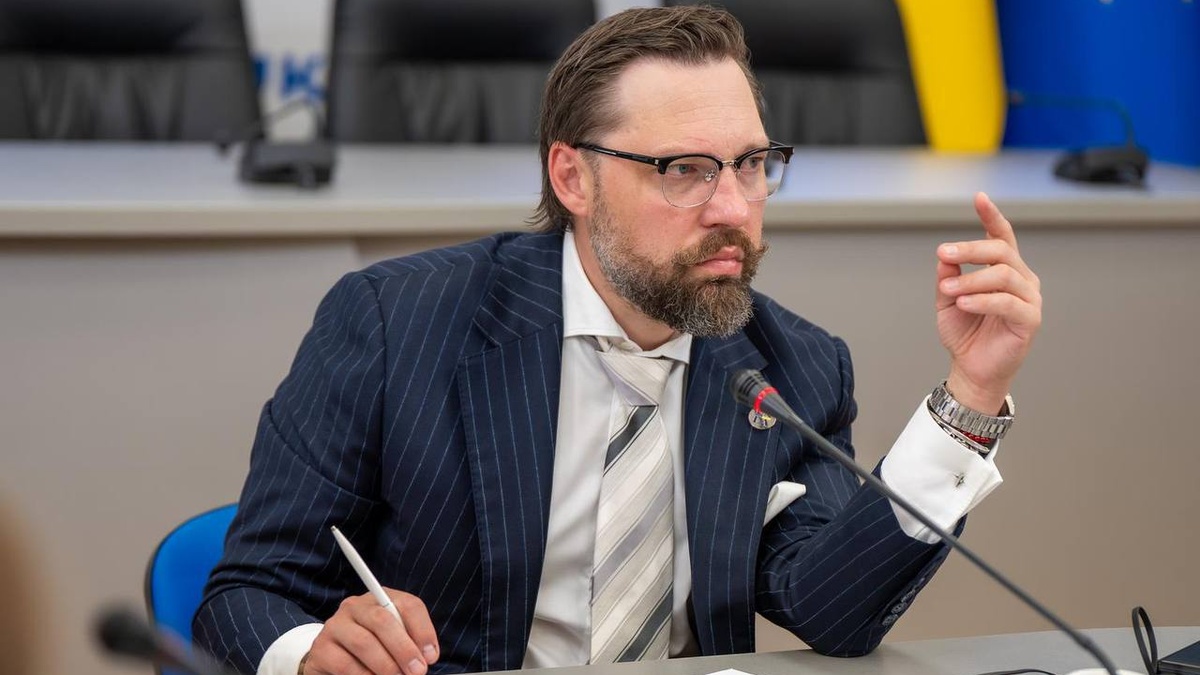
Oleksii Shevchuk, advocate, Finalist for Ukraine’s nomination to the International Criminal Court (ICC) as a Judge
The International Criminal Court (ICC) is facing unprecedented challenges as it battles to maintain its relevance and legitimacy in a world where powerful nations are increasingly resistant to accountability for their actions. As Ukraine prepares to establish a special tribunal for the crime of aggression, the fate of the ICC hangs in the balance, as the stakes extend far beyond the Ukrainian conflict.
Russia has been waging a long-standing campaign to undermine the ICC, employing political pressure, disinformation, and legal maneuvers to deny the court's jurisdiction over its own leaders. The recent removal of ICC prosecutor Karim Khan and the withdrawal of states like Mali, Niger, and Venezuela from the Rome Statute system only serve to intensify the pressure on the court.
This concerted effort to discredit the ICC is not an isolated incident. It is part of a larger struggle to determine whether international law applies when senior officials of a nuclear-armed state commit war crimes. Russia's objective is clear: to ensure that those responsible for the war against Ukraine, namely President Vladimir Putin and his political and military leadership, will never face justice.
The removal of the ICC prosecutor and the retreat from international criminal accountability are being exploited by those who seek to weaken the system at every turn. A court without enforcement capacity and a legitimacy repeatedly questioned by states and disinformation networks becomes an easy target for those who seek to ignore its decisions.
For Ukraine, the establishment of a special tribunal for the crime of aggression is an urgent necessity. The ICC's investigations into war crimes, crimes against humanity, and genocide are crucial for victims and for preserving evidence. However, the specific issue of the crime of aggression requires a dedicated tribunal focused on Russia's aggression against Ukraine, addressing the legal and political implications of the decision to launch an illegal war.
The stakes are incredibly high. If Russia succeeds in evading responsibility for aggression, it will send a dangerous message that international law is selectively applied and negotiable for stronger states. This outcome would embolden future aggressors, undermine the prohibition on the use of force, and weaken the foundational security architecture established after World War II.
Critics argue that a special tribunal for the crime of aggression would be selective, politically motivated, or incompatible with international law. However, these arguments should not be used as excuses for inaction or paralysis. Every international court operates within a political environment, but that does not mean its work is illegitimate.
The appropriate response is to ensure the tribunal has a clear legal basis, robust procedural guarantees, independent judges, fair-trial protections, and a credible institutional structure.
The debate surrounding the ICC also highlights a broader issue within international criminal justice: a persistent focus on African situations, which raises concerns about uneven application and the perception of a system that scrutinizes some regions while neglecting the conduct of powerful states. However, the answer to this problem is not to weaken the ICC or reduce its work further; it is to strengthen its universality by demonstrating that its principles apply to all perpetrators, regardless of geopolitical status.
Russia recognizes the political importance of this debate and seeks to build support for a narrative that portrays international criminal justice as a Western political instrument. By doing so, Moscow aims to undermine the legitimacy of accountability mechanisms and present them as selective, colonial, and ultimately disposable.
The international community must recognize the gravity of this situation and take decisive action to support the ICC and its efforts to hold leaders accountable for serious international crimes. The alternative is a world where impunity reigns, and the fundamental principles of justice and security are undermined. Ukraine's establishment of a special tribunal is not just about prosecuting war crimes; it is about sending a message that international law matters and that those who seek to change borders by force will be held accountable for their actions.
Written by urgent.news from Interfax-Ukraine's reporting — not their text. Machine-written — may contain errors; check the original before relying on it.