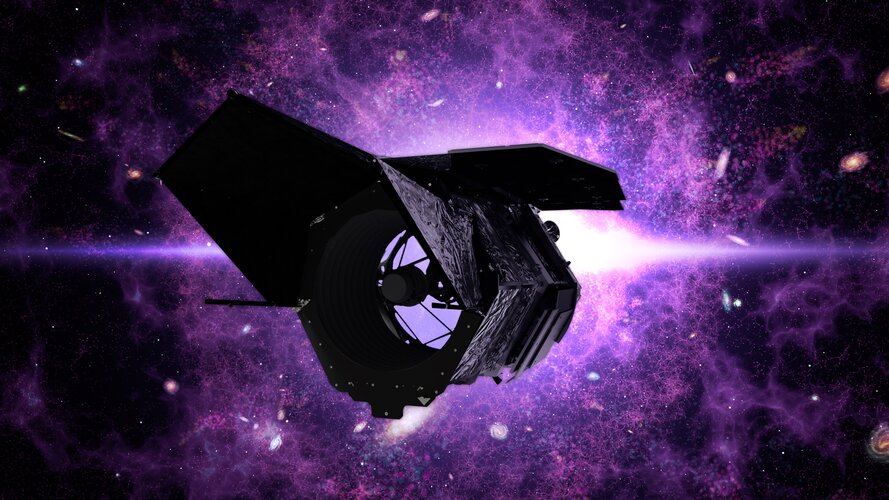
Roman Series: The Technology Inside NASA’s Newest Space Telescope
What makes NASA’s Nancy Grace Roman Space Telescope a powerful tool with an unprecedented wide view of the cosmos? NASA engineers who designed, built, and tested Roman pop the hood to explain the unique technology inside. Go inside the huge NASA clean room where Roman was built, and get an up-close look at the testing campaign that ensures Roman will succeed in the cold, inhospitable conditions…
In summer 2025, NASA's Nancy Grace Roman Space Telescope is expected to join other telescopes like Hubble and Webb in their study of the cosmos. This powerful tool will survey vast areas of space with an unprecedented wide view, collecting data on millions of galaxies and potentially discovering thousands of planets orbiting distant stars.
The telescope, named after astronomer Nancy Grace Roman, is currently being built and tested in a special clean room. At 42 feet long and 14 feet wide, Roman is large enough to require scaffolding for maintenance. The primary mirror, identical in size to Hubble's, measures 7.9 feet across or 2.4 meters.
Roman is not just a telescope but also a spacecraft, equipped with a propulsion system, fuel tanks, and a network of cables for electricity and communication. The final stage of testing involves joining the two main pieces of the telescope, which are currently being assembled separately. Once complete, Roman will be ready to embark on its mission to unravel some of the biggest mysteries of the universe.
Written by urgent.news from NASA Science's reporting — not their text. Machine-written — may contain errors; check the original before relying on it.
This story
This is one outlet's version. Read the fullest account.