Pakistan’s Kashmir Crackdown
A “sham” election sparked popular outrage in nominally autonomous Pakistan-administered Kashmir – and a corresponding security crackdown.
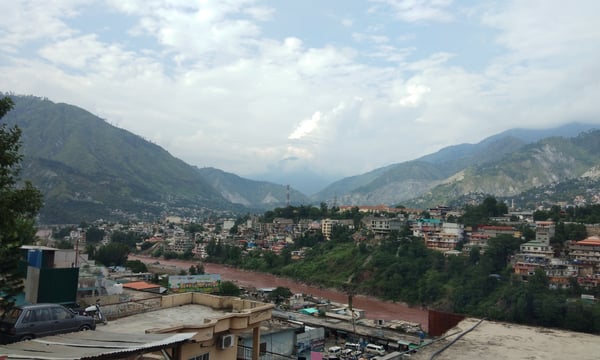
Pakistan-administered Kashmir, the capital of Muzaffarabad, has begun to recover from weeks of turmoil. The city, which houses government buildings and serves as the Prime Minister's Secretariat, is showing signs of a return to normal life. Mirpur, the region's second-largest city, has also resumed intracity public transportation.
However, the region remains under heavy security presence. Over the past three months, at least 80 people have died in the general election held between July 27 and August 10. The contentious election saw the Pakistan Muslim League-Nawaz (PML-N) and Pakistan People's Party (PPP) win, both parties also leading the ruling alliance in Islamabad.
Tariq Rehman, a schoolteacher in Kotli, criticized the election, stating, "The elections were a sham. No one who actually wants any betterment for the locals participated in the election. It is not an election when all the votes go to one party: the Pakistan army." Pakistan's military has controlled the region since the 1947 partition, with both India and Pakistan administering parts of Jammu and Kashmir and claiming the territory entirely.
In August 2019, India revoked Article 370, removing the special status of Indian-administered Kashmir. Pakistan-administered Kashmir has been debating its status, with some seeking autonomy and others wanting it to be a part of Pakistan. The locals have been in a state of uncertainty about their relationship with the country.
Written by urgent.news from The Diplomat's reporting — not their text. Machine-written — may contain errors; check the original before relying on it.