On this day in space! Aug. 25, 1997: NASA launches Advanced Composition Explorer to track solar wind and so much more
On Aug. 25, 1997, NASA launched the Advanced Composition Explorer, or ACE satellite to study energetic particles traveling through space, including solar wind and space weather. Here's why it mattered.
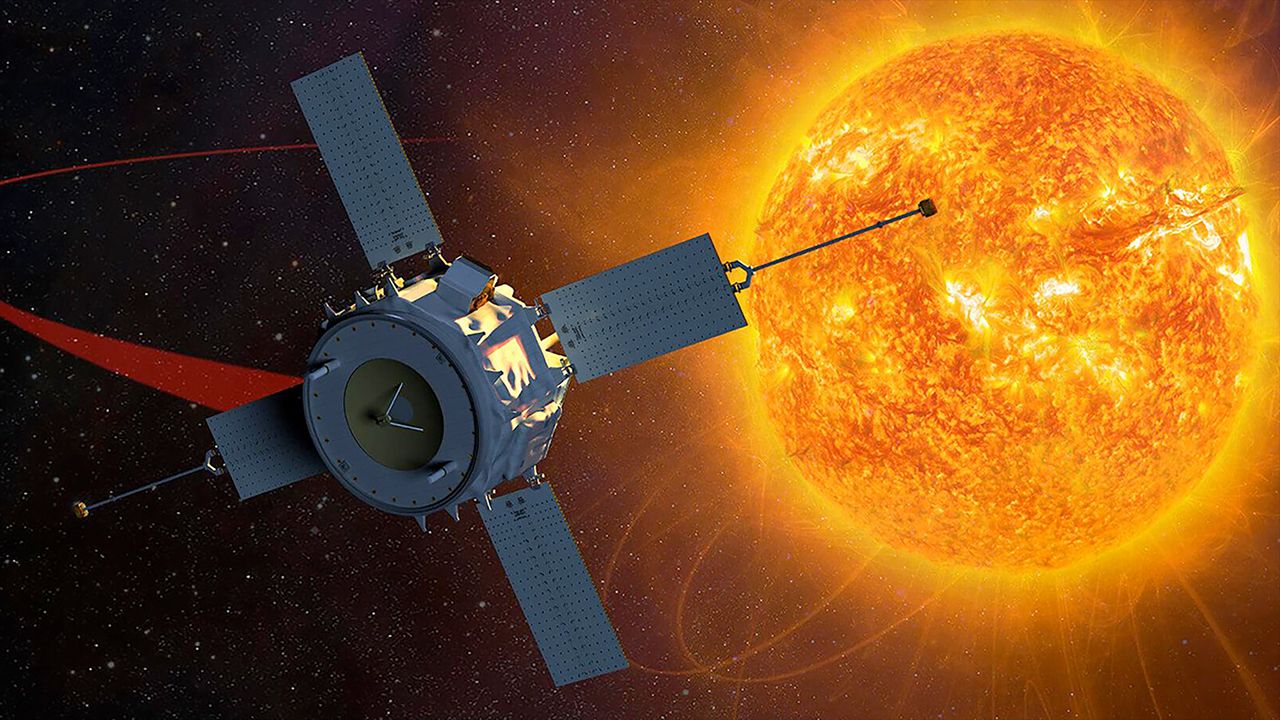
On this day in August 1997, NASA successfully launched the Advanced Composition Explorer (ACE) satellite, which was tasked with studying energetic particles that travel through space. The spacecraft embarked on its journey from the Kennedy Space Center in Florida, hitching a ride on a Delta II rocket. After three and a half months of traveling through space, the ACE satellite reached its designated orbital post near the L1 Lagrangian point, a region of gravitational equilibrium between Earth and the sun.
From this position, the spacecraft has been continuously monitoring the solar wind, a stream of accelerated particles originating from the sun, providing round-the-clock coverage of these particles. This constant observation allows scientists to anticipate potential geomagnetic storms that could disrupt communication satellites and power grids on Earth.
The ACE satellite's mission has been remarkably enduring, lasting 29 years as of today, far surpassing its initial five-year projected lifespan. Its nine primary instruments are significantly more advanced than any sensors that were used in space when the satellite launched back in 1997. In 2005, one of these instruments, the Solar Energetic Particle Ionic Charge Analyzer, ceased transmitting data; however, it remains the only instrument lost during the spacecraft's lifespan.
ACE serves as a crucial component of NASA's early-warning system for incoming space weather, enabling early detection and mitigation of potential threats.
Written by urgent.news from Space.com's reporting — not their text. Machine-written — may contain errors; check the original before relying on it.