Nvidia announces ray-traced Nanite, native anti-cheat, and DLSS 4.5 at Gamescom 2026
Nvidia used Gamescom to detail a wave of developer-facing updates across DLSS, RTX, and its GeForce Now cloud platform. Read more
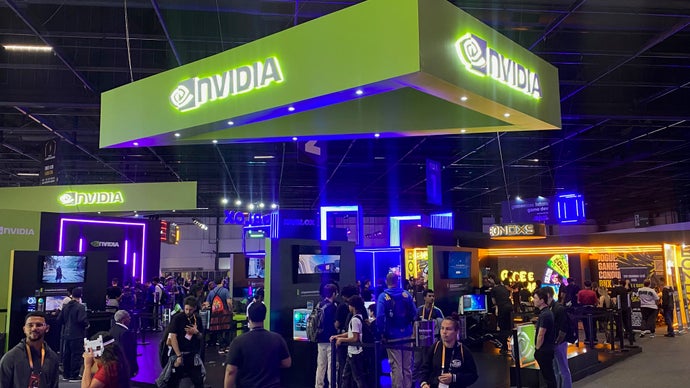
At Gamescom 2026, Nvidia unveiled a series of developer-focused enhancements to its DLSS, RTX, and GeForce Now technologies. The most notable update is DLSS 4.5 Ray Reconstruction, which utilizes a second-generation transformer model to enhance image quality in ray-traced games by combining denoising and Super Resolution into a single model.
This feature is available on all GeForce RTX GPUs via the Nvidia app and supports 30 titles, including Cyberpunk 2077, Alan Wake 2, and Call of Duty: Black Ops 7. Developers can integrate DLSS 4.5 into their own games through official updates.
Nvidia's CEO, Jensen Huang, addressed criticism of DLSS 5, which adds an AI sheen to character models. Huang argued that DLSS 5 fuses controllability of geometry and textures with generative AI while preserving direct control with developers. The company announced support from major publishers such as Bethesda, Capcom, NetEase, NCSoft, Tencent, Ubisoft, and Warner Bros Games for DLSS 5.
Nvidia also expanded its RTX Spark platform, which combines DLSS and Reflex with on-device AI agents, to include Electronic Arts, Embark Studios, and Ubisoft. These publishers will launch titles like EA Sports F1 25, Apex Legends, and Arc Raiders on the platform. Nvidia collaborated with EA to integrate its Javelin anti-cheat system into GeForce Now. The company's hardware partners showcased new displays, such as AGON by AOC's first 5K G-SYNC Pulsar monitor.
Written by urgent.news from GamesIndustry's reporting — not their text. Machine-written — may contain errors; check the original before relying on it.
This story
This is one outlet's version. Read the fullest account.
- Nvidia releases DLSS 4.5 Ray Reconstruction, available now in 30 games techspot.com
- Nvidia DLSS 4.5 Ray Reconstruction, out now, ups shadow quality and more accurately illuminates trash bags rockpapershotgun.com
- I tested NVIDIA’s new DLSS 4.5 Ray Reconstruction — it finally fixes path tracing’s biggest flaw, but here’s the reality check tomsguide.com
- DLSS 4.5 Ray Reconstruction is a definite improvement but path traced fidelity is still not a 100% solved issue pcgamer.com