(LEAD) Ruling party, gov't stress active fiscal policy to boost growth in 2027 budget proposal
SEOUL, Aug. 25 (Yonhap) -- The ruling Democratic Party (DP) and the government o...
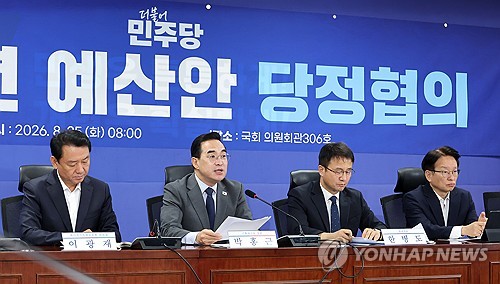
The ruling Democratic Party and government in South Korea have emphasized the importance of using fiscal policy and investment to stimulate future industries in the upcoming 2027 budget proposal, which is projected to be the highest in history. Floor leader Han Byung-do urged the government to strategically allocate the budget to support leadership in future industries, prioritizing areas that benefit the youth, regional growth, and emerging sectors.
President Lee Jae Myung revealed that the government plans to create a record-high budget of 800 trillion won ($540 billion) for 2027, using the additional tax revenue from the semiconductor industry boom to fund a "future response fund" for investment in future industries, young generation policies, and regional development. The DP's chief policymaker, Rep. Kwon Chil-seung, advocated for strategic investments in artificial intelligence to help South Korea become one of the world's top three AI powers.
The 2027 budget proposal aims to play an active fiscal role in the country's growth and transformation, with investments in key sectors like bio, culture, defense, and energy. The government will focus on supporting economic growth through active fiscal management to create an "irreplaceable South Korea." The proposed budget will include funding for the AI sector and the "three megaprojects" initiative, increased support for young people, addressing polarization, enhancing public safety, and boosting future growth engines such as aerospace.
The government plans to increase investment in aerospace research and development to achieve a lunar landing by 2030 and secure 10,000 graphics processing units to develop frontier-level AI models. Additionally, the budget proposal features record-high subsidies for electric vehicles, support for nuclear-powered submarines, and full tuition support for students at regional national universities.
Written by urgent.news from Yonhap News's reporting — not their text. Machine-written — may contain errors; check the original before relying on it.
This story
This is one outlet's version. Read the fullest account.