IMF's Georgieva says global economy weathering energy shock, sees fiscal concerns
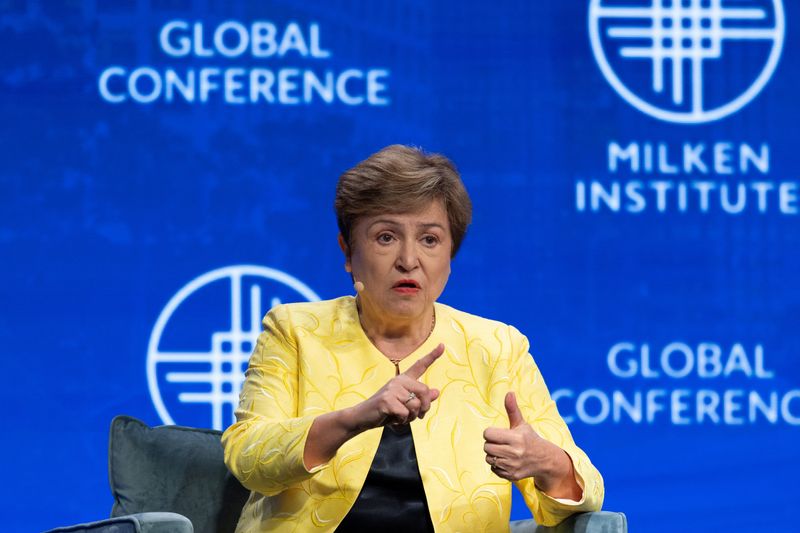
Kristalina Georgieva, Managing Director of the International Monetary Fund, stated on Tuesday that the global economy has withstood the Iran war energy shock better than anticipated. However, she expressed concerns over worsening fiscal conditions in certain nations, evident through escalating bond yields and a stagnant disinflation process.
During a briefing before the upcoming Group of 20 finance leaders meeting in Asheville, North Carolina, Georgieva highlighted a "tug of war" between the adverse Gulf energy supply shock and growth incentives from the artificial intelligence investment surge, extending beyond the United States. She characterized the risks to the global outlook as more balanced compared to April, yet still leaning towards the negative due to increasing fiscal pressures and the likelihood that central banks may maintain tight monetary policy to curb inflation.
The global economy is struggling against significant headwinds involving high debt levels, persistent inflation, and trade tensions. Still, it has managed the energy shock resulting from the closure of the Strait of Hormuz better than initially anticipated, thanks to a mix of factors, including oil and gas reserves depletion by many countries, rise in non-Gulf energy supplies, reduced energy demand, increased renewable energy capacities, and a resurgence of coal power generation in some areas.
The artificial intelligence investment in the U.S. is sustaining corporate earnings and consumer spending, with other countries accelerating data-center construction and AI hardware supplies, Georgieva noted. She did not provide any new forecasts in her assessment of global economic conditions. In July, the IMF had reduced its 2026 global growth forecast to a slow 3.0%, warning of further downside risks from the Middle East conflict, trade fragmentation, and potential AI unpredictability.
It will next revise its global growth forecast in mid-October at the IMF and World Bank annual meetings in Bangkok. Georgieva cautioned against complacency among policymakers amid stagnant Brent crude oil prices hovering between $80 and $90 per barrel since mid-June, far below their spring highs above $118. She emphasized that the energy shock is ongoing.
A resurgence in oil prices could exacerbate inflation, compelling central banks to maintain a restrictive policy stance with consequences on debt service costs and economic activity. Georgieva underscored that all countries must address their fiscal issues and devise and present credible plans to ensure their debt and deficits are on a sustainable course.
She refrained from singling out specific countries requiring fiscal consolidation. However, her remarks followed the recent surge in U.S. Treasury 30-year bond yields to 19-year peaks, prompting Treasury Secretary Scott Bessent to announce a surprise doubling of long bond buyback sizes to curb borrowing costs. The IMF has consistently urged Washington to reduce its growing fiscal deficits, which would also alleviate the U.S. trade and current account deficits.
Georgieva stressed that central banks must remain laser-focused on their price stability mandates despite ongoing inflation risks, even though she expressed concern that tight monetary policy might dampen growth. She also advocated for countries to tackle excess global imbalances causing trade tensions. While she did not name specific nations, Georgieva has previously urged China to shift its growth model from export-driven, flood markets with cheap goods, to one driven by domestic consumer demand.
A more balanced economy is a stronger global economy, she asserted, adding that this is more challenging to achieve in a more fragmented world. The IMF is refining its model for evaluating external balances, Georgieva said, and will conduct a more in-depth analysis of the drivers of these imbalances, encompassing macroeconomic trends, trade, and industrial policy in a series of upcoming papers.
Written by urgent.news from Yahoo Finance's reporting — not their text. Machine-written — may contain errors; check the original before relying on it.
This story
This is one outlet's version. Read the fullest account.
- IMF's Georgieva says global economy weathering energy shock, sees fiscal concerns brecorder.com
- IMF's Georgieva says global economy weathering energy shock, sees fiscal concern... thejakartapost.com
- IMF’s Georgieva says global economy weathering energy shock, sees fiscal concerns straitstimes.com
- IMF’s Georgieva says global economy weathering energy shock, sees fiscal concerns investing.com