Georgia island hogs descended from Spanish pigs now help scientists study obesity
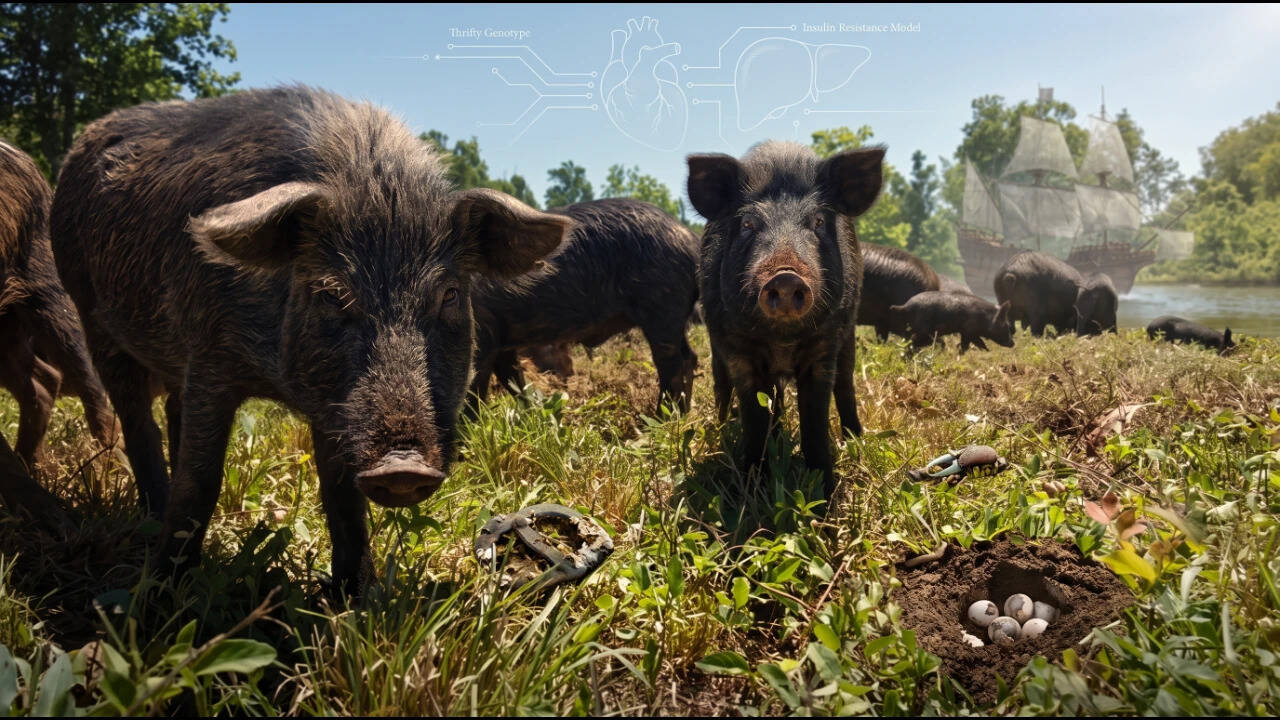
Spanish explorers brought pigs to Ossabaw Island, off the coast of Georgia, centuries ago for food supply. Over time, these pigs evolved unique traits due to the island's seasonal food scarcity and abundance. These adaptations, including a high capacity for fat storage, have made Ossabaw hogs valuable to scientists studying obesity, metabolic syndrome, and related conditions.
While the pigs' ancestry may include some Canary Islands influence, their primary lineage can be traced back to Spanish explorers. The isolated island population has evolved smaller size and increased fat storage abilities, traits that help them survive feast and famine cycles but can lead to obesity in captivity. Researchers study Ossabaw pigs to better understand human metabolic diseases, as their biology mirrors certain aspects of human physiology that can develop under excess calorie consumption.
Written by urgent.news from Times of India's reporting — not their text. Machine-written — may contain errors; check the original before relying on it.