From an unlikely friendship to a leopard’s clumsy maneuver: the world’s leading wildlife photography competition reveals a sneak peek of this year's extraordinary images
The Wildlife Photographer of the Year competition shares insights in the 2026 edition that received record-breaking subissions from photographers around the world
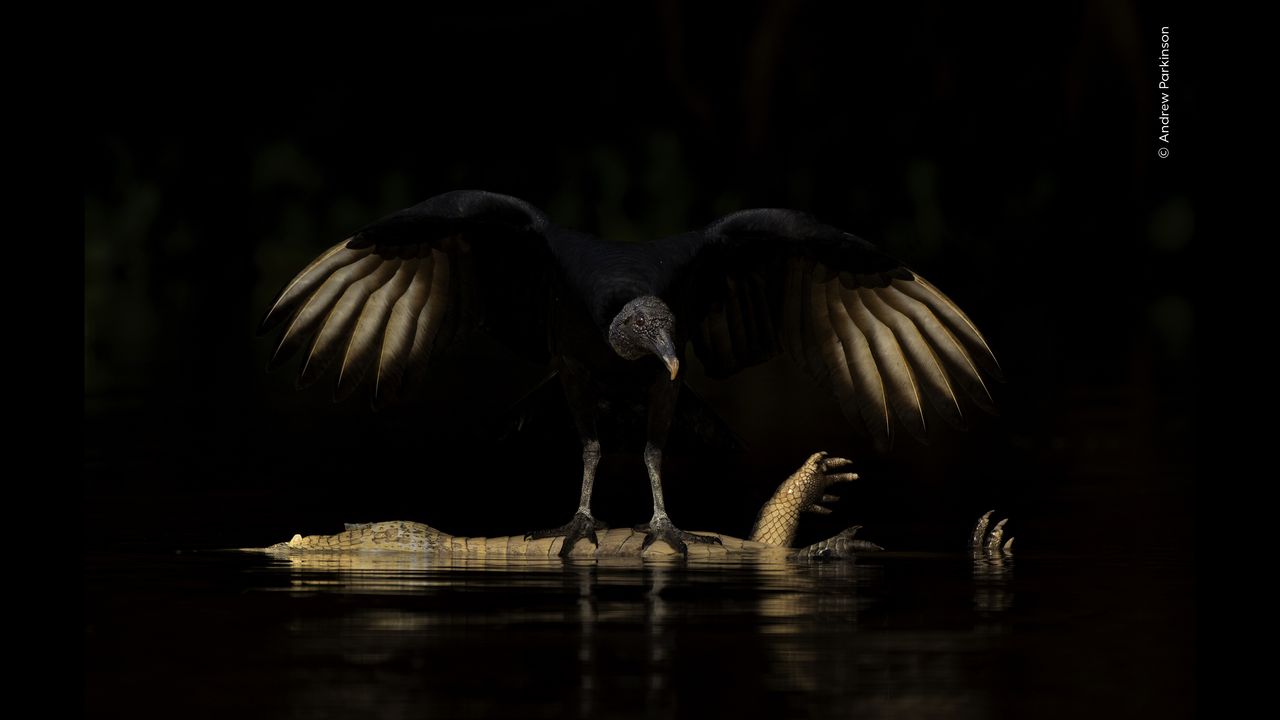
In its 62nd year, the Wildlife Photographer of the Year competition, organized by the Natural History Museum in London, has just unveiled a sneak peek of its most outstanding photographs from around the globe. This year, over 65,000 images were submitted for consideration.
One standout entry is "Up a Tree without a Squirrel" by Allegra Hutton from the USA. This image captures a remarkable moment in the Okavango Delta, Botswana, when a leopard's clumsy attempt to stalk a rabbit causes it to retreat awkwardly, with the squirrel ultimately escaping to safety. Hutton used a Sony A7R V camera with a 200-600mm lens to capture this image at 467mm, with a shutter speed of 1/640 at f/11 and an ISO of 4000.
Another fascinating photograph is "Calm Amid the Storm" by Shane Gross from Canada, showcasing the serene beauty of D’Arros Island in Seychelles. Gross used a Nikon D500 camera with a Tokina AT-X107 fisheye lens to photograph a school of fish near the shore, flipping the camera upside down to aid buoyancy distribution and approach the fish slowly. The image was taken at 1/200 at f/16 and ISO 500.
Jens Cullmann from Germany captured "Split-Second Escape" of a tadpole's rapid escape from a predator in Central Kalahari Game Reserve, Botswana. Cullmann used a Canon EOS R3 camera with a 100-300mm lens to photograph the young bullfrogs, which he discovered after heavy rains the previous year. He spent two weeks observing the frogs as they feasted on any moving creature.
Gil Wizen from Israel/Canada won the Highly Commended award with "Hidden Dragon," showcasing an incredibly small dragon katydid, only 15 millimeters in length, found in the Wildsumaco Biological Station, Napo Province, Ecuador. Wizen used a Canon EOS 7D Mark II camera with a Canon EF 100mm macro lens to capture this elusive creature, which posed a challenge due to its tiny size and the need to distinguish it from the lichen it was camouflaged against.
Written by urgent.news from Digital Camera World's reporting — not their text. Machine-written — may contain errors; check the original before relying on it.
This story
This is one outlet's version. Read the fullest account.