DuckDuckGo survey highlights how much personal information users share with AI
Private search company DuckDuckGo has released a new survey highlighting just how much personal information people are sharing with AI chatbots, and how little many understand about what happens to those conversations. Here are the details.
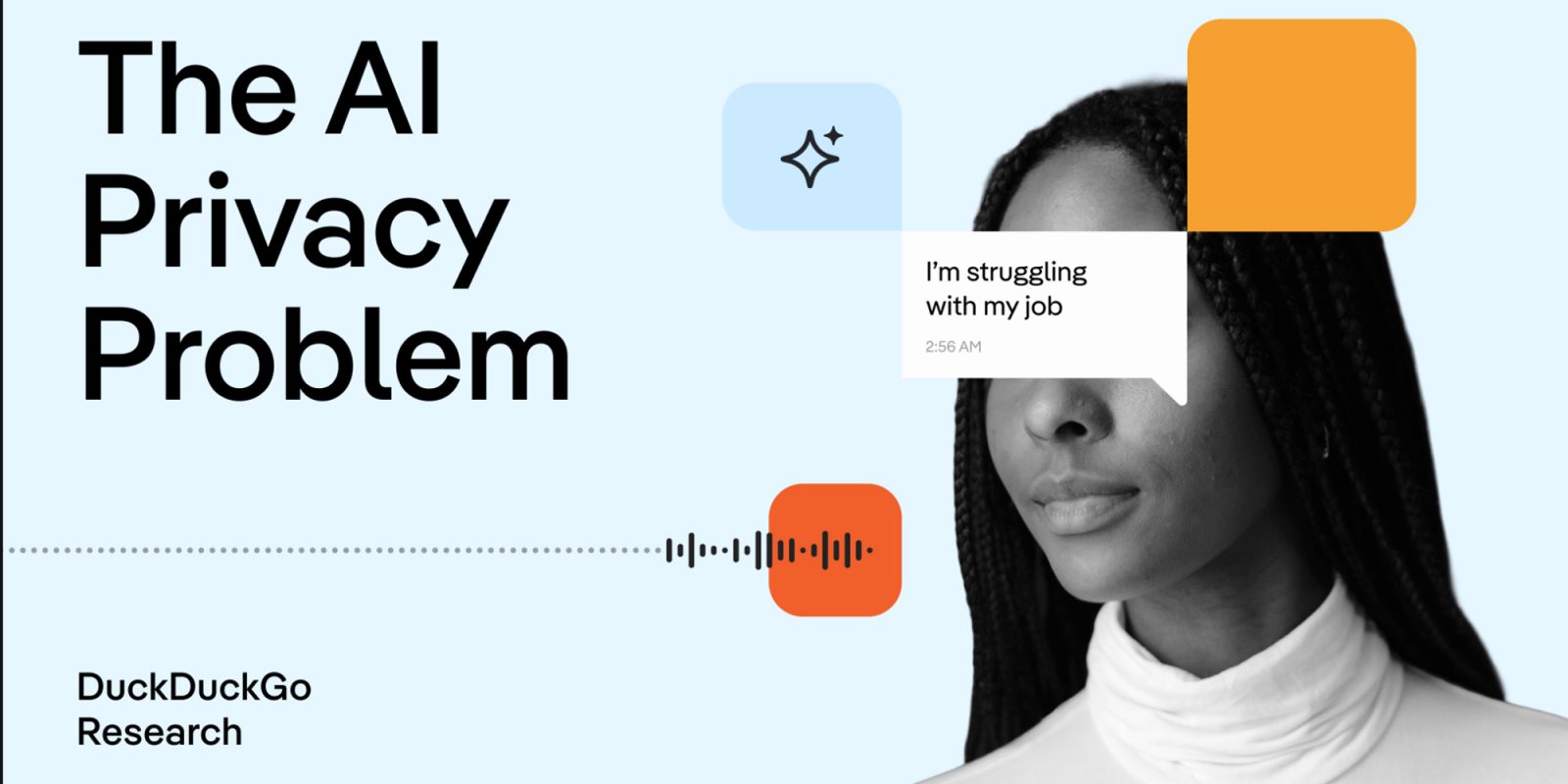
DuckDuckGo has released a survey that sheds light on the vast amounts of personal information people are sharing with AI chatbots, as well as the limited understanding of what happens to those conversations. The survey reveals several concerning aspects of AI chatbot usage. Nearly one in three users have shared something with an AI that they would not confide in friends, family, colleagues, or medical professionals.
For AI enthusiasts, this number increases to 56%. AI chatbots often provide a non-judgmental space for users to share personal details. However, a typical web search involves only a few words, whereas AI chatbots allow for more extensive and personal input. A majority of the survey respondents, 53%, were unaware that most chatbots use conversations for training by default, while only 25% knew that AI chats can be subpoenaed by law enforcement.
Out of the 2,000 U.S. adults surveyed, 58% expressed discomfort with the idea of their conversations being used to train AI, with 30% describing themselves as "very uncomfortable." Interestingly, parents with children at home confide in AI almost twice as much as non-parents. Specifically, 43% of parents have shared something they've never told anyone else with an AI, compared to 25% of non-parents.
Despite this, the survey found that people generally have more trust in large AI companies than in the U.S. government to protect their data. However, skepticism remains high, with 39% of respondents having no trust in large AI companies and 48% expressing the same level of skepticism towards the government. DuckDuckGo emphasizes that users still have the opportunity to change their approach to AI privacy, especially as chatbot habits are still relatively new.
Users should be cautious not to think that their information is already out there, as the most valuable information they can share with Big Tech is their next question, not the questions from the past. The company recommends switching to more private services online and using AI chatbots with clearer and more transparent data-handling policies to protect their privacy.
Written by urgent.news from 9to5Mac's reporting — not their text. Machine-written — may contain errors; check the original before relying on it.