C Raja Mohan writes: India’s Central Asia strategy needs less romance, more realism
In 1991, the collapse of the Soviet Union led to the formation of five new Central Asian republics, reigniting India's interest in reconnecting with the region. However, India's limited capabilities and geopolitical challenges have hindered this engagement. In 2006, the United States restructured the State Department to create a South and Central Asian bureau, aiming to establish Afghanistan as a bridge between Central Asia and South Asia.
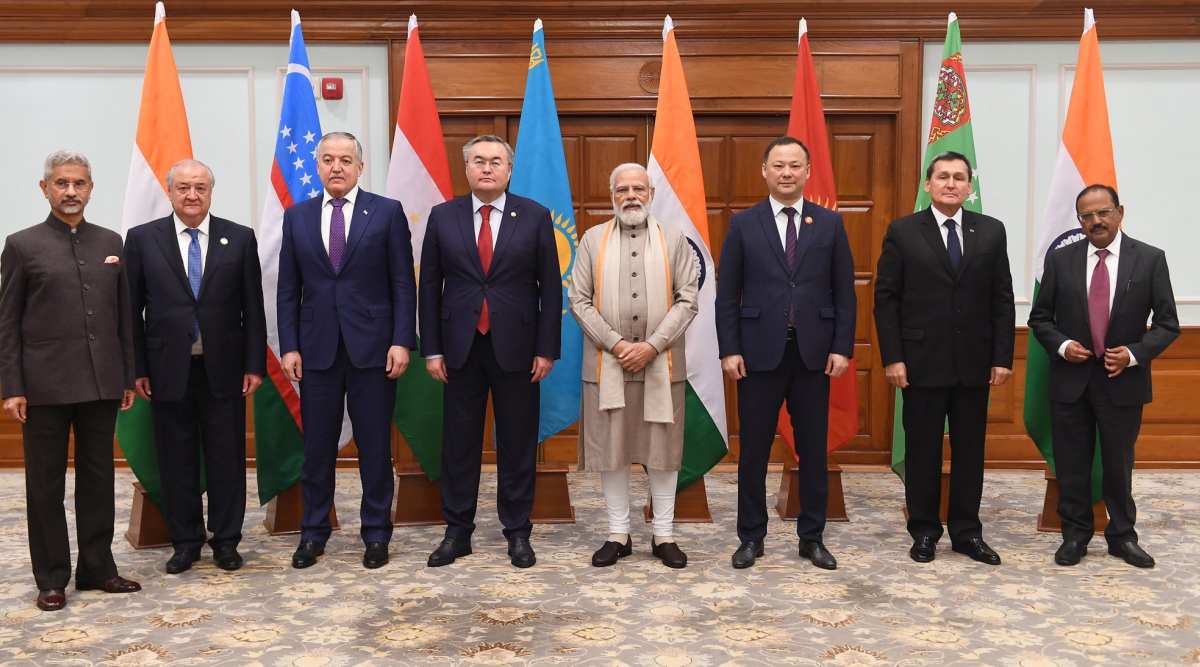
This vision has faced difficulties due to Afghanistan's internal conflicts and the ongoing tensions between India and Pakistan. Prime Minister Narendra Modi's recent visit to Central Asia highlights several key trends. Central Asia is becoming more politically autonomous, with the five republics forming a friendship treaty and seeking to establish closer ties with the Caucasus and Türkiye.
The region's leaders are engaging with a range of powers, including the European Union, China, Russia, the United States, and Japan, rather than relying on a single great power. Additionally, Central Asia is increasingly connected to the Greater Middle East, with Kazakhstan joining the Abraham Accords and Türkiye expanding its influence through the Organisation of Turkic States.
Finally, the Afghan issue, once a significant concern, has diminished, as Central Asian states have adopted a more pragmatic approach to the Taliban. For India, these developments present both opportunities and challenges. While India enjoys goodwill in the region, its lack of direct access and geopolitical constraints limit its potential.
India must focus on building practical economic partnerships and considering diplomatic flexibility to improve its position. Prime Minister Modi's upcoming visit should emphasize modest, sustained efforts to strengthen India's limited connectivity and diplomatic engagement in Central Asia.
Written by urgent.news from The Indian Express's reporting — not their text. Machine-written — may contain errors; check the original before relying on it.