Buying a Robotic Pool Cleaner Based on Suction Power Is a Mistake, According to Our Lab Tests
Some robot pool cleaners offer huge suction power and massive battery life. Our lab data shows why those features don’t matter as much as you’d think.
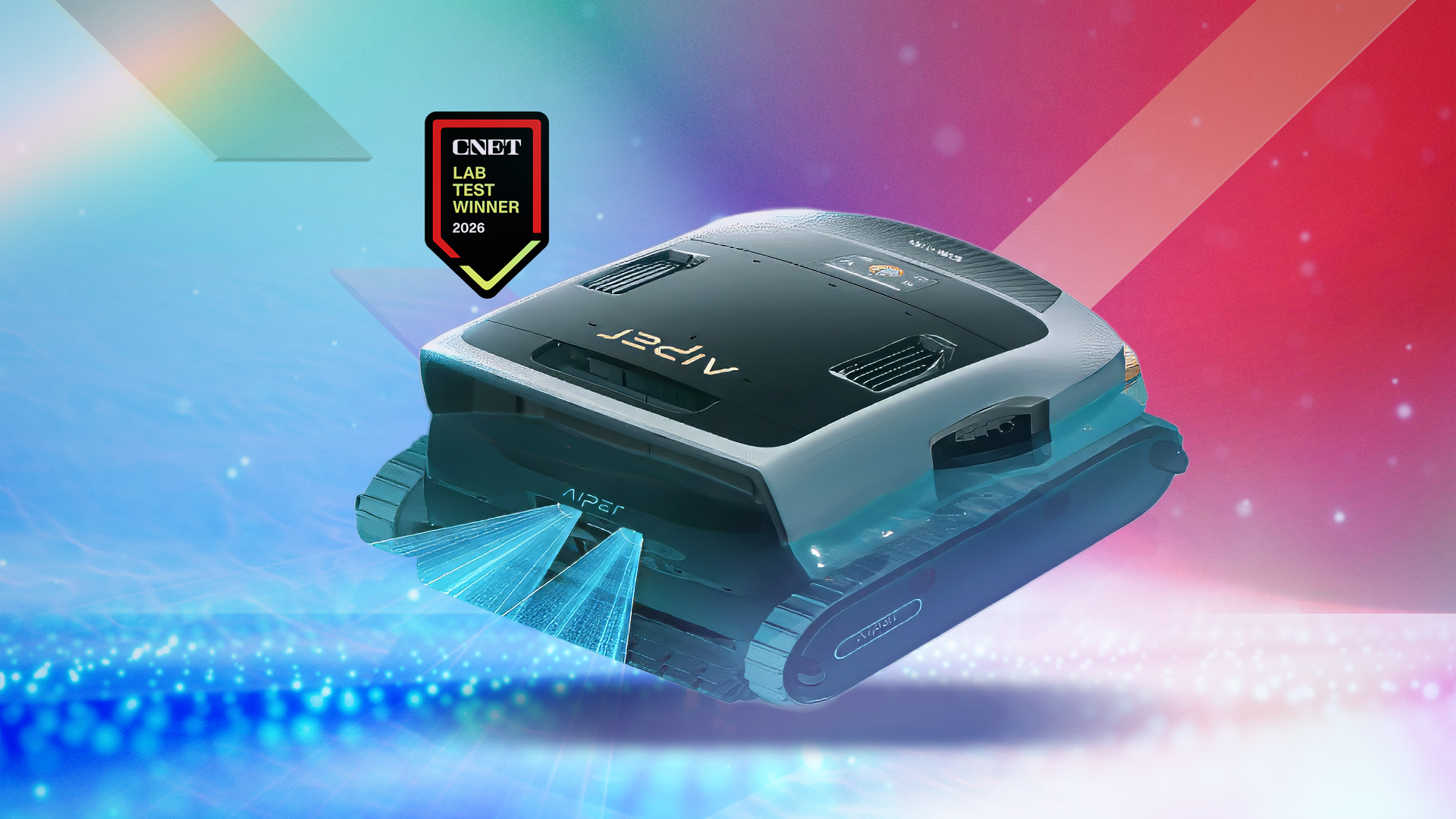
When selecting a robotic pool cleaner, it might be tempting to prioritize suction power as the primary metric. However, our lab tests indicate that this approach could be misguided. Historically, suction power and battery life have been the key factors considered in evaluating robot pool cleaners. However, advancements in smart navigation, cameras, and sensors, often referred to as AI, have shifted the focus to more efficient cleaning methods.
During our tests, we discovered that newer, more efficient robot pool vacuums are capable of picking up debris strategically, allowing them to complete the task in less time with a smaller battery and motor. This not only reduces the weight and cost of the robot but also makes the machine more effective.
In our testing, we measured the efficiency of each robotic pool cleaner by running it on a full charge in a 14,000-gallon test pool filled with 100 pebbles and 30 leaves. We timed how long each robot operated on a full charge, and then counted the amount of debris it captured in the basket. Next, we prorated the pickup performance with the time the robot spent cleaning to determine an efficiency score that represents the number of pieces of debris a robotic pool cleaner collects per hour.
Our top performers were the Aiper Scuba V3, with AI detection, the Aiper Scuba X1 Pro Max, and the Beatbot Aquasense Pro. The Aiper Scuba V3 was the most efficient, picking up 125 pieces of debris in just 2 hours and 48 minutes. Despite its lower suction power and battery life compared to other models, its ability to detect debris using cameras, sensors, and AI allowed it to be far more targeted in its cleaning, resulting in a superior efficiency score of 44.64 items per hour.
The Aiper Scuba X1 Pro Max, while requiring more time to complete the job, left the pool with zero pebbles and cleared every leaf from the bottom. It achieved an efficiency score of 28.36 items per hour. The Beatbot Aquasense Pro, another powerful pool cleaner with a large battery, performed well, clearing all the leaves and leaving only three stones. However, it took a relatively longer time of 4 hours and 40 minutes, resulting in an efficiency score of 27.21 items picked up per hour.
The Polaris Freedom, another top performer, picked up 107 items in 2 hours and 25 minutes, with an efficiency score of 44.28 items per hour. However, it left behind 23 items, including 10 leaves and 13 pebbles, which is a noticeable dip in performance compared to the top two models.
Our tests revealed that three robot pool cleaners stood out in total pickup by successfully picking up all 30 leaves and at least 95 pebbles, which we considered a perfect or near-perfect performance. Among these top performers, the Aiper Scuba V3 demonstrated the most impressive efficiency rating, despite having lower GPH and battery life. It picked up 125 of the 130 pieces of debris in just 2 hours and 48 minutes, thanks to its AI-driven targeted cleaning capabilities.
Written by urgent.news from CNET's reporting — not their text. Machine-written — may contain errors; check the original before relying on it.