Argentina acknowledges the Magellan treaties and seeks to defuse friction with Chile
Argentina's foreign ministry issued a statement on Tuesday reaffirming that its position on the Strait of Magellan is the one established by the 1881 Boundary Treaty and the 1984 Treaty of Peace and Friendship, a day after Chile announced it would send a note of protest over remarks by the head of the Argentine Air Force General Staff.
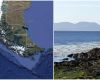
On Tuesday, Argentina's foreign ministry clarified its stance on the Strait of Magellan, reaffirming the terms set forth by the 1881 Boundary Treaty and the 1984 Treaty of Peace and Friendship. This announcement came a day after Chile declared it would send a protest note following remarks made by Argentina's head of the Air Force General Staff. According to the foreign ministry, both treaties are legally binding and definitive for Argentina.
In a statement, Pablo Quirno, head of the ministry, noted that the Argentine Republic considers the treaties to be final and without dispute. The document, titled "Argentina's position on the Strait of Magellan and cooperation with Chile in the South Atlantic and Antarctica," does not mention Brigadier General Gustavo Javier Valverde, whose comments sparked the recent diplomatic tension.
Valverde's assertion in a YouTube interview that "Magellan, the south, the Drake, all of that is sovereignty" and the need to "maintain a presence" in the area as a "bioceanic key" prompted Chile to interpret his words as a threat to their nation's sovereignty over the passage. The Argentine statement emphasized the continent's southern extremity as part of defending its rights concerning the Malvinas Question, the South Atlantic, and Antarctica—areas of increasing strategic importance due to their natural resources and role in global maritime routes and supply chains.
The statement also reiterated the "strategic value of cooperation with Chile," listing several areas of mutual collaboration. These include the recognition of each other's Antarctic claims, shared administration of protected zones, a combined naval patrol that has been ongoing for over two decades, and a proposal for a marine protected area in the western Antarctic Peninsula.
The 1881 treaty established Chile's sovereignty over the Strait of Magellan while ensuring perpetual neutrality, allowing free navigation for all vessels. The 1984 treaty, signed in 1984, solidified the southern boundaries and resolved disputes over the eastern mouth of the passage. A precedent for diplomatic resolution exists: in 2021, under President Alberto Fernández, Argentina proposed strengthening "exploration, study, and joint control" of the Strait of Magellan and the Drake Sea.
In March 2025, the Milei administration acknowledged the previous interpretation as erroneous and committed to rectifying it.
The recent diplomatic friction is notable as it marks the first disagreement between the governments of José Antonio Kast, who assumed office in March, and Chile’s Javier Milei. Despite sharing over 5,000 kilometers of land border, the two countries have traditionally maintained a close political relationship.
Written by urgent.news from MercoPress's reporting — not their text. Machine-written — may contain errors; check the original before relying on it.
This story
This is one outlet's version. Read the fullest account.