Africa’s Wild Dogs Are the Most Hated Carnivores on the Continent. Here’s How Some Conservationists Are Saving Them Anyway.
Meet the team that closely monitors the playful canines, who need help to form diverse packs and stop heir numbers from dwindling
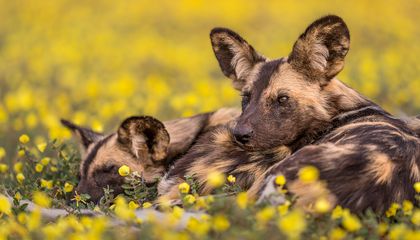
In a remote corner of South Africa, two white pickup trucks sit idly beside a highway, their cargo consisting of three African wild dog sisters. These remarkable canines have journeyed thousands of miles from their previous home in Mozambique, a nation that once stood divided by a brutal civil war. The Endangered Wildlife Trust's (EWT) wild dog range expansion program has played a pivotal role in saving these magnificent creatures from the brink of extinction.
The EWT's initiative, initiated in 1997, has significantly bolstered the global wild dog population, introducing more than 344 individuals to reserves in countries where the species had been absent for decades. Now, the organization is bringing these spirited sisters to South Africa, where they will reside in a specially designed enclosure, or boma, before being released into the wild.
Despite their small numbers—only 6,600 wild dogs remain globally—the animals are among the world's most endangered species. Their striking appearance, characterized by distinct black, white, and gold markings, belies the challenges they face in their natural habitat. Wild dogs are the most successful hunters in Africa, boasting an impressive 80 percent kill rate, far surpassing that of their close relative, the lion, which only manages to kill 30 percent of its prey.
However, these remarkable canines are also among the most reviled, with private game reserves owners and subsistence farmers often resorting to lethal measures to protect their livestock from the perceived threat. According to a 2021 study, human factors such as direct killing and diseases from domestic dogs account for 44 percent of all wild dog deaths in Kenya, Botswana, and Zimbabwe over a 15-year period.
Yet, beneath the surface of their fearsome reputation lies a remarkable animal with a unique social structure and hunting behavior. Wild dogs are known for their playful antics, often playing with balls of elephant dung and demonstrating a level of social interaction that sets them apart from other canids. They also exhibit a unique form of cooperation, allowing their pups to feed first and regurgitating food for injured or sick pack members.
The EWT's efforts to reintroduce wild dogs to South Africa highlight the importance of international collaboration in conservation efforts. By working with nature reserves across the country, the organization aims to create new, genetically diverse packs and expand the wild dog population's range. These efforts are crucial in ensuring the survival of this extraordinary species, which holds a special place in the hearts of conservationists around the world.
Written by urgent.news from Smithsonian's reporting — not their text. Machine-written — may contain errors; check the original before relying on it.