Why stars that survive close black hole encounters produce dimmer flares
Astronomers have made fascinating observations of stars that are caught in a gravitational dance with supermassive black holes. As these stars approach, they lose material in a series of light bursts that fade over time. New research indicates that the stars' rapid initial spin is key to this phenomenon, as it limits excessive rotation during subsequent encounters with the black holes.
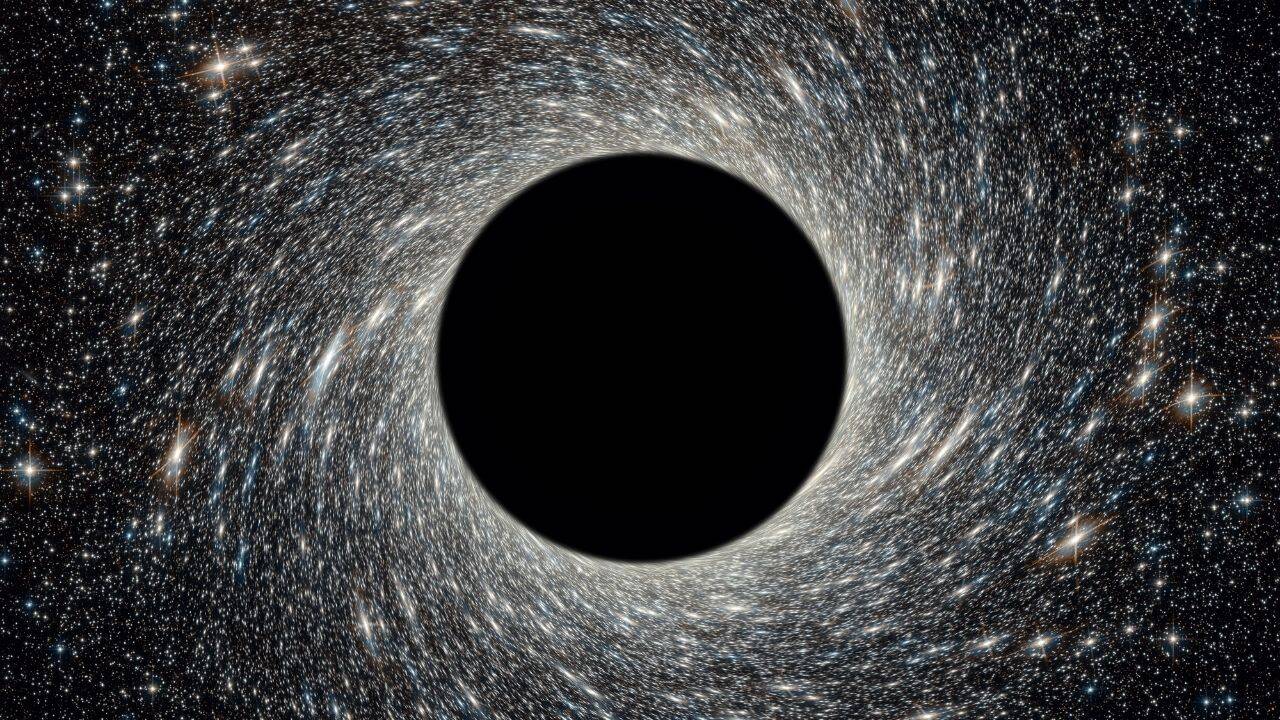
Repeating encounters with supermassive black holes can strip material from certain stars, causing them to survive and orbit the black hole again. However, astronomers have observed that the brightness of the flares produced during these repeated encounters has been gradually decreasing. A recent study published in The Astrophysical Journal suggests that the answer to this puzzle may involve the star's spin before its first close encounter with the black hole.
Researchers found that stars spinning rapidly before their initial encounter tend to produce progressively dimmer flares in subsequent encounters. This phenomenon occurs because the tidal forces from the black hole cannot significantly increase the star's spin during later passes, affecting how the stripped material behaves as it falls back towards the black hole.
The study also proposes that the rapid spin of these stars could be a result of the Hills mechanism, a process where a binary star system is disrupted by a supermassive black hole, ejecting one star and capturing the other into a close orbit. This mechanism could explain both the rapid rotation of the surviving star and its ability to repeatedly approach the supermassive black hole, leading to the observed pattern of fading flares.
Written by urgent.news from Times of India's reporting — not their text. Machine-written — may contain errors; check the original before relying on it.