3D-printed replacements let conservators monitor damage inside ancient pottery
Researchers at Koc University have developed a method that uses photogrammetry, 3D printing and embedded sensors to repair damaged ancient pottery. The customised 3D-printed sections can replace missing parts while monitoring temperature, humidity, pH and physical stress. Tested on maritime amphorae from Türkiye and Italy, the approach could help conservators track changes and support long-term…
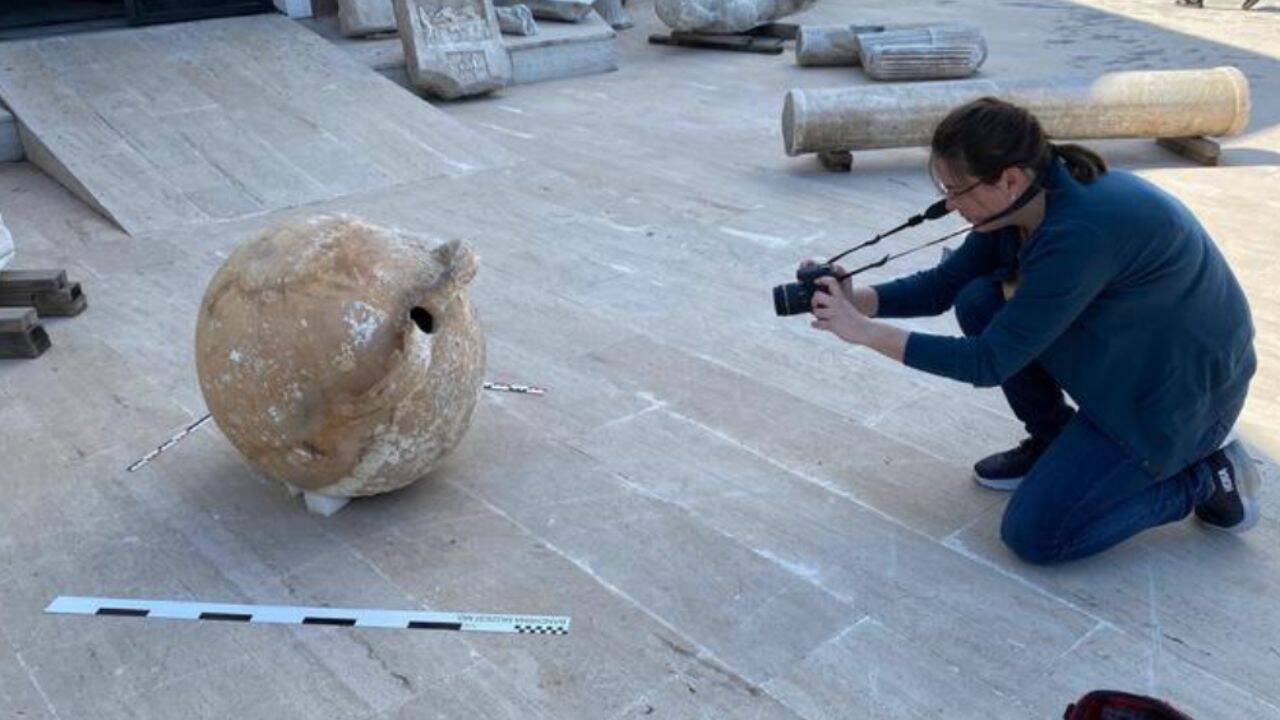
Ancient amphorae recovered from the seabed often suffer from damage, making restoration a delicate process. Researchers at Koc University in Turkey have devised a novel conservation technique to address this issue. By combining photogrammetry, digital modeling, 3D printing, and embedded sensors, the team can replace missing parts of ceramic objects while monitoring their condition. This method is detailed in a study published in the Journal of Cultural Heritage.
The process begins with photographing the amphora from various angles. These images are combined using photogrammetry software to generate a precise 3D digital model of the object. Next, the missing section of the ceramic is digitally reconstructed, and a replacement is created via 3D printing technology, tailored to fit the damaged amphora.
Customized "smart fills" are developed for the 3D-printed replacement sections. These smart fills incorporate sensors capable of detecting changes in temperature, humidity, pH levels, and physical stress. Such sensors play a crucial role in tracking environmental factors that can contribute to the deterioration of archaeological objects, including salt migration, deformation, and microfractures.
To validate the methodology, researchers tested it on two collections of maritime amphorae. One collection comprised Günsenin IV amphorae from the late Byzantine Camaltı Burnu I shipwreck, which are currently displayed at the Bandırma Archaeology Museum in Turkey. The other collection consisted of amphorae from the Amalfi coast, housed at the Minori Villa Romana e Antiquarium in Italy.
Initial measurements conducted in museums demonstrated that the embedded sensors could record daily variations in temperature and humidity, while a stress sensor was able to detect patterns of force affecting the objects. The researchers believe this innovative approach would prove especially valuable for maritime archaeological objects, as artifacts recovered from underwater environments are particularly susceptible to mechanical, chemical, and biological deterioration.
Further research will focus on evaluating the practical applications and cost-effectiveness of this technique.
Written by urgent.news from Times of India's reporting — not their text. Machine-written — may contain errors; check the original before relying on it.