Why are foreign medical graduates back on Delhi streets weeks after NBEMS offered solutions?
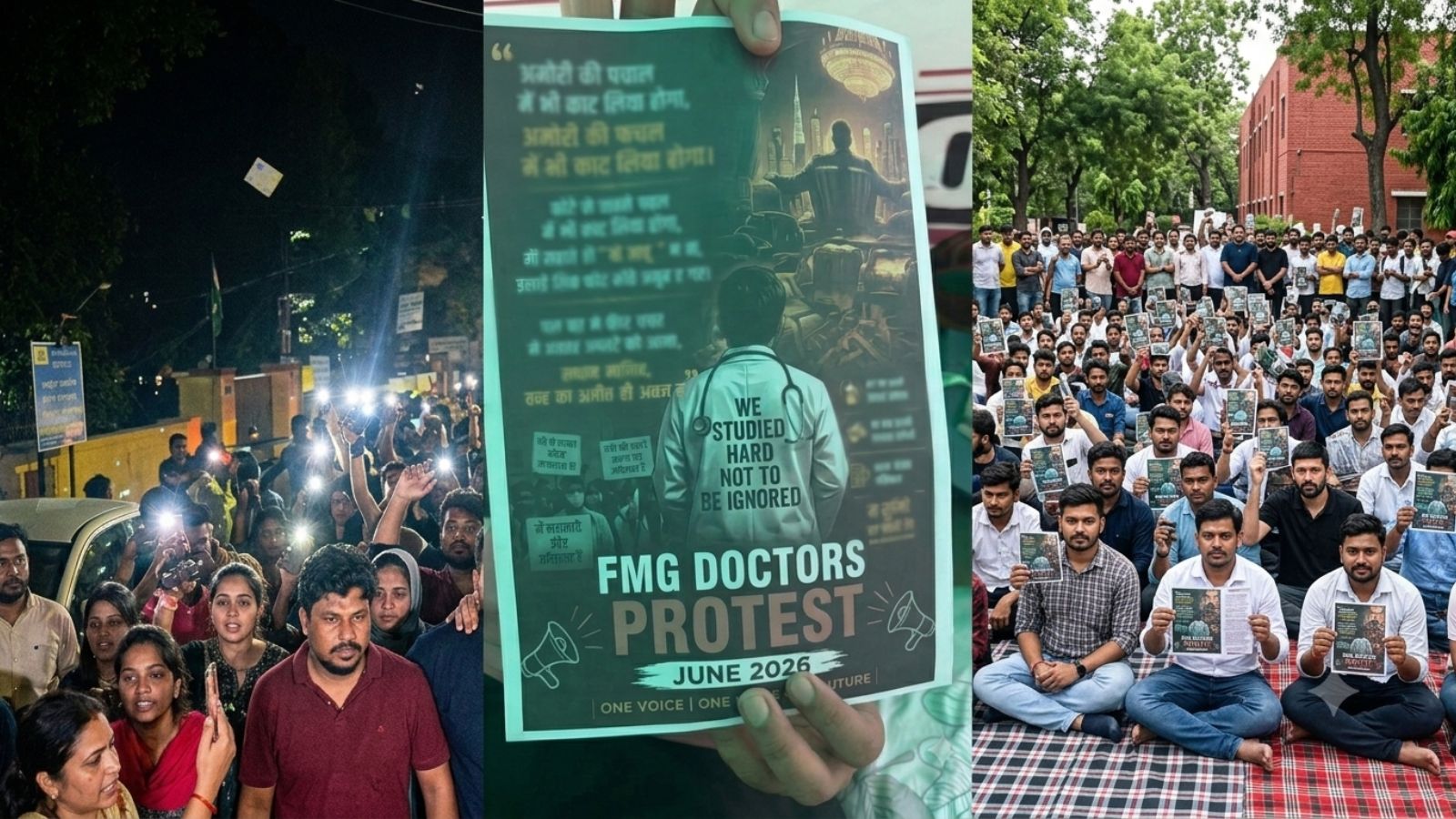
Foreign medical graduates (FMGs) in India are back on the streets, with some engaging in a hunger strike, even though the National Board of Examinations in Medical Sciences (NBEMS) had agreed to address some of their concerns regarding the June 2026 FMG examination. The FMGs have been protesting for weeks following multiple rounds of talks between the candidates and the Board.
While certain demands were taken into consideration, the core demand for compensation for this year's June examination remains unresolved. The June FMGE had a dismal pass rate of 12.38% out of 37,448 candidates who appeared for the test. This low pass rate sparked protests, with candidates blaming the examination for being unusually challenging, introducing video-based questions without sufficient notice, and citing issues related to examination center conditions and transparency.
The FMGE is a screening exam conducted by NBEMS for foreign-educated medical graduates aiming to practice medicine in India. The Health Ministry had previously proposed a National Exit Test (NExT) which, upon implementation, would likely establish a uniform licensing framework for both domestic and foreign medical graduates. The FMG protesters argue that the NExT could eventually offer a level playing field for both groups.
The initial protest took place at Jantar Mantar, where the candidates claimed their agitation did not start with the hunger strike, but rather began following the declaration of the June FMGE results on July 10. The protests continued through July and culminated in a demonstration at Jantar Mantar on August 3. The All India Medical Students Association - Foreign Medical Students Wing (AIMSA-FMSW) and the All FMGs Association (AFA) were subsequently called for discussions with NBEMS officials.
Following the protest on August 3, NBEMS set up an independent three-member committee to investigate the issues raised by the candidates, focusing on the June FMGE’s conduct and outcome. The protesters stated that initial meetings gave them hope that their concerns would be addressed, with representatives promising to investigate the answer key, examination difficulty, video-based questions, fees, and other complaints.
However, the candidates allege that the discussions stalled due to disagreements on the most important issue: relief for those who took the June examination. NBEMS representatives reportedly indicated that several demands, including conducting FMGE three times a year, reducing the examination fee, and improving transparency, could be addressed.
The expert committee also recommended changes such as increasing the number of lower-difficulty questions, providing advance information about multimedia questions, and deferring video-based questions for at least a year. Despite these recommendations, the committee did not recommend compensatory or grace marks for the June 2026 candidates, stating that there was no substantial evidence to suggest that the examined issues impacted the examination outcome.
The committee also pointed to the legal framework governing the FMGE qualifying standard, rejecting the request for compensation. This decision has led the protesters back to the streets, demanding some form of relief for the affected candidates.
Written by urgent.news from The Indian Express's reporting — not their text. Machine-written — may contain errors; check the original before relying on it.