Wat Phra Kaew’s Ramakien murals: A masterpiece wrapped around Bangkok’s sacred temple
BANGKOK — One of Bangkok’s most remarkable works of traditional Thai art stretches along the walls of the cloister surrounding the sacred grounds of Wat Phra Si Rattana Satsadaram, better known as Wat Phra Kaew or the Temple of the Emerald Buddha. The inner walls of the cloister are covered with intricate murals depicting the […] The post Wat Phra Kaew’s Ramakien murals: A masterpiece wrapped…
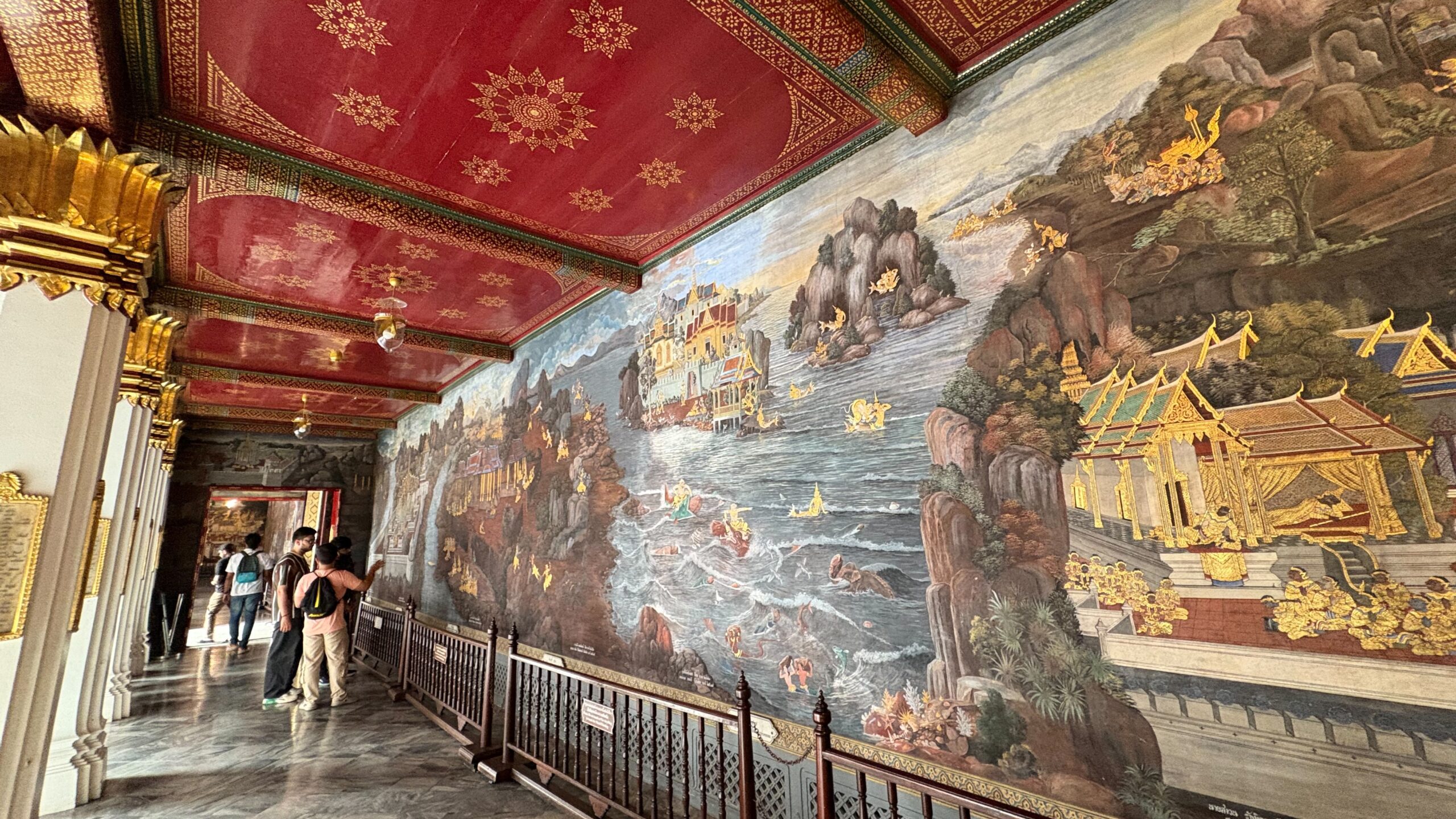
Bangkok's Wat Phra Kaew, also known as the Temple of the Emerald Buddha, boasts an impressive collection of traditional Thai art adorning the interior walls of its cloister. These intricate murals vividly depict the Ramakien, Thailand's own interpretation of the ancient Indian epic Ramayana, which has evolved into a unique Thai literary and artistic tradition.
Construction of Wat Phra Kaew commenced in 1783 under the reign of King Rama I, the founder of the Chakri dynasty. The temple houses the revered Emerald Buddha, a symbol of Thailand's most sacred Buddha image. The Ramakien mural cycle began during King Rama I's reign and has been restored or repainted multiple times throughout history.
The mural cycle comprises 258 scenes, starting near the entrance to the Phra Wihan Yot and encircling the cloister. These extensive scenes, alongside 80 additional images of key Ramakien characters, narrate the conflict between the hero Prince Rama and his divine allies, and the demon king Ravana and his army of demons. Prominent figures in the story include Rama, Lakshmana, Sita, Thotsakan, and Hanuman.
The Ramakien, originally an Indian epic, has been adapted by Thai artists, incorporating distinctive characters, narratives, and artistic styles. Its influence permeates Thailand's culture, appearing in literature, dance, theater, music, and visual art. However, at Wat Phra Kaew, the scale and detail of the murals make the Ramakien particularly captivating, allowing visitors to traverse the epic through hundreds of scenes, each rendered in the distinctive Thai painting style.
The murals also offer a unique perspective into how generations of Thai artists have interpreted the Ramakien, preserving a centuries-old story while showcasing the mastery of Thailand's traditional arts. Today, the cloister stands as a major attraction for visitors exploring Wat Phra Kaew and the Grand Palace, providing an opportunity to immerse oneself in Thailand's literary heritage through one of its most enduring art forms.
Written by urgent.news from Khaosod English's reporting — not their text. Machine-written — may contain errors; check the original before relying on it.