Peg of doubt: Is your whisky really what the label says?
Indian regulators are increasing scrutiny of alcoholic beverage manufacturers. The FSSAI is investigating alleged violations involving flavor additives and age claims. This action focuses on flavors used to mimic natural spirit characteristics. Consumers are urged to pay closer attention to product labels and disclosures. The FSSAI's move highlights growing concerns about product authenticity and…
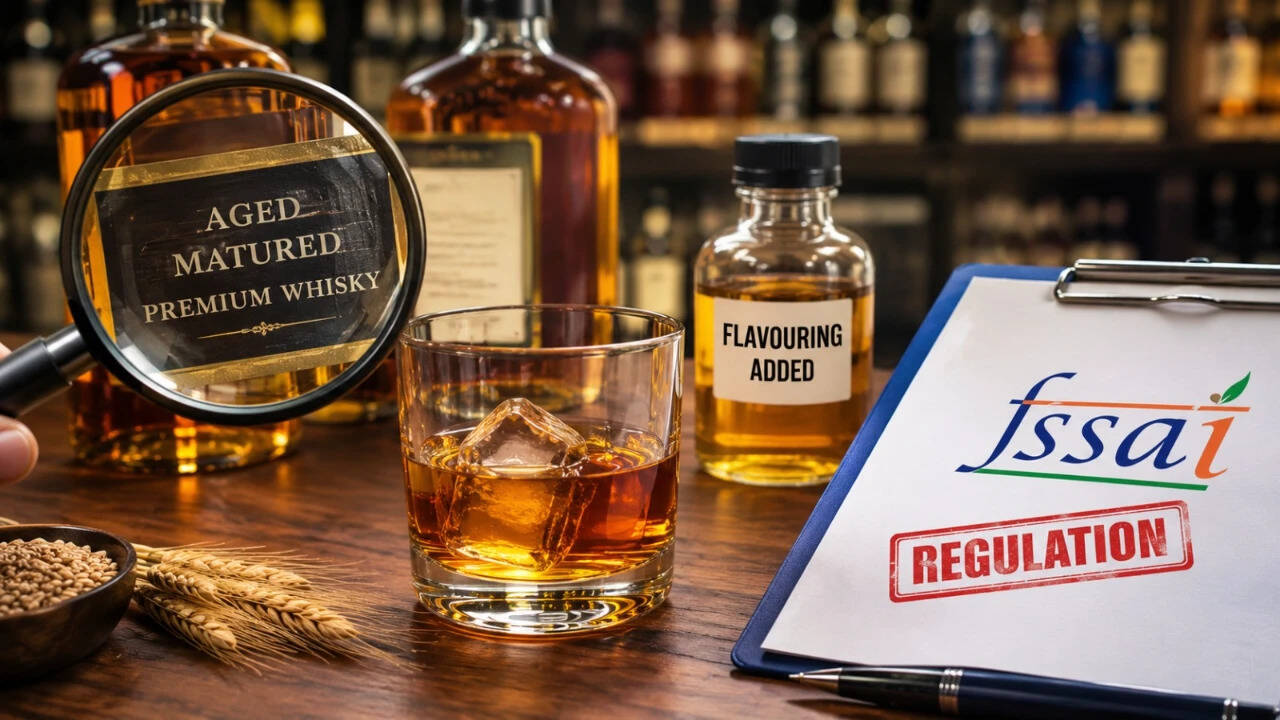
Next time you pour yourself a glass of whisky, a crucial question may arise: is that unique flavor truly originating from the spirit itself, the oak barrels, and years of aging, or has it been artificially enhanced with added flavors? This question has gained significance in India, as the Food Safety and Standards Authority of India (FSSAI) intensifies its scrutiny of alcoholic beverages, particularly those accused of violations related to flavor additives and age claims.While the FSSAI doesn't prohibit all flavoring substances in alcoholic drinks, it is concerned about the practice of using flavors to mimic the signature profile of a spirit in products where that character should naturally stem from the raw materials and the manufacturing process.
In simpler terms, the regulator is questioning the addition of flavors to make whisky taste like whisky or rum taste like rum, rather than through the prescribed methods for those spirits.Three key aspects make this issue particularly intriguing for consumers. Firstly, categories such as whisky, rum, gin, vodka, and brandy are expected to derive their characteristic flavors from their raw materials and the manufacturing methods.
Secondly, the regulatory meaning of terms like "aged" and "matured" can create a specific image in the consumer's mind, suggesting that the liquid has spent years resting in wooden casks. Lastly, consumers are becoming more discerning, seeking premium-looking bottles, age statements, and phrases like "craftsmanship."The FSSAI's primary message is clear: labels should not give the impression of age, quality, or production methods that the product cannot substantiate.
The truth is that maturation is one of the most time-consuming and expensive aspects of spirit production, with the flavor developing over time due to factors like the spirit, wood, temperature, maturation conditions, and duration. Manufacturers who can replicate some of these sensory characteristics through added flavors can alter the economics and consumer proposition significantly.This regulatory shift is especially relevant as India's alcohol market continues to expand, with the country projected to become the world's second-largest alcohol market by 2032.
As consumers become more selective, focusing on provenance, maturation, ingredients, craftsmanship, and the story behind the bottle, the information on the label becomes a crucial part of the product itself. Therefore, false statements or misleading impressions, even through omission, can significantly impact consumer understanding of the product.Furthermore, the FSSAI's action reflects its growing oversight of alcoholic beverages, with inspections, sample testing, and actions against products allegedly containing artificial or nature-identical flavoring substances.
This situation highlights the challenge of determining the line between legitimate processing aids, permitted flavorings, and flavors intended to replicate the defining characteristics of the spirit. Manufacturers are questioning the clarity of the rules around flavoring and labeling, suggesting that the controversy may be resolved through clarification rather than enforcement.
Written by urgent.news from Times of India's reporting — not their text. Machine-written — may contain errors; check the original before relying on it.