Urgent.News

What's breaking now, across thousands of outlets.

World

Oil drops more than $2 despite new US sanctions on Iran

Oil prices slipped more than $2 a barrel on Monday as investors took profits after recent gains and shrugged off new U.S. sanctions on Iran.
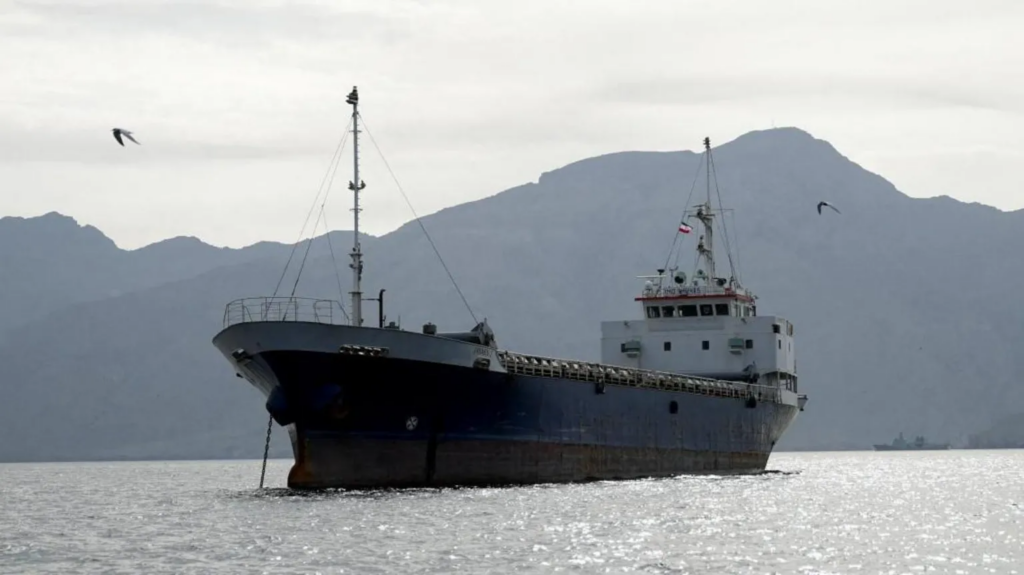
Oil drops more than $2 despite new US sanctions on Iran

Oil prices declined by more than $2 per barrel on Monday as investors took profits from recent gains and focused on the new U.S. sanctions imposed on Iran. Brent crude futures fell $2.22, or 2.35%, to $92.17, while U.S. West Texas Intermediate crude dropped $2.05, down 2.35% to $85.01. Treasury Secretary Scott Bessent announced an expansion of secondary sanctions that can be imposed on entities and countries maintaining business ties with Iran.

This move comes as the conflict with Iran enters its sixth month, following President Trump's threats of "economic warfare and isolation" against Tehran.

Experts suggest that the profit-taking in the oil market is a result of the recent rally, and the new sanctions may not have a significant impact on Iranian oil revenues unless China further reduces its purchases. The Strait of Hormuz, a critical route for oil shipments, has seen fewer than 20 vessels transit at the weekend due to Iranian and U.S. blockades.

Some analysts believe that a turning point could be Iran's decision to close the Strait with rockets and drones. Morgan Stanley has raised their Brent forecasts, projecting a peak of $100 per barrel in the fourth quarter. However, the International Energy Agency is not considering a second release of oil from its strategic reserves at this time.

Written by urgent.news from MyJoyOnline Ghana's reporting — not their text. Machine-written — may contain errors; check the original before relying on it.


Also reported by 2 other outlets

Read the original at myjoyonline.com →

More in World

A massive collision 10 billion years ago turned our galaxy, the Milky Way, upside down. The galactic smash-up, which involved a large spiral galaxy, occurred 10 billion years ago when the universe was just 4.6 billion years old. Our galaxy, the Milky Way, is thought to have formed 13.6 billion years ago, not long after the Big Bang. The collision is believed to have involved a large spiral galaxy, which has been named the Gaia-Enceladus galaxy. The Milky Way was largely made up of stars that were born in the early universe, and it had a distinctive shape, with a large bulge of older stars at its centre and a disk of younger stars. But 10 billion years ago, the universe was just 4.6 billion years old, and the Milky Way had a very different structure. It had a large disk of stars, gas and dust, but not much of a bulge. The collision with the Gaia-Enceladus galaxy changed everything. The impact was so violent that it threw the Milky Way's stars, gas and dust into chaotic motion. The galaxy was turned 90 degrees on its side, and its stars, gas and dust were flung out into space. The stars that had made up the Milky Way's disk were scattered, some moving inward to join the bulge, while others were flung outward into the galaxy's halo. The collision is thought to have played a key role in creating the galaxy we see today. The distinctive bulge of older stars at the centre of the Milky Way is thought to have formed from the debris of the collision. The stars that make up the bulge are mostly older, redder and fainter than the stars in the disk. The study, published in the journal Nature, used data from the European Space Agency's Gaia spacecraft. Gaia has been orbiting the L2 Lagrange point, a gravitationally stable location about 1.5 million km from Earth, since 2013. The spacecraft has been mapping the positions and movements of 1.6 billion stars in the Milky Way. The study's lead author, Dr. Diederik Kruijssen, of the University of Heidelberg, said: "The Milky Way is a large spiral galaxy with a rather unusual shape." He said that the collision had "reshaped" the galaxy, creating the distinctive bulge of older stars. Dr. Kruijssen said that the study had provided "the most detailed picture yet of the Milky Way's evolution". The study's findings have provided new insights into the history of the Milky Way and the role that collisions have played in shaping the galaxy. The research has also raised new questions about the formation and evolution of galaxies. The study's co-author, Dr. Maria-Rosa Cioni, of the INAF Observatory in Italy, said: "The Gaia spacecraft has provided a wealth of data about the Milky Way." She said that the study had shown that the collision had "profoundly changed" the galaxy. The study's findings are an important reminder of the dynamic nature of galaxies and the role that collisions play in shaping their evolution.

More from Monday 24 August →