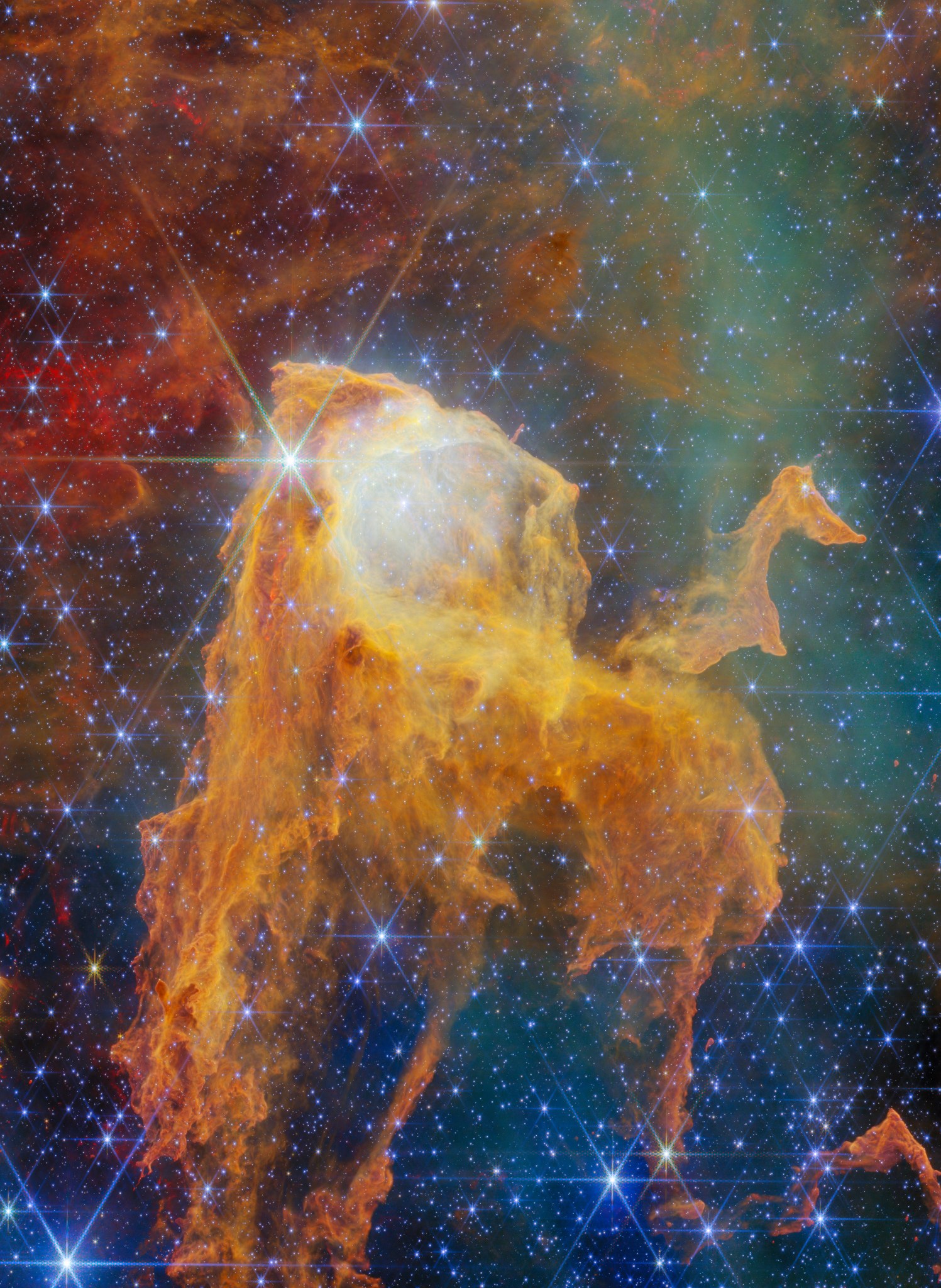
NASA’s Hubble opens the earliest window into the young Milky Way
The Milky Way, spanning over 100,000 light-years, is our galactic home. Among its many discoveries, the ESA’s Gaia mission has found that the Milky Way galaxy not only has a warp to its galactic disk, but that the warp in the disk precesses and wobbles, completing a full rotation for roughly every three revolutions of the Sun (in yellow) around the galactic center. The origin of the Milky Way’s…
The Milky Way, a vast galaxy spanning over 100,000 light-years, has recently been revealed to possess a unique warp in its galactic disk. This discovery, made by the ESA’s Gaia mission, also suggests that the warp precesses and wobbles, completing a full rotation every three rotations of our Sun around the galactic center. The origin of this rotation is not attributed to cosmic forces, but rather the result of gravitational and tidal forces during galaxy formation.
The Milky Way has grown over cosmic history, now containing an estimated 400 billion stars and more than 150 globular clusters. While most of these clusters formed alongside the Milky Way, a significant portion originated from other galaxies, including smaller ones such as the Kraken and Gaia-Enceladus, which were assimilated during later stages of galaxy growth.
This growth required more than mere accretion of infalling matter; energetic processes like star-formation, supernovae, stellar winds, and black hole jets expelled matter, which can later cool and return to the outer galactic halo for new star-formation episodes.
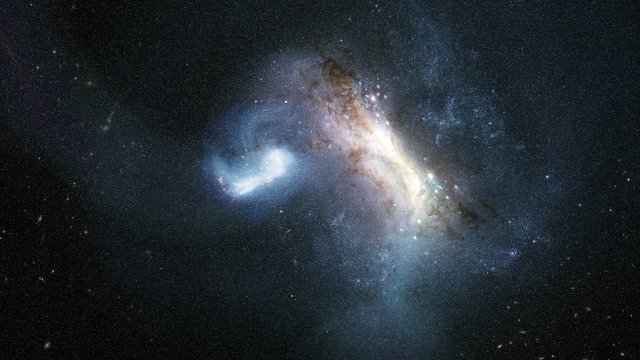
The process of galactic cannibalism, where smaller galaxies are consumed by larger ones, has played a significant role in shaping the Milky Way. An example of such a merger is Zw II 96, located about 500 million light-years away. Mergers trigger star-formation and can use up substantial amounts of gas within the progenitor galaxies instead of a steady stream of low-level star formation found in isolated galaxies.
Over time, smaller galaxies are assimilated by their larger galactic neighbors, leaving telltale signs such as streams of stars encircling the Milky Way.
These mergers have also left behind lasting relics within the Milky Way. For instance, recent studies have revealed a low-energy population of globular clusters concentrated close to the galactic center, possibly representing a new, older population of imported clusters from an ancient merger. These clusters, with their stars formed in single bursts, provide valuable insights into the galaxy's history and formation processes, helping astronomers trace back to earlier periods in the Milky Way's cosmic timeline.
Written by urgent.news from Big Think's reporting — not their text. Machine-written — may contain errors; check the original before relying on it.