If You Don’t Want Smart Glasses to Spy, Try a Bluetooth Detector App
Amid broad privacy concerns, new apps like Zuckoff help detect smart glasses in the wild.
As smart glasses become more popular, concerns over privacy have grown. These wearables can record, stream, and process video without alerting others, aside from a small indicator light. This has led to a power struggle between hardware modders, who make glasses harder to spot by disabling LEDs, and developers creating detection tools to warn users of nearby smart glasses.
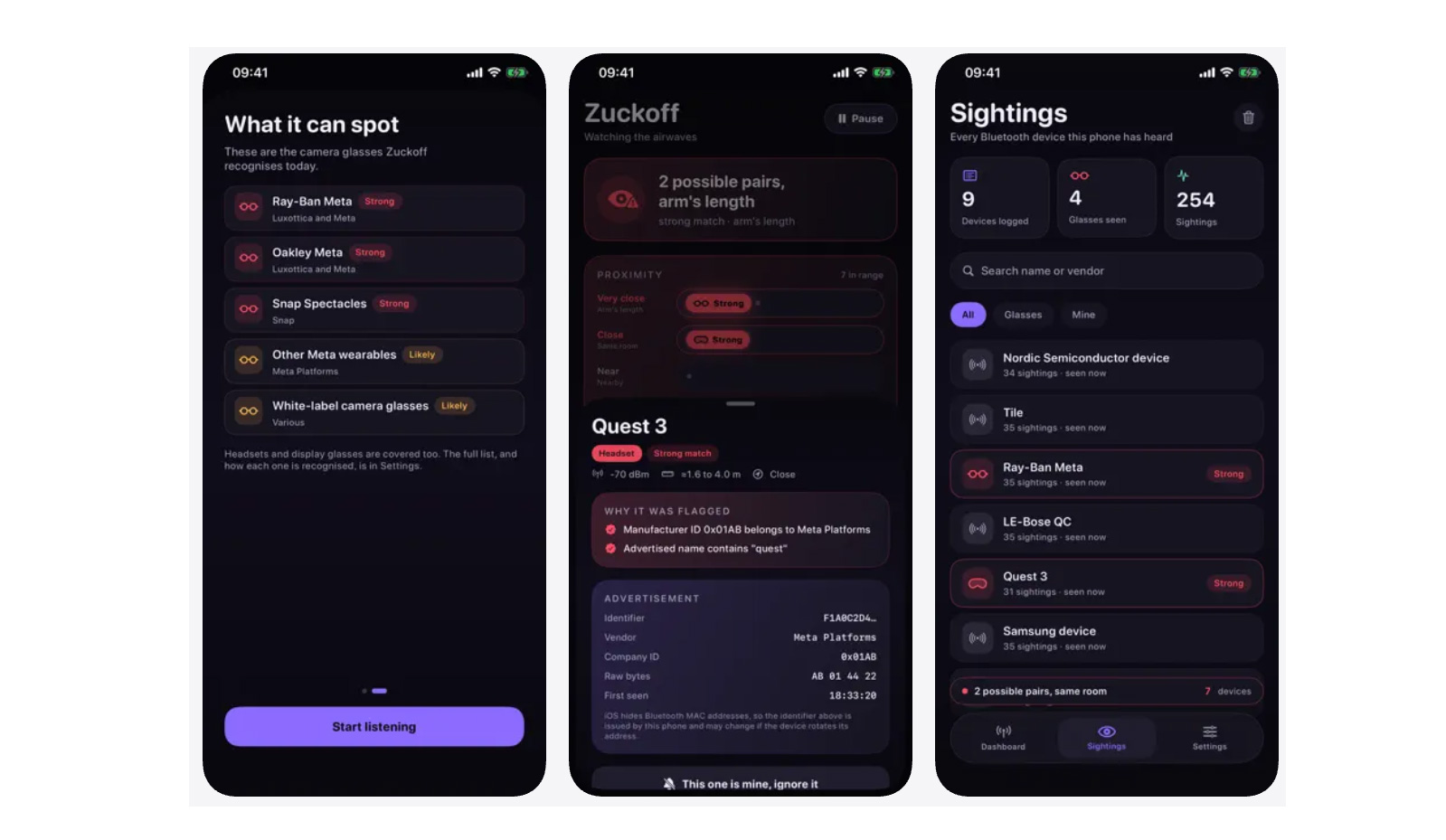
One such developer is Pawel Szydlowski, who created a free Apple iOS app called Zuckoff. The app, named after Meta CEO Mark Zuckerberg, uses Bluetooth to detect smart glasses like Ray-Ban Meta glasses and Snap Spectacles, alerting users to their presence and proximity. However, Zuckoff can't determine if the device is actively recording or using AI.
Another tool is Antizuck Smart Glasses Scanner, and Nearby Glasses, which serve a similar purpose. These apps detect smart glasses by analyzing Bluetooth frequencies and vendor IDs, but they can't confirm whether someone is actively recording or using AI.
Smart glasses have been used for various purposes, from bullying in schools to recording viral videos without the subject's knowledge. This has led to instances of harassment and lack of consent. The Zuckoff app has gained popularity, with 2,000 sign-ups since its launch in August. Szydlowski is also working on an Android version.
However, there's a growing DIY market of modifications and third-party hardware hacks that allow users to disable activation lights, making smart glasses even more covert. A recent video demonstrated how a local hacker removed the LED light from Ray-Ban Meta glasses for $100, enabling secret recording.
Detecting smart glasses in public or private spaces raises questions about what action to take. Should users leave the area or ask the wearer to remove their glasses? Assistant Professor of Information Systems at Carnegie Mellon University, Uttara Ananthakrishnan, says the issue of consent is particularly complex when children might be captured on video or in photos.
Some hardware-makers are responding to these concerns by releasing alternative versions of smart glasses, like Even Realities' G2. These devices don't have front-facing cameras, focusing instead on providing information like a personal assistant. CEO Will Wang believes that smart glasses don't need cameras to be useful and that they should respect both the wearer and those around them.
Written by urgent.news from CNET's reporting — not their text. Machine-written — may contain errors; check the original before relying on it.