How Did Medieval Builders Construct Complex Cathedrals Before Advanced Mathematics? And More Questions From Our Readers
You’ve got questions. We’ve got experts
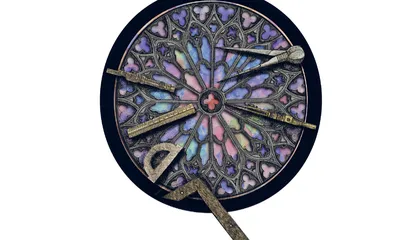
How did medieval master builders construct complex cathedrals without advanced mathematics? Although they lacked sophisticated calculations, these craftsmen possessed extensive knowledge of applied geometry and engineering. They utilized simple drafting tools, including the compass and the square, to establish the proportions of a cathedral.
By relying on basic ratios, they planned the relationships between various parts of the building. The designs were sketched onto the floor of the mason’s lodge to guide the workmen, and snaplines—taut cords—were used to lay out straight lines across large areas. Master builders utilized proprietary templates to guide finer carved shapes.
Their extensive training through long apprenticeships in teams or guilds of stonemasons, carvers, and sculptors played a crucial role. These artisans traveled widely from project to project, acquiring valuable knowledge about buttressing and vaulting from existing buildings. They also experimented with new ideas in the projects they supervised.
As construction progressed, master builders continuously assessed the structural soundness of the building, making adjustments to support elements like flying buttresses as needed.
Written by urgent.news from Smithsonian's reporting — not their text. Machine-written — may contain errors; check the original before relying on it.