Green hydrogen: made in MENA, built with China, sold to Europe?
The region has emerged as a hub for hydrogen investments, with construction and tech from China, and eyes on EU markets. But securing buyers remains a challenge The post Green hydrogen: made in MENA, built with China, sold to Europe? appeared first on Dialogue Earth .
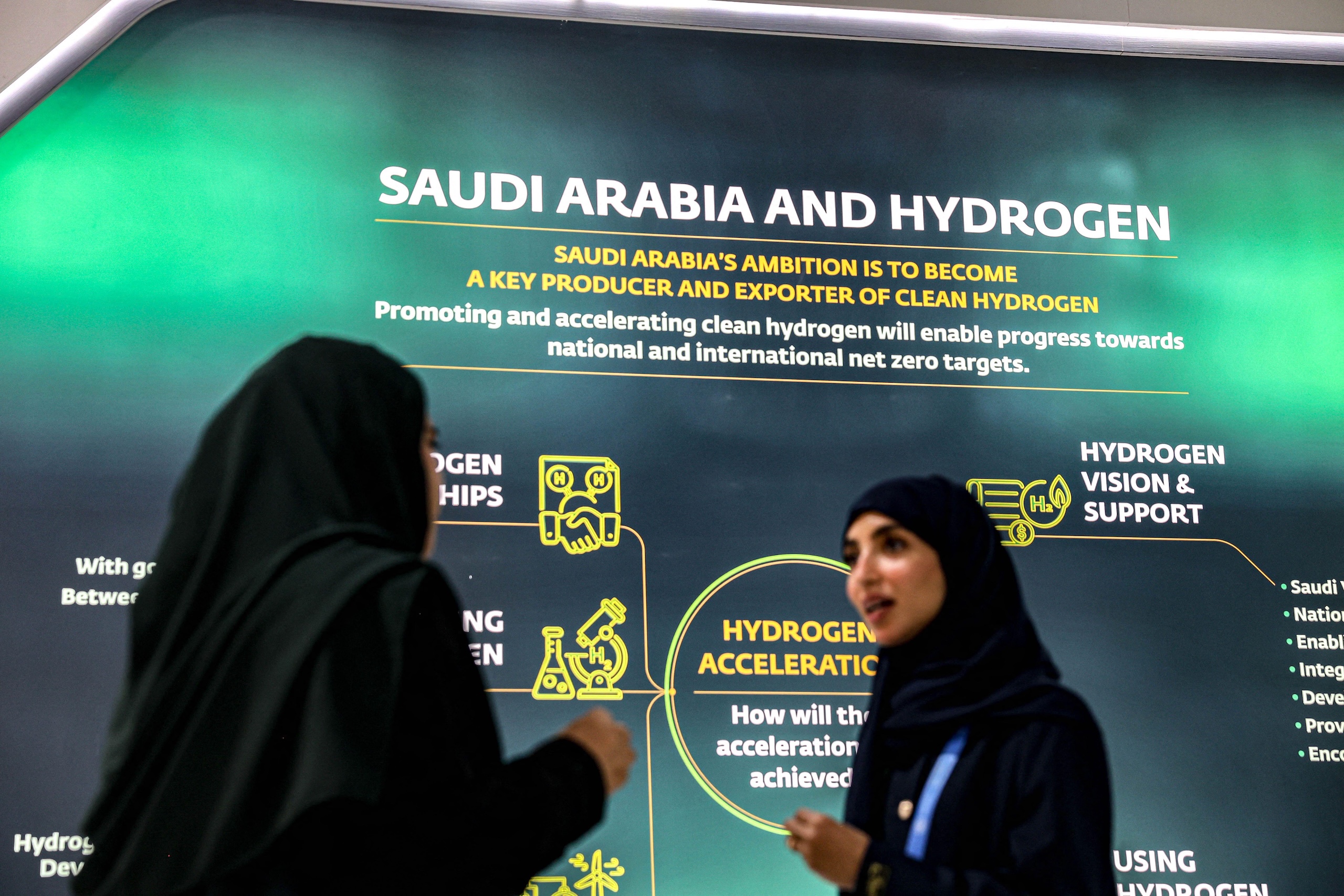
The Middle East and North Africa (MENA) region is emerging as a key player in the production of green hydrogen. With its abundant sunshine and wind, the area is well-suited for generating renewable power to create hydrogen. Recently, a surge of clean hydrogen projects have been announced in the MENA region, with European markets as the primary target.
Chinese companies and engineering firms are also contributing to the construction of this hydrogen supply infrastructure. However, the industry is facing uncertainties due to a lack of committed buyers and Europe's fluctuating policy signals. Despite the challenges, the region's potential for green hydrogen is clear. It boasts a high concentration of sunlight, which can be harnessed to produce renewable energy and subsequently green hydrogen.
This type of hydrogen, generated from renewable energy sources, results in minimal or no carbon emissions. However, currently, less than 1% of hydrogen production is classified as low-emission by the International Energy Agency (IEA). The IEA projects that renewable capacity in the MENA region will triple from 53 gigawatts (GW) to nearly 150 GW between 2023 and 2030.
This surge could lead to some gigawatt-scale projects producing green hydrogen for under USD 3 per kilogram, which would be one of the lowest costs globally. The region's proximity to Europe, a major consumer, gives MENA an advantage over other exporters such as Africa, Australia, and Latin America, which have longer shipping distances and higher costs.
The region also has planned pipelines for transporting hydrogen directly to Europe, such as the SoutH2 Corridor and a project connecting Oman, the Netherlands, and Germany. European demand for green hydrogen is expected to rise significantly by 2050, up to 68 million tonnes, according to EU predictions. With Europe's limited natural resources, it will likely need to import green hydrogen or related products.
China's involvement in the MENA region's hydrogen projects is significant, with Chinese companies investing in various sectors, including transport infrastructure, energy storage, and energy utilities. China's state-owned company Sinopec has invested in Saudi Arabia's Yanbu project, which aims to produce 400,000 tonnes of green hydrogen annually.
Other Chinese investments include a project in Morocco for green ammonia production and an Oman project for 300 tonnes of green ammonia daily. Chinese companies believe that selling green hydrogen to Europe is a lucrative opportunity, seeing it as a gateway to the European market. While Europe remains MENA's preferred market, China's involvement in early-stage construction across the region is noteworthy.
The Middle East topped the list of Chinese construction engagement in the first half of 2026, with USD 36.5 billion invested in various sectors. China's state-owned company Sinopec has invested in Saudi Arabia's Yanbu project, and other Chinese investments include a project in Morocco for green ammonia production and an Oman project for 300 tonnes of green ammonia daily.
China's involvement in the MENA hydrogen projects aligns with its broader energy strategy of promoting green energy and reducing reliance on fossil fuels.
Written by urgent.news from Dialogue Earth's reporting — not their text. Machine-written — may contain errors; check the original before relying on it.