GHS launches strategic PHEOC documents to strengthen public health emergency response
The Ghana Health Service (GHS) has launched five strategic documents to help strengthen public health emergency preparedness and response across the country.
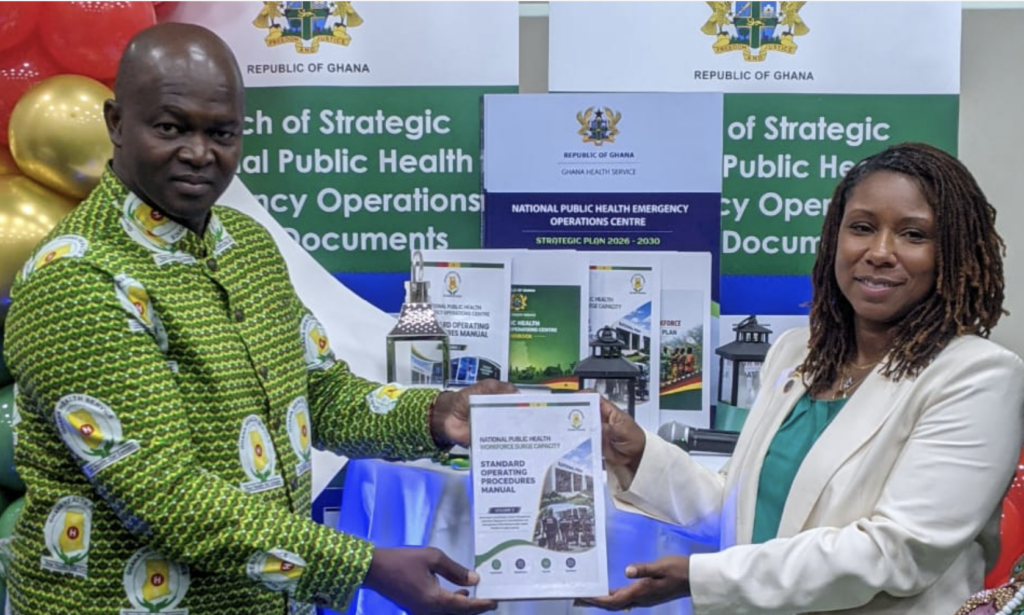
The Ghana Health Service (GHS) has introduced five strategic documents aimed at bolstering the country's public health emergency preparedness and response capabilities. The launch event featured the presentation of the National Public Health Emergency Operations Centre (PHEOC) strategic plan, handbook, and standard operating procedures.
These documents were created in collaboration with various stakeholders, including the Ministry of Health, security agencies, academia, research institutions, professional bodies, civil society, and the private sector. The goal is to build a more resilient and coordinated public health emergency management system in Ghana.
Dr. Samuel Kaba Akoriyea, the Director-General of GHS, emphasized the importance of a unified response during public health emergencies, stating that success depends on the ability to act as a single system. He highlighted the need for early detection, timely treatment, and prompt care, noting that Ghana has faced seasonal outbreaks of meningitis, cholera, typhoid, and other diseases.
The PHEOC, according to Dr. Akoriyea, will bridge the gap between data collection and strategic action, connecting health agencies, emergency services, laboratories, and animal health agencies.
The National PHEOC Strategic Plan 2026-2030, National PHEOC Handbook 2026, National PHEOC Standard Operating Procedures Volume One, National Health Workforce Search and Strategy Plan 2026-2034, and National Public Health Workforce Search and Management SOP Volume Two are the five documents launched. These documents were developed through collaboration among numerous stakeholders and form part of efforts to build a robust and sustainable public health emergency management system in Ghana.
Dr. Lawrence Lartey, Head of the National PHEOC, outlined the implementation strategy, which focuses on seven key areas: governance and institutionalization, ICT and public health intelligence, logistics and infrastructure, emergency operations and incident management, workforce capacity, sustainability, and multispectral coordination.
The strategy aims to promote the use of integrated dashboards and digital systems for timely decision-making, strengthen logistics and infrastructure for rapid deployment during outbreaks, and ensure a trained and skilled workforce for effective emergency response. Regular testing, monitoring, and after-action reviews will be crucial for improving the health system, while sustainable financing and accountability will be essential for the success of the PHEOC.
Written by urgent.news from MyJoyOnline Ghana's reporting — not their text. Machine-written — may contain errors; check the original before relying on it.
Also reported by 1 other outlet
- GHS outdoors 5 documents to coordinate public health ghanaiantimes.com.gh