El Niño risks prompt call for proactive rice supply planning
Vietnam needs to secure rice supplies and strengthen reserves ahead of an El Niño forecast to become strong to very strong from now to January 2027.
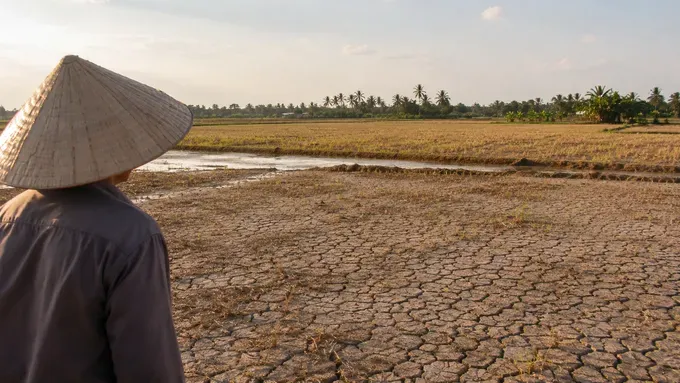
Vietnam must fortify its rice supplies and reserves as an anticipated El Niño from August 2026 to January 2027 is expected to intensify to strong or very strong levels. The Department of Meteorology and Hydrology warns that the forecasted El Niño could bring drought, water shortages for agriculture, and early saltwater intrusion. Roughly 350,000 hectares, or over 20% of the rice-growing area in southern Vietnam, are slated to be affected.
The government must consider rice export policies with this risk in mind. If production is disrupted, ensuring sufficient local rice supplies, stable food prices, and containing inflation become top priorities. Rice should only be exported after securing domestic food security and reserves, especially during periods of favorable international demand and prices.
Past experiences, such as the 2020 Covid-19 pandemic, drought, and saltwater intrusion in the southern region, offer crucial lessons in rice market management. Initially, Vietnam imposed a rice export quota in 2020, later adjusting the policy after evaluating domestic supplies of 13.54 million tons of paddy, equivalent to 6.5-6.7 million tons of rice. Vietnamese rice exports rose to 8.13 million tons and 9.18 million tons in 2023 and 2024, respectively.
Given the outlook, the State should support businesses in purchasing and temporarily stockpiling rice during favorable supply conditions, while simultaneously investing in storage and post-harvest infrastructure to bolster supply security. Authorities could also adjust the planting schedule for the third rice crop and convert some rice-growing areas to more drought and saltwater intrusion-resistant short-cycle crops.
The most crucial step is early rice supply security, which would grant policymakers greater flexibility to respond to market fluctuations. If domestic supplies, reserves, and local prices remain stable, rice exports can be adjusted based on international demand and price trends. This strategy helps businesses avoid the cyclical wait for prices to rise before purchasing, only for prices to drop once stocks have been secured.
Additionally, it offers policymakers more room to balance domestic food security with export opportunities.
Written by urgent.news from SGGP English Edition's reporting — not their text. Machine-written — may contain errors; check the original before relying on it.