Divorce, smartphones and control - BBC sees how Taliban run Afghanistan
Five years after the Taliban’s return, the BBC follows senior figures as the group reshapes the country.
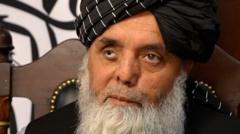
In northern Afghanistan, a governor named Abdullah Sarhadi finds himself in an unusual situation. An 18-year-old woman named Tuba approaches him to request a divorce from her husband, who she claims has been abusing and beating her for months. Despite the governor's initial advice that she should compromise and return to the marriage, Tuba remains resolute and insists that her honor and dignity have already been compromised.
The governor's response to the woman's request draws laughter from the male officials and bodyguards present in his office. He dismissively labels women as "mindless" and "deficient in intellect," eliciting laughter from those around him. The encounter sheds light on the daily realities of life under Taliban rule, which has been in power for five years since their 2021 coup that ousted the US-backed government.
During their time in Afghanistan, the BBC obtained rare access to influential Taliban figures, including former insurgents who had spent years in underground hideouts. These men, now officials and soldiers, appeared to present themselves as reasonable while avoiding discussing their violent past. The Taliban's policies, claimed to be a change from their 1990s hard-line interpretation of Sharia law, remained similar to the strict religious law they imposed a quarter-century ago.
The BBC's interviews with Afghan women revealed that their lives have drastically changed under Taliban rule. They are now barred from most workplaces, universities, and public spaces such as parks and leisure centers. When asked about their situation, the women expressed that their lives are unrecognizable compared to the pre-Taliban era.
During their investigation, the BBC also encountered moments of unease between the Taliban rulers and those they govern. In the case of Tuba, the governor's suggestion that she should stay in the marriage due to the potential difficulty of finding a new husband after a divorce highlighted the challenges women face under the current regime.
The governor's past as a military commander during the Taliban's first rule in the 1990s, which included the destruction of ancient Buddha statues, further adds to the complexity of the situation.
Another senior Taliban figure, Habibullah Badr, had a violent past himself, responsible for coordinating suicide attacks in Kabul. Despite his history, Badr now holds an official role within the Taliban administration. While he evaded questions about specific civilian casualties, he emphasized that their attacks were directed at US convoys and that civilians were advised to stay away from foreign bases.
The story also covered the tense encounter between Habibullah Badr and a representative of a charitable foundation who advocated for the reopening of girls' schools. The representative's request to reopen schools for girls went unmet, as Badr seemed disinterested in the idea, stating his pride in Afghanistan and his role as a fighter.
Written by urgent.news from BBC World's reporting — not their text. Machine-written — may contain errors; check the original before relying on it.
This story
This is one outlet's version. Read the fullest account.