Daniel Janzen and the long work of bringing back a forest
In northwestern Costa Rica, the forest did not return all at once. First the cattle were removed. Then the fires had to be stopped. Introduced grasses made the old ranchlands burn too easily. Fence lines had to be watched. Seeds had to arrive by wind, birds, bats, and the stomachs of passing animals. People had […]
In northwestern Costa Rica, the restoration of a forest was a gradual process. Initially, cattle were removed from the land. This was followed by efforts to stop fires, which had been rampant due to introduced grasses making the old ranchlands highly flammable. Fence lines were meticulously monitored to prevent further encroachment.
Seeds needed to be transported by wind, birds, bats, and the digestive systems of animals that passed through the area. People needed to believe in the potential of turning the land from pasture into a thriving forest, and stay committed long enough to witness the transformation. A park on paper could still be vulnerable to burning, poaching, logging, neglect, or resentment.
The task at hand necessitated scientific knowledge, well-paid staff, political agreements, national investment, educational programs, local support, and consistent maintenance. It also required individuals who remained dedicated even after the initial influx of money and enthusiasm had waned. While popular narratives often portrayed this story through the lens of a single American ecologist with a beard, a camera, a theory, and a park, the reality was far more complex.
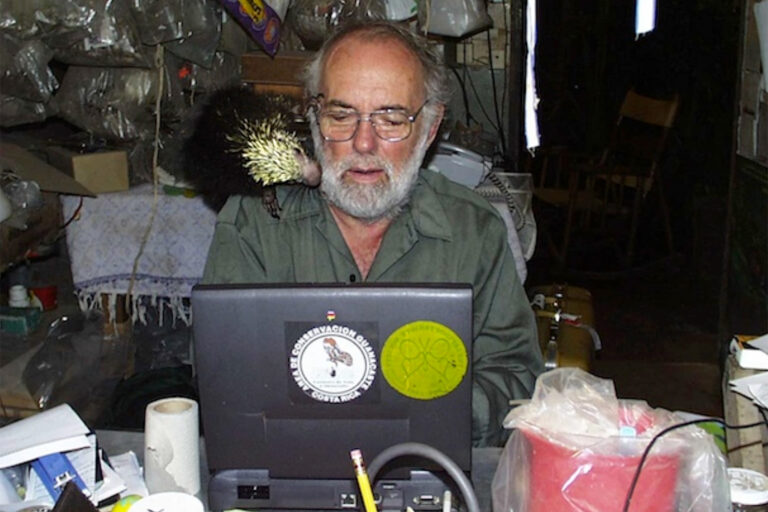
For over half a century, Daniel Hunt Janzen has collaborated closely with his wife, Winnie Hallwachs, who serves as their scientific partner and interpreter to the human world. Around them, a larger Costa Rican conservation effort bloomed, driven by park leaders, field staff, parataxonomists, educators, donors, government officials, neighbors, and families who transformed a conservation concept into a functional landscape.
Janzen is now 87 years old. As his field work has slowed, he has transitioned from university teaching to assume the role of Chief Scientist of the Guanacaste Dry Forest Conservation Fund (GDFCF), the nonprofit conservation organization co-founded by Janzen and Hallwachs with his colleagues.
Written by urgent.news from Mongabay's reporting — not their text. Machine-written — may contain errors; check the original before relying on it.