Centuries Ago, Europeans Were Plagued by Constant Flooding, With 16 Major Events That Killed Thousands Over the Course of Just Three Years
When researchers went looking for information about the legendary Magdalena Flood, they were surprised to discover that it was just one of many extreme weather events that ravaged the region in the early 1340s
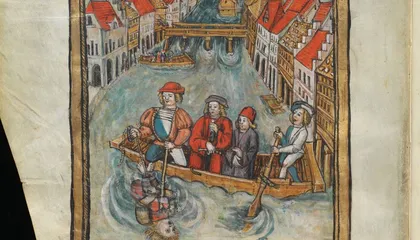
Between 1341 and 1343, Europe endured a series of 16 devastating floods, with the year 1342 alone witnessing the most catastrophic events in the past 700 years, according to a study published in Nature. These floods resulted in the death of thousands of people and caused widespread destruction of infrastructure and crops. The Magdalena Flood, also known as the Magdalene Flood or St. Mary Magdalene's Flood, stands out as one of the most significant natural disasters in Central Europe within the past millennium. Despite its severity, historians have long lacked comprehensive knowledge about this event.
To address this knowledge gap, researchers from various disciplines, including historians, geographers, and climatologists, delved into medieval archives, examining over 1,000 pieces of evidence such as administrative records, church texts, legal documents, and personal writings. From this extensive collection, they reconstructed a more comprehensive picture of the early 1340s in Europe, revealing the sequence of floods that struck the region during this period.
The research team determined that the flood cycle was unprecedented, with the year 1342 being the most eventful in terms of reported flooding. This series of floods, spanning just two years, can be likened to having the last five extreme flood events over the last 20 years occurring within a two-year span, as noted by Ellen Arnold, an environmental historian at Ohio State University. The sheer scale and frequency of these floods make it clear that they were not isolated incidents but rather part of a larger pattern.
The Black Death, which claimed the lives of an estimated 30 to 50 percent of Europe's population just a few years after the floods, further exacerbated the hardships faced by the affected regions. The convergence of these calamities left communities struggling to cope with successive disasters, highlighting the importance of considering the potential for multiple extreme events occurring in succession when planning for future flood risks.
Researchers believe that natural climate factors, such as volcanic eruptions, reduced Arctic sea ice, and lower solar activity, may have contributed to the extreme weather conditions that led to these floods. By understanding the interplay of these factors, scientists can gain valuable insights into how shifts in climate influence flooding patterns.
This knowledge can inform modern flood-management decisions and enhance climate modeling efforts, ultimately helping to mitigate the impact of extreme weather events on vulnerable communities.
Written by urgent.news from Smithsonian's reporting — not their text. Machine-written — may contain errors; check the original before relying on it.