Blood moon lunar eclipse, how to photograph it this Friday
The Blood Moon Total Lunar Eclipse is a rare occurrence, find out when, where and how to photograph the eclipse in this how to guide The post Blood moon lunar eclipse, how to photograph it this Friday appeared first on Amateur Photographer .
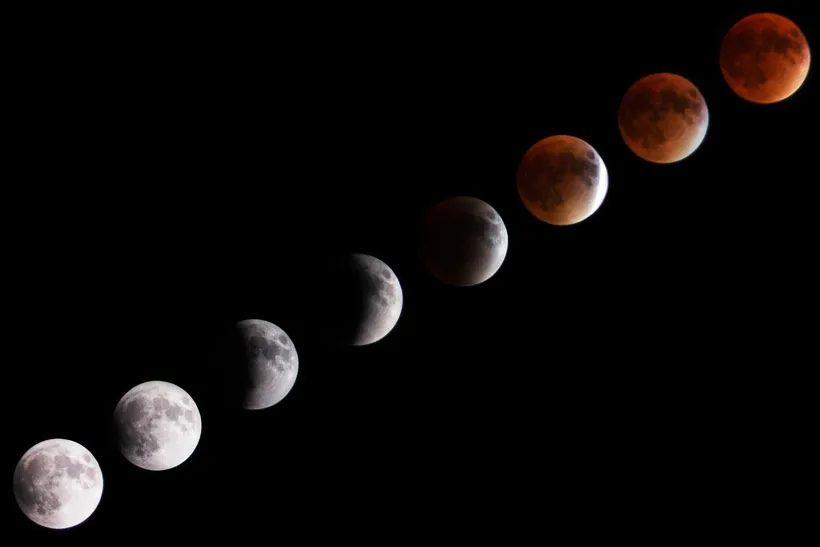
On Friday, August 28, 2026, stargazers have the chance to witness a rare total lunar eclipse known as the "Blood Moon." This celestial event will occur during the early hours of the morning, with the partial eclipse beginning at 3:33 AM BST and reaching its peak at 5:12 AM BST. In the UK, the moon will set before the partial eclipse concludes, making it difficult to observe for viewers in this region.
To photograph this phenomenon, one will need a tripod, a telephoto lens of 300-600mm equivalent or higher, a self-timer, or remote release to minimize camera shake, and an adjustment in exposure as the moon becomes darker due to the earth's shadow. Cloud cover could potentially hinder the viewing experience, so clear skies are essential.
The lunar eclipse will be visible across North and South America, Europe, and Africa, with visibility potentially increasing for those in more northern locations. The total lunar eclipse happens approximately every three years, with two occurrences taking place in the same year. The previous total lunar eclipse was observed on March 3, 2026, while the last one occurred on September 7, 2025.
The "Blood Moon" gets its name from the red hue it turns as the earth blocks sunlight, with the reddish color resulting from Rayleigh Scattering, which filters out green and violet light through the atmosphere. Photographers should be aware that their images may not match the intensity of red seen in other photos due to the need for saturation adjustments.
To avoid light pollution, it is advisable to venture into the countryside to witness the eclipse in its clearest form, as urban light sources can hinder the viewing experience. Online resources, such as www.lightpollutionmap.info, can provide information on light pollution levels in specific areas to help plan the best viewing location.
Written by urgent.news from Amateur Photographer's reporting — not their text. Machine-written — may contain errors; check the original before relying on it.
Also reported by 4 other outlets
- Blood moon total eclipse to occur in Africa Friday – NASA dailypost.ng
- Penumbral lunar eclipse visible in Qatar on Friday as expert warns public against myths thepeninsulaqatar.com
- Partial lunar eclipse on Friday: Where to see it in Spain, Italy, France, Portugal and Germany euronews.com
- Watch: Stargazers around the world glimpse 'Blood Moon' lunar eclipse bbc.co.uk