Bessent unveils sanctions designed to cripple Iran
Treasury Secretary Scott Bessent announced on Monday that the U.S. will impose punishing sanctions on countries and entities that do business with Iran — an attempt to bring the country to heel absent renewed military strikes. Why it matters: The move is aimed at ratcheting up pressure on the Iranian regime amid the current "no war, no deal" limbo. U.S. officials say the expanded "secondary"…
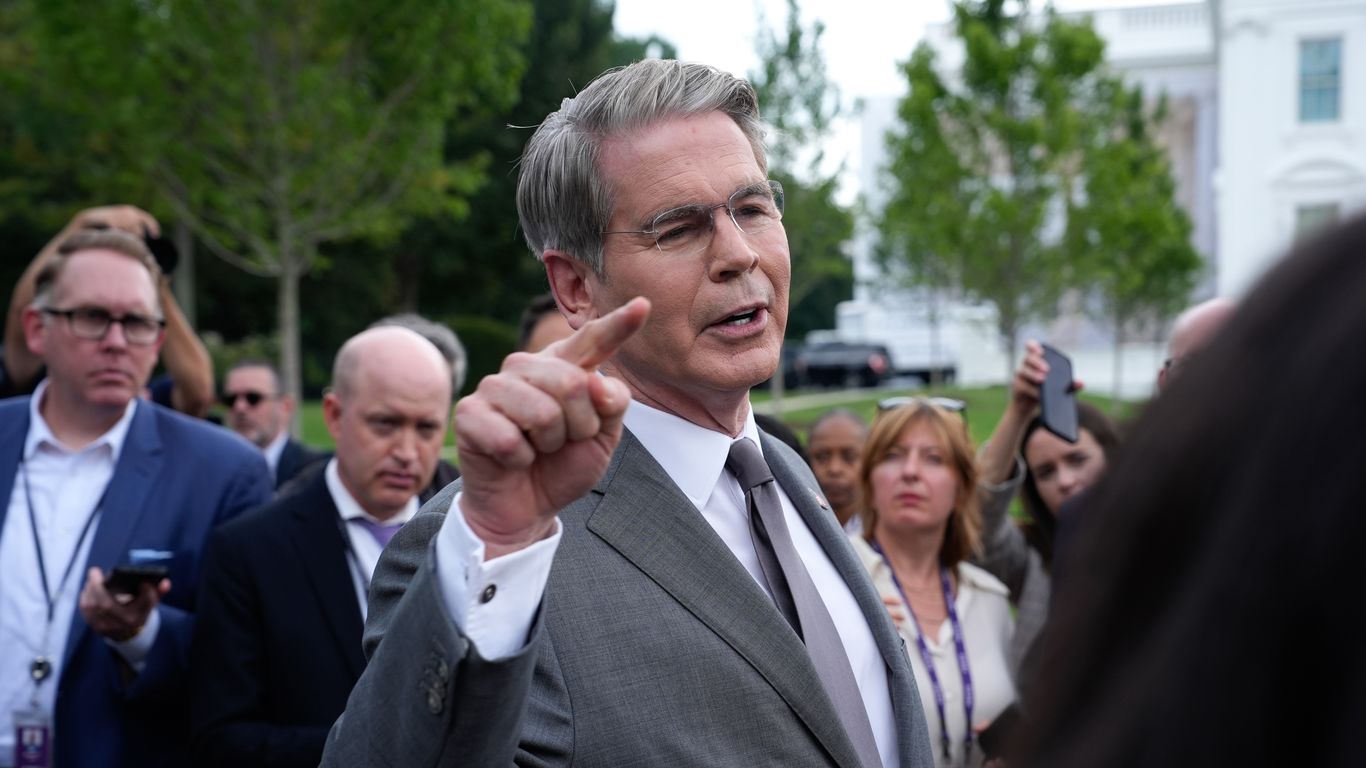
Treasury Secretary Scott Bessent unveiled plans on Monday to impose strict sanctions on nations and entities that engage in business with Iran, aiming to compel the country's compliance without resorting to military force. The announcement comes as the U.S. navigates a "no war, no deal" stalemate. U.S. officials anticipate that these secondary sanctions will be the primary means of pressure on Iran until at least after the midterm elections, potentially paving the way for renewed military action.
However, the U.S. has been inconsistent in enforcing existing secondary sanctions against countries trading with Iran, especially its oil industry. For the new economic pressure to succeed, the U.S. must rally Western allies to enforce these measures collectively. Additionally, the administration must challenge nations like China, Russia, India, Pakistan, Qatar, Turkey, and others that continue trading with Iran, an effort the U.S. has not undertaken thus far.
Despite years of international sanctions, Iran's regime has shown little change in regional behavior or its stance on nuclear activities. The economic crisis has deepened, with Iran's currency, the rial, plummeting to 2 million rials per U.S. dollar. The naval blockade has crippled Iran's oil exports, a vital economic lifeline. Iran is struggling to find alternative transportation routes, limiting its ability to distribute essential goods and services.
Inflation is driving up food prices, exacerbating the economic strain. Government workers, including military and police, are grappling with delayed or nonexistent paychecks, a situation that could foster discontent among the population.
Iranian leadership has attempted to minimize the impact of potential new sanctions, even threatening retaliation against cooperating countries. However, Iranian President Masoud Pezeshkian acknowledged the severity of the economic situation, urging an end to the war while Iran is still in a position of strength. Speaker of the Iranian parliament, Mohammad Bagher Ghalibaf, emphasized that without a robust economy, Iran's security and stability cannot be maintained, regardless of military might.
Written by urgent.news from Axios's reporting — not their text. Machine-written — may contain errors; check the original before relying on it.
This story
This is one outlet's version. Read the fullest account.
- India's Iran exports set to fall further due to Dubai halt, US sanctions brecorder.com
- Iran’s rial drops to record low as U.S. readies more sanctions fastcompany.com
- China warns US against Iran trade sanctions dailytimes.com.pk
- Mexican Peso weakens as Iran sanctions offset Mexico’s inflation data fxstreet.com
- WATCH: Bessent announces new sanctions to block Iran's revenue streams pbs.org
- India's Iran exports set to fall further due to Dubai halt, US sanctions jpost.com
- US sanctions on Iran trade unlikely to impact China, expert says english.ajel.sa
- Trump tries to fight Iran war with sanctions cbsnews.com