Iran warns neighbours against joining U.S. sanctions as Hormuz stays closed
Iran has cautioned neighboring countries against aligning with the United States' impending sanctions, warning that such an action would render them adversaries and subject their interests to potential retaliation, according to Al Jazeera. This warning came from Iran's security chief, Mohsen Rezaei, prior to U.S. Treasury Secretary Scott Bessent's planned Monday announcement of the administration's toughest sanctions against Iran.
The imminent measures could potentially include targeting Chinese refineries buying Iranian crude, imposing sanctions on major Chinese banks handling Iranian funds, and introducing secondary tariffs on nations trading with Tehran. China is the largest purchaser of Iran's seaborne oil, accounting for more than 80% in 2025, making Chinese entities crucial to Washington's aim of restricting Iranian revenue.
Targeting these businesses might provoke a response from Beijing. Iranian President Masoud Pezeshkian characterized the conflict as a "full-scale economic, military, and security war," acknowledging Iran's domestic economic difficulties but also calling for an end to the ongoing "no war, no peace" situation, stating that uncertainty about renewed hostilities is deterring investment.
Pezeshkian urged the search for a solution that respects Iran's principles and averts another confrontation. These remarks followed calls from parliamentary speaker Mohammad Bagher Ghalibaf to resolve the country's economic crisis and pursue peace. Hardliners within Iran, conversely, have prepared for further escalation and threatened severe retribution against any new attacks.
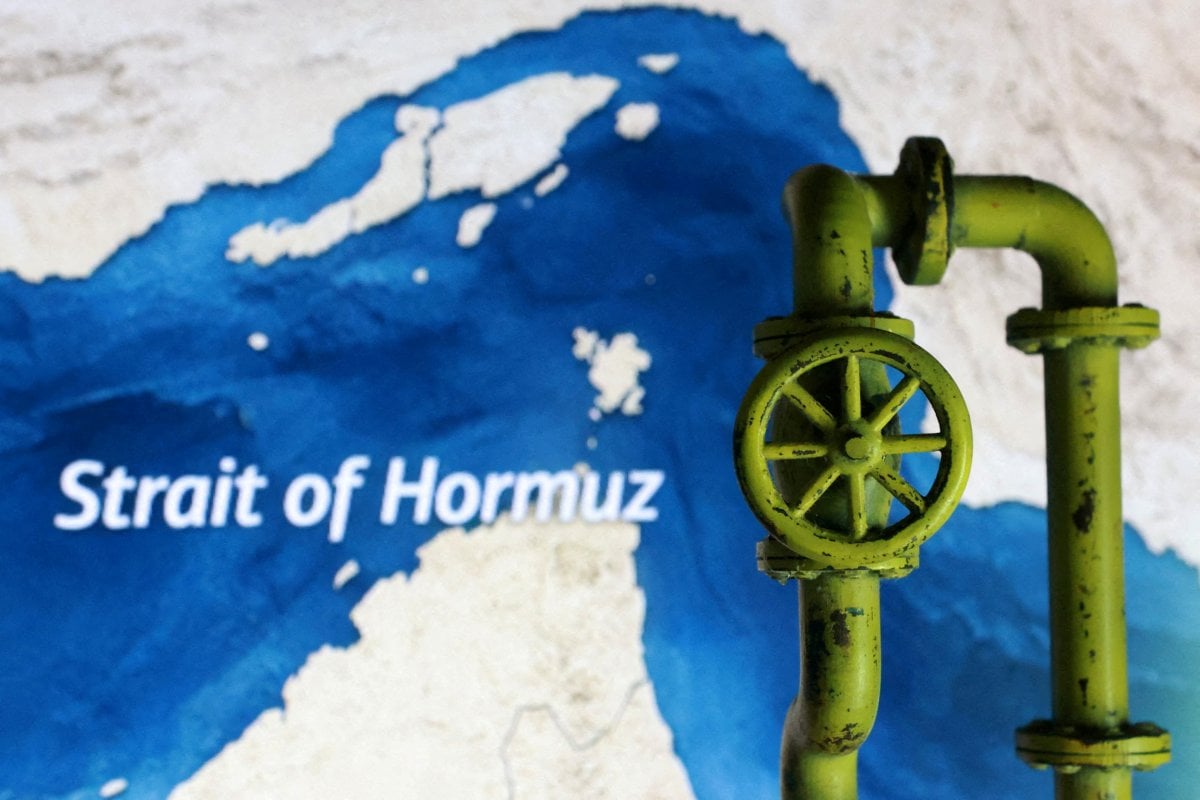
The Strait of Hormuz remains largely blocked due to the ongoing standoff. Iran has intermittently permitted select vessels, such as some Iraqi oil tankers, to pass. Talks with Oman over reopening arrangements have made progress but failed to reach an agreement. Separately, Iran's oil minister, Mohsen Paknejad, announced on Sunday that Iran had discovered over 7.5 trillion cubic feet of gas in a field located south of its Fars Province.
U.S. Energy Secretary Chris Wright had previously stated that military operations had helped achieve a seven-day average of 8 million barrels of oil per day through Hormuz, a significant decrease from over 20 million barrels before the conflict. Discussions on alternative trade routes, such as expanded pipelines, rail links, and increased use of Omani ports outside the Gulf, are expected between French President Emmanuel Macron and Saudi Crown Prince Mohammed bin Salman.
Additionally, Pakistan's army chief, Asim Munir, will visit Tehran on Monday as part of Pakistan's ongoing efforts to facilitate regional diplomacy.
Written by urgent.news from Investing.com's reporting — not their text. Machine-written — may contain errors; check the original before relying on it.
This story
This is one outlet's version. Read the fullest account.
- Iran condemns looming US sanctions as Hormuz standoff deepens thenationalnews.com
- US threatens tougher Iran sanctions, raising pressure on China thevibes.com