Hong Kong can open a lucrative new frontier as Chinese tech IP hub
Since 2021, Hong Kong’s development as a regional intellectual property (IP) trading centre has featured in China’s five-year plans and the policy addresses of chief executives Carrie Lam Cheng Yuet-ngor and John Lee Ka-chiu. There are good strategic reasons to see considerable potential in developing the city as an IP servicing centre for the Greater Bay Area, and potentially the whole of China…
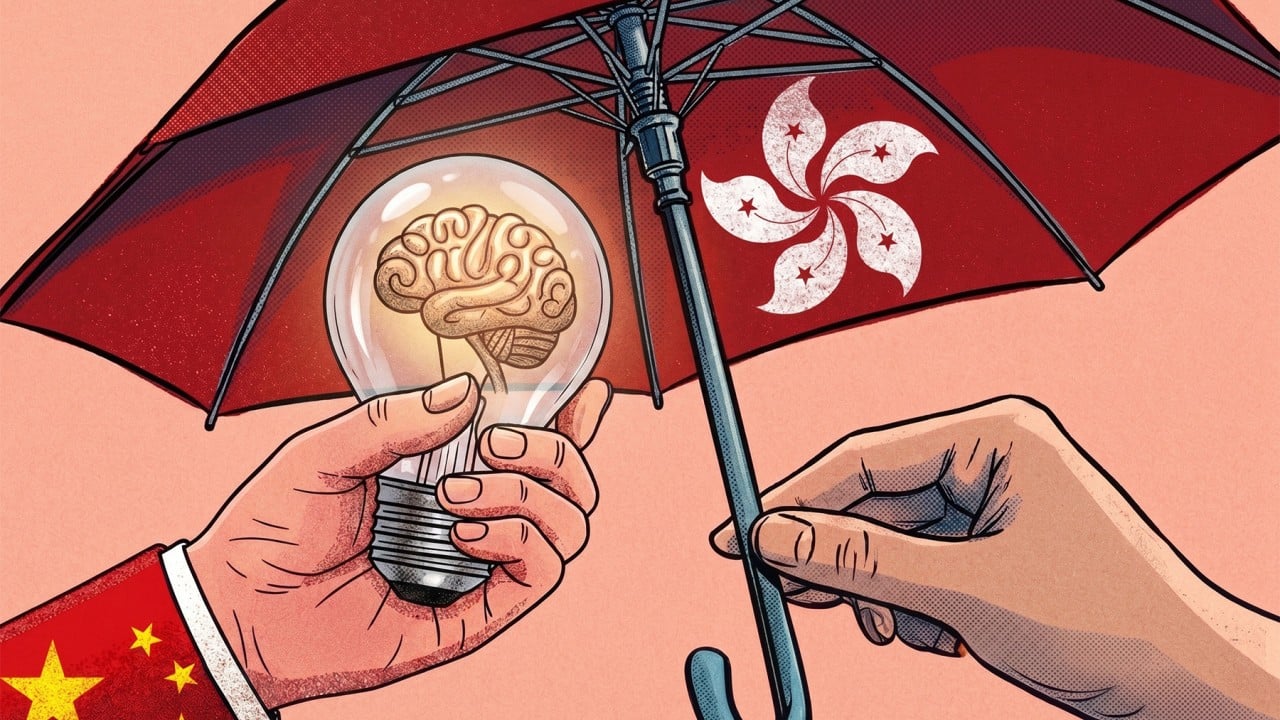
Hong Kong is positioned to become a lucrative center for intellectual property (IP) services in the Chinese market and beyond. Since 2021, the city has been a focal point in China's five-year plans and leadership policy discussions. Several strategic factors contribute to Hong Kong's potential in this domain. Firstly, the city benefits from supportive international IP agreements, either via China or Hong Kong's World Trade Organization membership.
Secondly, Hong Kong's robust IP regime is reinforced by effective enforcement mechanisms. Moreover, the Customs and Excise Department's reputation is well-regarded, particularly within the Asia-Pacific customs community since 2000. Hong Kong safeguards seven key IP categories: patents, trademarks, designs, copyright, trade secrets, plant varieties, and integrated-circuit layout designs.
Trademark and copyright protection remain most familiar to the public, as evidenced by high-profile corporate disputes over logos, designs, and entertainment-related properties. IP is not merely a legal entitlement but also a valuable commercial asset. It can be traded, licensed, financed, and commercialized. Traditionally, digital platforms have facilitated IP trading, but in recent years, collectible cards have gained prominence.
Derek Cheung Pui-sang, an entrepreneur, has established a trading-card and gaming hub in Tsim Sha Tsui, offering services for authenticating, grading, and valuing rare and vintage cards. The city's challenge is to expand this ecosystem to encompass technology and innovation. While Hong Kong's R&D investment has been historically low, government initiatives like the Original Grant Patent (OGP) system since 2019 are aimed at transforming this landscape.
Schools are emphasizing STEM education, and universities are prioritizing commercialization of research. Success stories, such as Hong Kong inventors excelling at international competitions, indicate a growing pool of research and innovation that could yield commercially valuable patents. The establishment of technology hubs in the Northern Metropolis is expected to fuel this trend.
As more mainland enterprises, particularly in biotechnology, artificial intelligence, microelectronics, and quantum computing, establish a presence in Hong Kong, the demand for sophisticated IP-related services, such as licensing, joint research, and mergers and acquisitions, is anticipated to increase. Hong Kong's common law system offers a familiar and reassuring environment for international investors, while its close integration with mainland China provides access to one of the world's largest and fastest-growing technology markets.
The city's legal and financial professionals can assist start-ups and technology companies in patent registration, licensing technologies overseas, packaging IP into investment opportunities, obtaining professional valuations, and raising capital through IP-backed lending and securitisation. However, turning this potential into a viable industry requires investment in talent.
The government must expand training and bolster the capacity of the Intellectual Property Department, which handles patent registration and re-registration of standard patents granted in mainland China and Europe. To fully embrace this role, Hong Kong must ensure its patent professionals meet international standards. Advanced economies have developed rigorous professional pathways blending scientific or technical expertise with specialized legal and patent training.
Hong Kong needs to expand similar interdisciplinary training programs. While universities have introduced postgraduate certificate courses and cross-disciplinary degree programs to produce legal professionals with stronger technological expertise, more such initiatives are needed, particularly those that equip practitioners to understand both the science behind an invention and its commercial opportunities.
Written by urgent.news from South China Morning Post - Hong Kong's reporting — not their text. Machine-written — may contain errors; check the original before relying on it.