Congo-Kinshasa: The Deadly Bundibugyo Ebola Outbreak Can Be Stopped
[allAfrica] Each time we travel to the Democratic Republic of the Congo (DRC), we first go to listen.
Over the past 100 days, the Democratic Republic of the Congo (DRC) has been battling its 17th Ebola outbreak, caused by the Bundibugyo virus. The World Health Organization (WHO) has declared the situation a Public Health Emergency of International Concern, while the Africa CDC has declared it a Public Health Emergency of Continental Security.
The outbreak, which has now become the second-largest in recorded history, is moving more swiftly than any previous case, likely due to ongoing insecurity from decades of armed conflict that has displaced over a million people.
Community leaders, survivors, and health workers have emphasized the importance of involving local populations in the response. They possess vital knowledge of community dynamics, information flows, and the roots of trust breakdowns, which are essential to effectively controlling the outbreak. They can identify early symptoms, alert health teams, help track and trace contacts, challenge misinformation, and support families in accessing treatment and dignified burials.
Despite the efforts of national authorities, health workers, and international partners, the scale of the emergency remains immense. As of 21 August 2026, the DRC has reported 5,290 confirmed cases and 2,516 deaths across 56 health zones. The outbreak is fueled by insecurity, which has undermined law and order, as well as social services, further exacerbating the crisis.
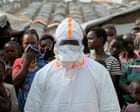
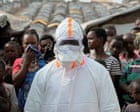
Health workers are at the forefront of the response, providing care for patients, identifying the virus, following its path, building trust within communities, and ensuring safe burials. However, they are working under immense pressure, often in insecure and remote areas, and some have contracted Ebola themselves. Their safety and well-being must be prioritized, with adequate safety measures, protective equipment, training, supplies, timely payment, psychosocial support, and access to rapid diagnosis and high-quality care in case they fall ill.
The response has made progress, with expanded surveillance, laboratory deployment, treatment centres, infection prevention measures, and support for cross-border coordination. However, more is needed. Surveillance teams must be expanded and equipped to detect cases early and identify contacts rapidly. Safe clinical care and infection prevention measures should be increased wherever people seek treatment.
Risk communication and community engagement teams should be deployed to empower communities and address barriers to care. Special efforts should be made to reach vulnerable populations in insecure and hard-to-reach areas.
Despite these efforts, more resources are required to scale up the response by two to three times current capacities across all response pillars. This includes ensuring the safety of frontline workers, strengthening health facilities, securing predictable funding for surveillance, laboratories, treatment, logistics, infection prevention, and community engagement.
Frontline workers must be paid on time, and local organizations need direct support to maintain consistent community engagement. Supplies must arrive promptly to avoid stockouts, and delayed financing can cost lives. Fragmented financing leaves gaps, and Ebola exploits these weaknesses.
Written by urgent.news from AllAfrica Health's reporting — not their text. Machine-written — may contain errors; check the original before relying on it.