Colombia y Perú se alinean con la política de seguridad de Trump
De la Espriella y Fujimori anuncian la integración de sus países al Escudo de las Américas, la cumbre de seguridad creada por Donald Trump que promete combatir el narcotráfico. Leer
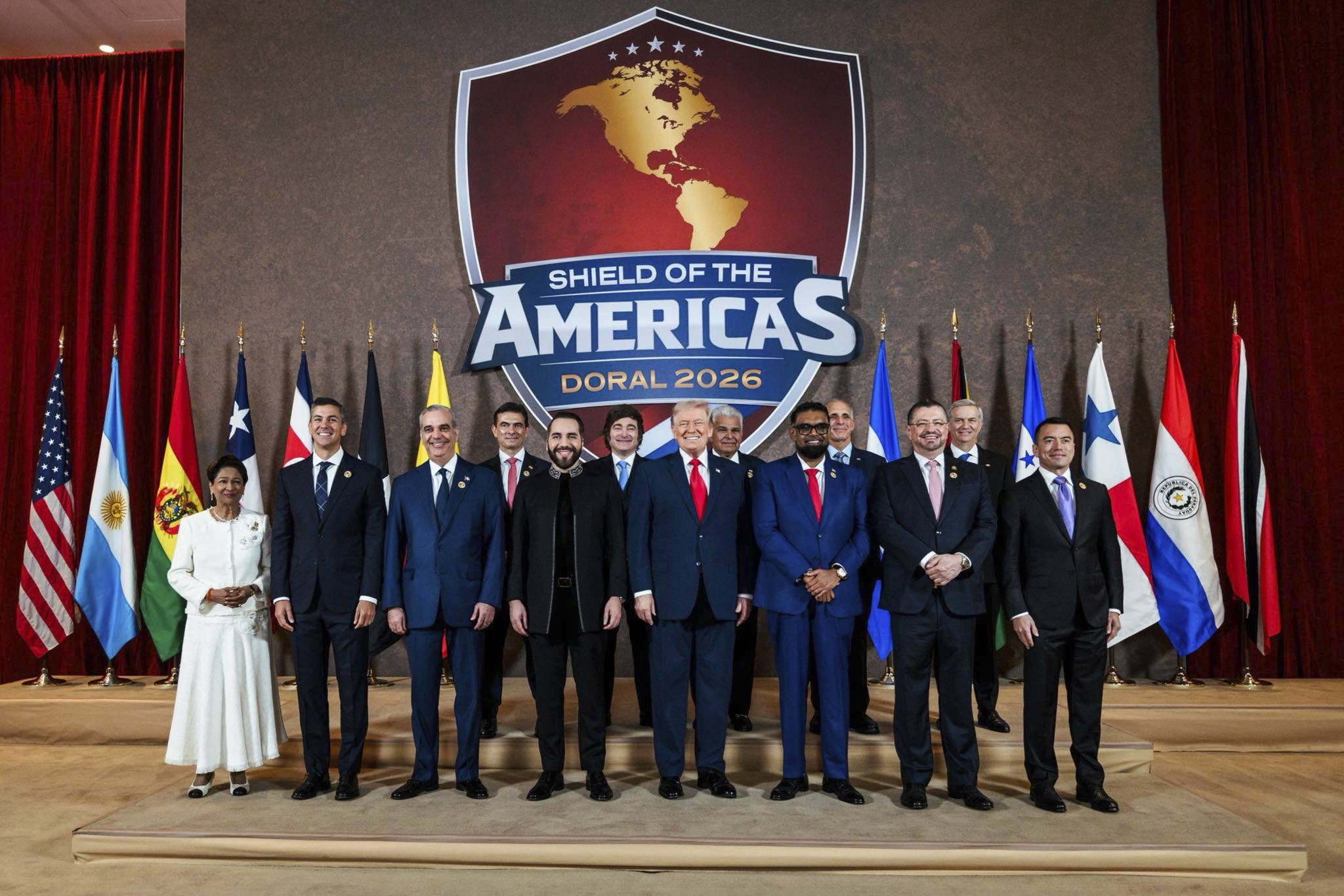
Colombia and Peru have aligned themselves with the U.S. security policy of President Donald Trump, joining the Shield of the Americas, a security summit aimed at combating drug trafficking. The two South American nations held presidential elections this year marked by social and political divisions. In Colombia, ultrarightist Abelardo De la Espriella won the second round election by a narrow margin, while in Peru, conservative Keiko Fujimori emerged as president following a four-week scrutiny period.
This electoral scenario reflects the social and political divisions within both countries. De la Espriella's triumph in Colombia signals the return of a hard right government promising a firm hand, while Fujimori's slim victory in Peru highlights a polarized nation torn between a free market economic model and social demands from Andean regions. Both De la Espriella of Colombia and Fujimori of Peru have announced their intention to incorporate their countries into the Shield of the Americas.
The U.S. president described the alliance as a new military coalition to eradicate criminal cartels and destroy organizations dedicated to drug trafficking. The coalition includes the United States, Argentina, Bolivia, Chile, Costa Rica, Dominican Republic, Ecuador, El Salvador, Guyana, Honduras, Panama, Paraguay, and Trinidad and Tobago, all of which have supported Trump's initiative.
Despite initial differences between Trump and Colombian candidate Petro, Colombia was not initially invited to join the coalition, according to a spokesperson for the White House, Karoline Leavitt.
Now, with the new governments, Colombia and Peru will be incorporated into the coalition. Fujimori stated in an interview with the Colombian magazine Semana that both nations want to be part of the Shield of the Americas to recover peace and fight against organized crime. De la Espriella announced the decision via his X account, stating that Colombia will no longer be governed by a government that is complicit with narcoterrorism, starting from August 7th.
However, the Colombian political scene has been marked by increasing tension following the victory of the Tigre, as known in the campaign. Senator Iván Cepeda, who lost the election and leads the opposition from his chamber in Congress, called for disobedience and asked De la Espriella to renounce his U.S. citizenship, considering it incompatible for a Colombian leader to maintain exclusive loyalty to the United States.
The new stage of cooperation between Bogotá and Washington has also resulted in a closer approach in security matters. U.S. Secretary of Defense Pete Hegseth announced that Colombia will join the coalition as the 19th member and assured that President De la Espriella has authorized joint military operations with U.S. forces to combat narcoterrorism.
The agreement reinforces the shift in bilateral relations after the distance during the Petro government and adds to a package of security assistance worth $1 billion pledged by Washington for Colombia. Similar to Colombia, the electoral outcome in Peru was also rejected by the defeated left-wing candidate Roberto Sánchez, who called the victory of Keiko Fujimori illegitimate and announced the creation of an opposition front to recover democracy in the country.
He also insisted on his allegations of alleged irregularities in the electoral process, contradicting the official proclamation by the National Elections Jury (JNE).
Written by urgent.news from Expansion ES's reporting — not their text. Machine-written — may contain errors; check the original before relying on it.