Chinese robot sprints 100m faster than Usain Bolt: Why teaching robots to run matters
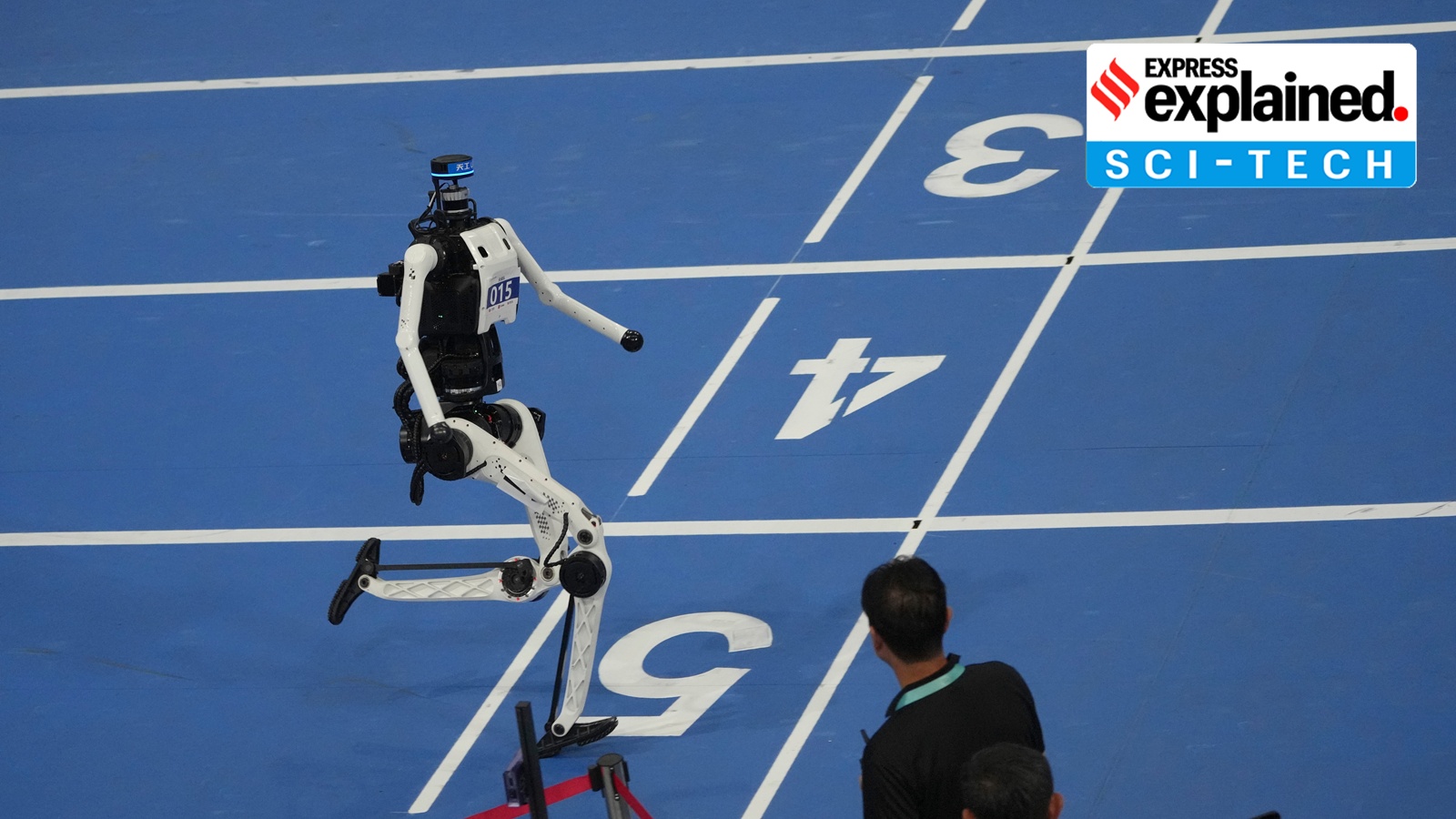
A Chinese humanoid robot named Tiangong Ultra recently achieved a remarkable feat by running 100 meters faster than the world's fastest human, Usain Bolt. The robot completed the distance in just 9.39 seconds during the World Humanoid Robot Games in Beijing on August 22, beating Bolt's record of 9.58 seconds set in 2009. Another Chinese robot, called Lightning, developed by smartphone manufacturer Honor, finished the 100 meters in 9.47 seconds but had to be carried off the field on a stretcher.
Why teach robots to run? This may seem unusual, but racing provides engineers with a challenging scenario to demonstrate how adept their robots are at handling real-world situations. Humans are incredibly adept at navigating unpredictable environments, processing information from various senses, and making split-second decisions to maintain balance and coordinate muscle movements.
Teaching a robot to perform these tasks reliably is incredibly difficult. The 100-meter sprint, for example, forces engineers to solve multiple problems simultaneously, such as acceleration, limb coordination, balance maintenance, position sensing, and deceleration.
Once a robot can master these skills, it can perform a wide range of tasks, from delivering food in restaurants to cleaning houses, sweeping mines, or even rescuing people trapped under rubble. In disaster response scenarios, robots sent into burning buildings, collapsed structures, or hazardous industrial sites must navigate stairs, rubble, and uneven surfaces, move on inclined surfaces, find and manipulate objects, and perform various other tasks.
Similarly, in warfare, drones equipped with physical capabilities can navigate, observe, carry equipment, and operate in dangerous environments that would be hazardous for humans.
China's investment in robotics is driven by the need to pivot its AI research towards physical applications, with robots as key drivers of economic growth. The International Federation of Robotics reports that 54% of annual industrial robots installed worldwide are in China, and the country's latest Five-Year Plan (2026-2030) places robotics at the heart of its modern industrial system. This increasing focus on robotics underscores China's ambition to lead in this field and leverage AI advancements for economic growth.
Written by urgent.news from The Indian Express's reporting — not their text. Machine-written — may contain errors; check the original before relying on it.
This story
This is one outlet's version. Read the fullest account.
- Chinese robots tackle tennis, smash track records at World Humanoid Robot Games scmp.com
- Chinese humanoid robots smash human records in 100m sprint and high jump at Beijing robot games thehindu.com
- Chinese humanoid robot beats Bolt's 100-metre world record time euronews.com
- Chinese humanoid robots smash human records in 100m sprint and high jump qatar-tribune.com
- Chinese humanoid robots smash human records in 100m sprint and high jump at Beijing robot games mainichi.jp
- Robot horse and rider steal the spotlight at Chinese conference bbc.co.uk
- Chinese humanoid robots smash human records in 100m sprint and high jump at Beijing robot games winnipegfreepress.com
- Chinese humanoid robots smash human records in 100m sprint and high jump at Beijing robot games gulfnews.com